About Plakobranchus ocellatus van Hasselt, 1824
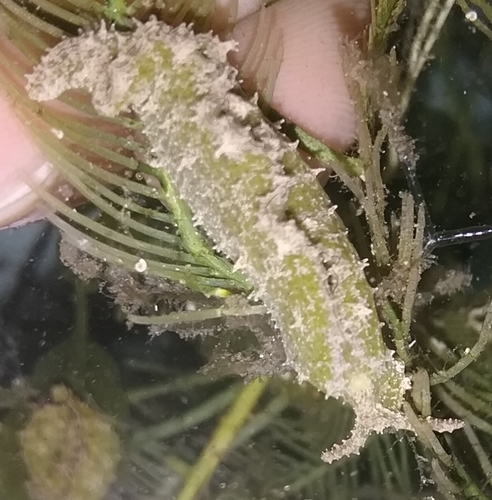
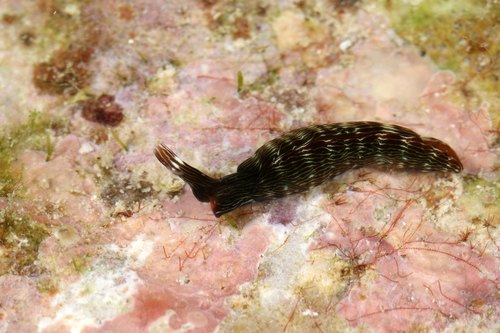
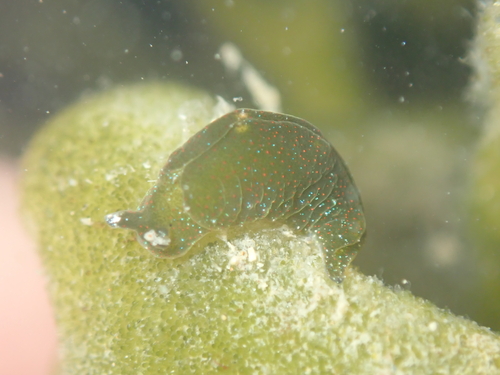
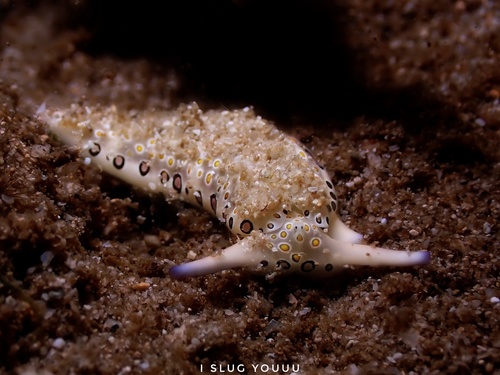
This species of sea slug has a broad, truncate, and rather flattened body that reaches up to 4 cm (1.6 in) in length. Its head is flat and squarish, with rhinophores that are folded longitudinally. The mouth is located at the front apex of the head, and the two eyes are positioned very close together, visible through the semi-transparent skin of the head. The dorsal surface of the sea slug bears a number of longitudinal ridges, but when the animal is at rest, its parapodia fold over the body's midline, concealing the dorsal surface from view. On the underside, the foot is broad and long, and it is not clearly separated from the mantle. The base body colour of this sea slug is most often pale green, beige, or cream, marked with large ocelli (eye-spot-like spots) in varying shades of cream, brown, pink, and purple. Ocelli are also present on the sole of the foot. Plakobranchus ocellatus is distributed across the Indo-Pacific region. Recent research into the photosynthetic abilities of the genus Plakobranchus has found that P. ocellatus as originally defined is actually a species complex made up of at least four distinct clades. These sea slugs inhabit sheltered shallow water habitats containing stones or gravel mixed with silt. They have a broad feeding diet that includes algae from the genera Halimeda, Caulerpa, Udotea, Acetabularia, as well as additional unidentified algae, with Halimeda macroloba being their primary food source.