About Plagodis dolabraria (Linnaeus, 1767)
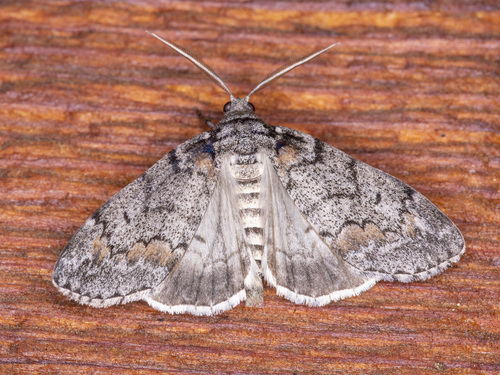
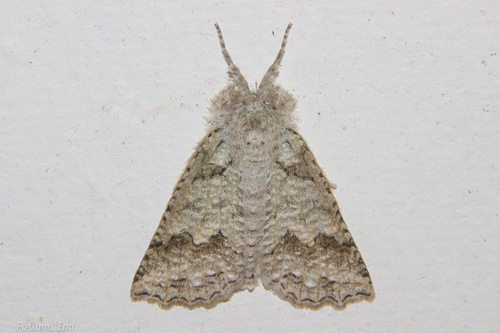
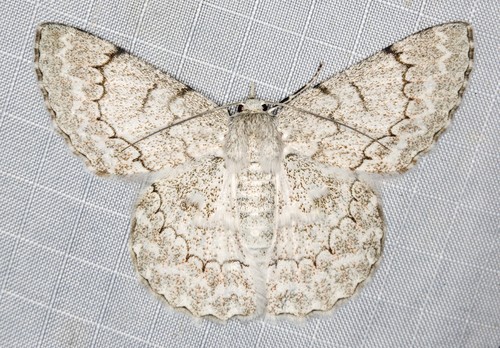
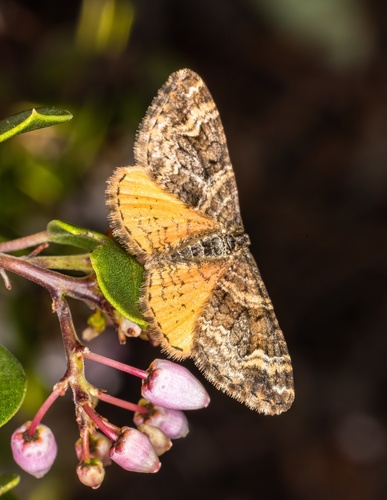
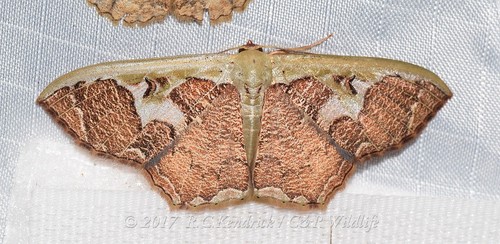
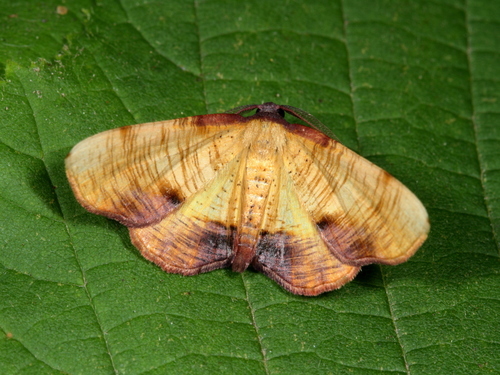
Plagodis dolabraria, commonly known as the scorched wing, is a moth species belonging to the family Geometridae. Carl Linnaeus first described this species in 1767. It is distributed across all of Europe and the Palearctic region, extending east as far as Transcaucasia, southeastern Siberia, and Japan. The species has a wingspan of 28 to 32 millimetres, and the forewings measure 16 to 19 millimetres in length. The forewings are covered with countless fine, slightly oblique transverse striae, and lack distinct lines. On both wings, the postmedian line is marked by a thick dark fuscous shade on its posterior side. Distal to this shade lies an indistinct purplish blotch that reaches the hind angle; this blotch is most prominent on the hindwing. Ab. atrox Zerny is a melanotic form of the species, in which the forewings are mostly dark chestnut brown, turning black toward the base and hind angle. The moth produces one generation per year, flying from early May to mid-July. The larvae are twig-shaped, brownish, and variegated. Their thorax is darker on the dorsal side, there is a hump on the fifth abdominal segment, and a transverse marking near the tail is also dark. The larvae feed on a variety of deciduous trees, including oak, birch, and sallow.