About Plagiomnium venustum (Mitt.) T.J.Kop.
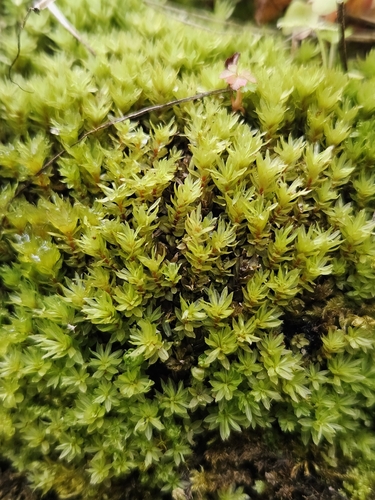
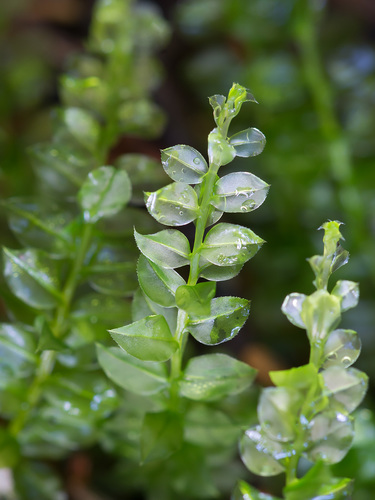
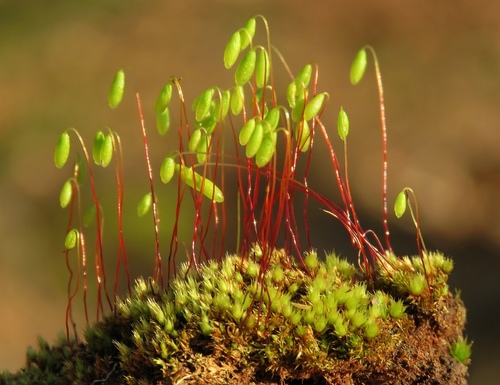
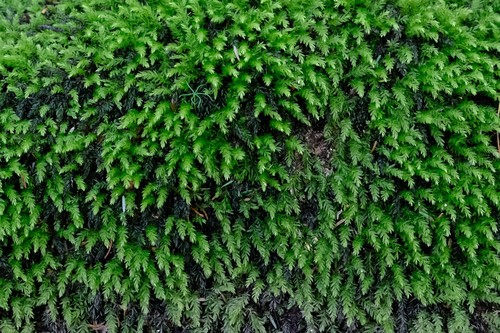
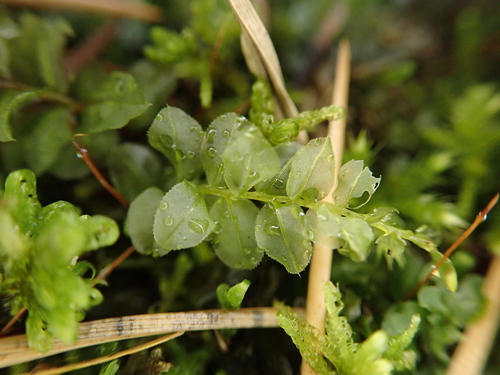
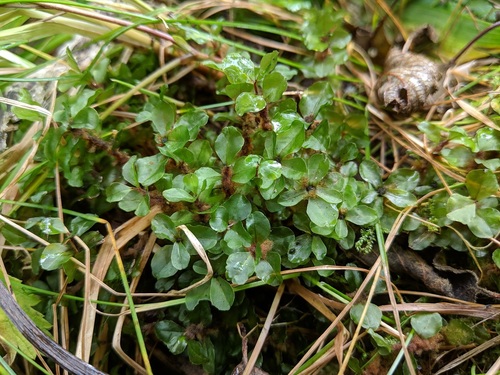
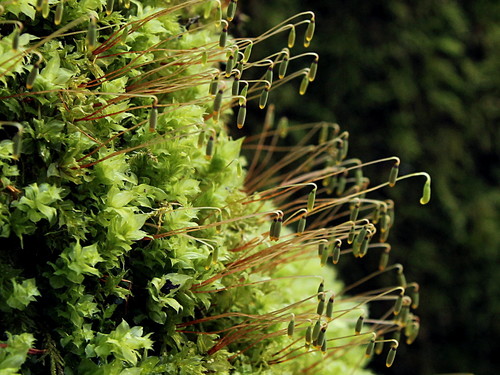
Plagiomnium venustum (Mitt.) T.J.Kop. has an acrocarpous growth form, with upright, unbranched shoots. It can be distinguished from all other moss species in the genus Plagiomnium by a set of unique characteristics: dark-coloured stomatal guard cells, leaves that are densely twisted around the stem when dry, collenchymatous lamina cells, a distinct brown and wrinkled capsule neck, and an absence of sterile stems. Most recorded populations of Plagiomnium venustum are located in British Columbia, Canada and Oregon, United States, so it is classified as a Pacific Coast bryophyte. Additional populations have also been found in Washington, Idaho, and Montana, United States. This moss is most common at low to moderate elevations. It grows in a range of moist habitats: the moist soil of forest floors, tree trunks, rotten logs, rocks, and cliffs. Plagiomnium venustum is a synoecious species, meaning both antheridia and archegonia, its reproductive structures, are found on the same individual plant. Unlike many other species in the genus Plagiomnium, it does not produce specialized asexual reproductive structures. Its perichaetial leaves are arranged in a rosette, have a distinct yellow midrib, and produce multiple emerging sporophytes.