About Plagiobothrys nothofulvus (A.Gray) A.Gray
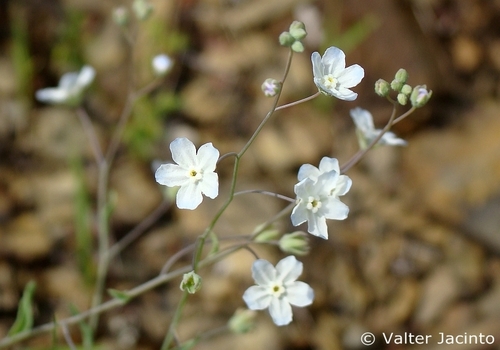
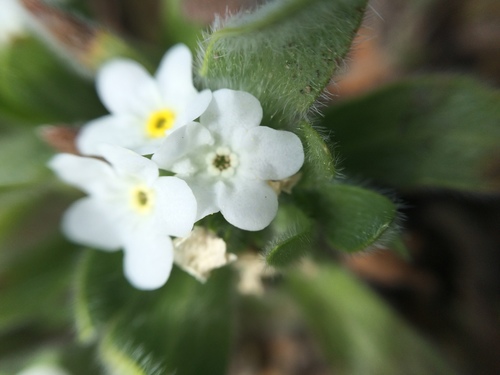
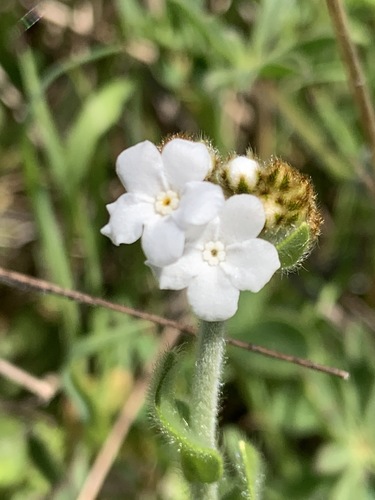
Plagiobothrys nothofulvus is an annual herb with deep roots, particularly when growing on drier soils. It reaches a maximum height of 50 centimeters, or 20 inches. This plant produces purple sap; its herbage has purple or rusty red edges, and bleeds purple when crushed. Its texture is hairy, with rough, sharp hairs. It has spatula-shaped leaves that grow up to 10 centimeters (4 inches) long; most leaves form a tuft near the base of the stem, with smaller leaves growing higher on the stem. It blooms from March to May, and produces an inflorescence made up of a series of five-lobed white flowers that are roughly 6 millimeters (1⁄4 inch) wide. The fruit of this species is split into four nutlets: these are rounded with a pointed tip, measure roughly 2 millimeters long, and are borne singly, in pairs, or in triplets that are solidly attached to each other. This species is distributed from southern Washington to northern Baja California. It can grow in grassy meadows, especially those along the coast, and also occurs in woodlands, coastal sage scrub, and wetland-riparian habitats. It is often associated with serpentine or plutonic soils. Common species that grow in similar grassland habitats alongside this plant include Aster chilensis, Lotus angustissimus, Plantago lanceolata, Galium parisiense, and Brodiaea terrestris. Like many other members of the Boraginaceae family, this plant produces flowers with five petals that are bisexual, holding both male and female reproductive parts. The main pollinators are bees and butterflies, which transfer haploid microgametophytes (pollen grains) to the flower's pistil. After pollination, the microgametophyte travels down the pistil to the ovule to fertilize the haploid macrogametophyte, or egg. Each pollen grain holds two sperm cells for double fertilization of the egg: one fertilization event produces a diploid zygote, and the other forms the seed's endosperm. Plagiobothrys nothofulvus serves as a food source for many different animals. Deer, ground squirrels, and insects often forage on this plant. Turtles feed on its flowers in riparian zones. Black seed-harvesting ants eat the seeds of this popcorn flower. Beetle species use its flowers as a breeding platform. Butterflies, moths, and bees drink its nectar while pollinating the flowers. Ctenuchid moths are frequently found on the flowers, though the importance of this interaction is currently unknown.