About Pittosporum kirkii Hook.fil. ex Kirk
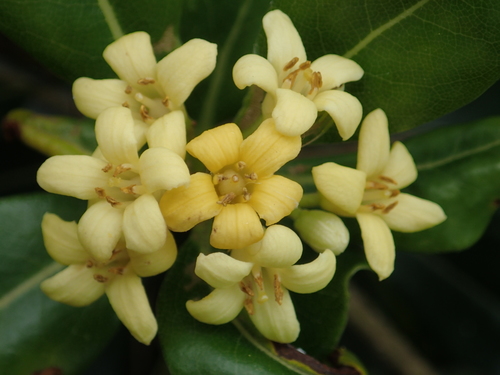
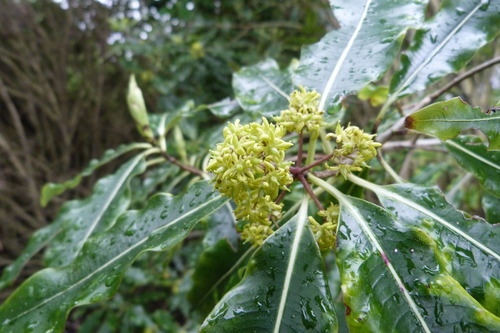
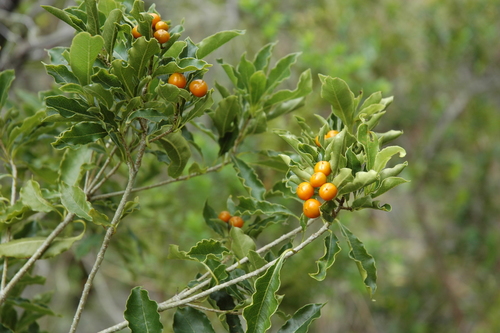
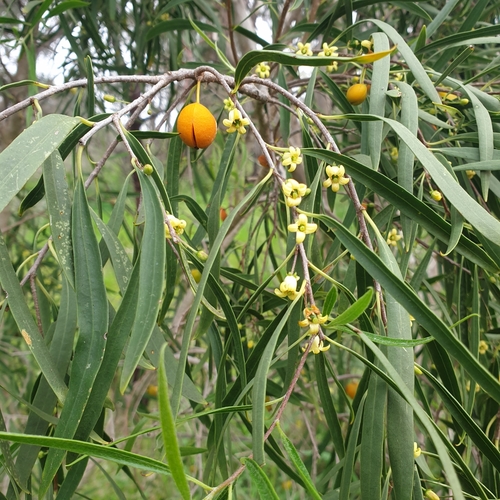
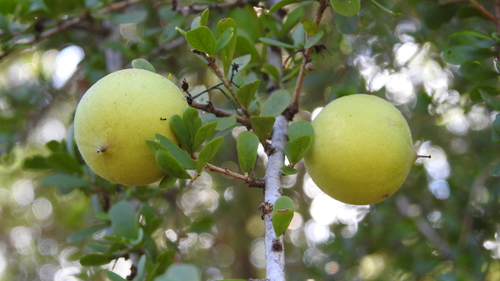
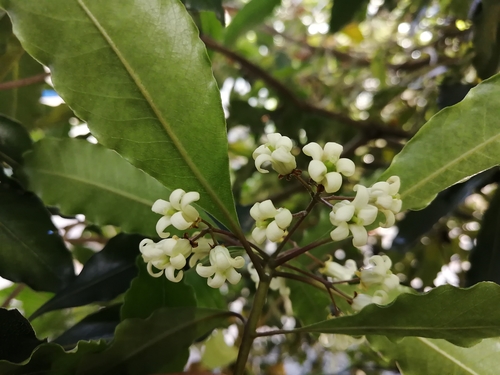
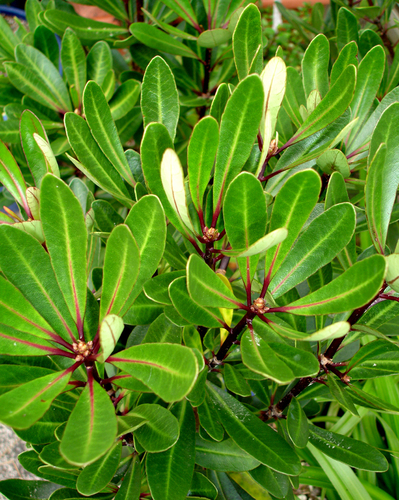
Pittosporum kirkii Hook.fil. ex Kirk is an evergreen perennial shrub in the Pittosporaceae family, endemic to the northern half of the North Island of New Zealand, including some of the island's offshore islands. This species is usually epiphytic, meaning it most often grows on other trees, though some individual plants grow independently, and rarely grow on rock surfaces. Mature plants reach 1–5 m in height, with a trunk up to 10 cm in diameter. The trunk holds densely arranged light green-brown branches, with reddish-to-purple branchlets. Petioles are purple-reddish, short at 0.3–1.6 mm in length, and 0.1–0.2 mm broad. Leaves are egg to oval shaped, widest toward the tip, with a recorded length range of 4–12 cm and width range of 0.7–3.2 cm; most commonly they are 5–10 cm long and 2–3 cm wide. Leaves are thick, leathery (coriaceous), and range from dark to pale green in colour. Flowering takes place from October to December, and produces small yellow flowers. Inflorescences (flower spikes) are pedicellate, complete, and pentamerous except for the gynoecia, each holding 1 to 10 flowers. Inflorescences are supported by 5–10 mm pedicels, and subtended by numerous 1–2 mm long bud scales. Fruiting occurs from January to May. Fruits are yellowish-green capsules 2.5–4 cm long, which split into two parts to reveal black seeds contained inside a yellow pith. This species has a restricted known geographical range within New Zealand's North Island, extending from the Karikari Peninsula and Mangōnui in the Northland Region south to the area south of the Whanganui River in the Manawatū-Whanganui region, and west to Mount Taranaki. It also occurs on North Island offshore islands including Great Barrier Island and Little Barrier Island. It naturally occurs at a mean altitude range of 50 to 1116 m above sea level. It is not naturally present in the Taupō Volcanic Zone, due to unfavourable environmental conditions; vegetation in this zone has been heavily impacted by extensive ecological disturbance from the 186 AD Taupō eruption. Its natural habitat is dense forest, where it usually grows near or on other plants in suitable sites with low numbers of browsing animals. It can also be found growing on exposed rock and rubble slopes. It is unknown what specific pollinators this species uses, but its flowers are thought to be entomophilous (pollinated by insects), because they are small and have unspecialised structures. Flies are likely the main contributors to cross-pollination, as they have been observed on the leaves of P. kirkii individuals. The fruit of P. kirkii, along with the fruit of other endemic New Zealand Pittosporum species, is eaten by introduced invasive brushtail possums.