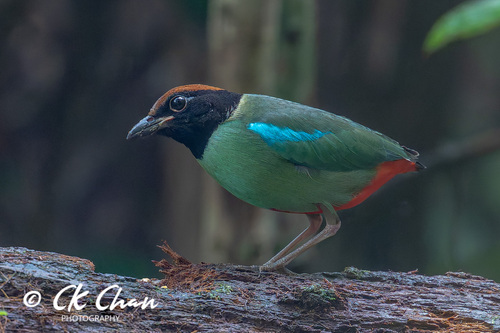
About Pitta sordida (Statius Muller, 1776)
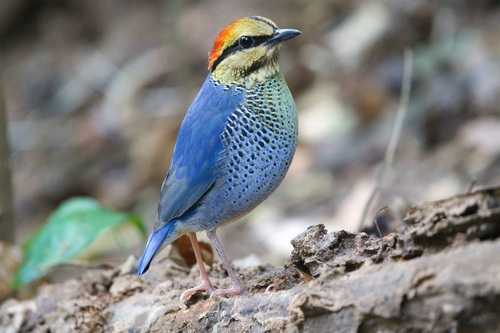
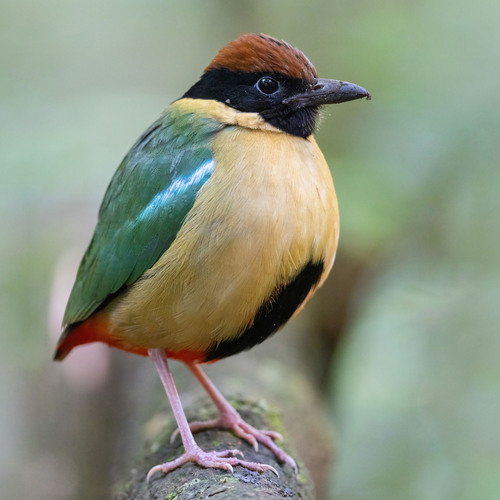
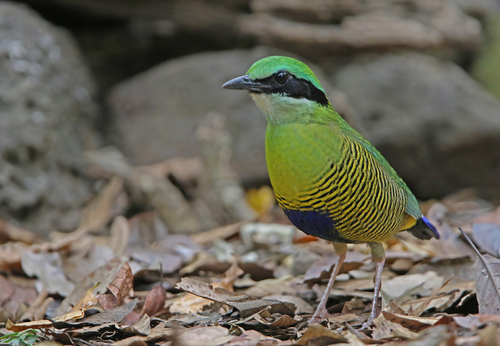
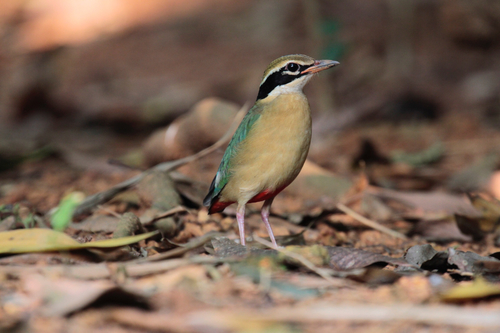
The western hooded pitta, scientifically known as Pitta sordida, is a passerine bird that belongs to the Pittidae family. It is common across eastern and southeastern Asia, as well as maritime Southeast Asia. In this region, it inhabits multiple types of forests, plus plantations and other cultivated areas. This species is a green-colored bird with a black head and a chestnut crown. It forages on the ground for insects and their larvae, and also consumes berries. Breeding occurs between February and August. Breeding pairs are strongly territorial, and build their nests on the ground. Both parents share the work of incubation and caring for fledglings. This bird has a wide geographical range, and the International Union for Conservation of Nature has assessed its conservation status as least concern. It was previously classified as the same species as the Nicobar hooded pitta, Minahasa hooded pitta, eastern hooded pitta, and Biak hooded pitta.