About Pisidia longicornis (Linnaeus, 1767)
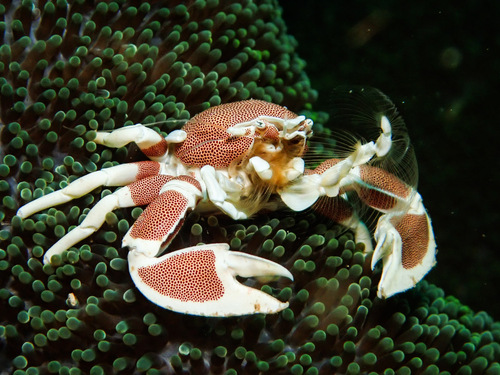
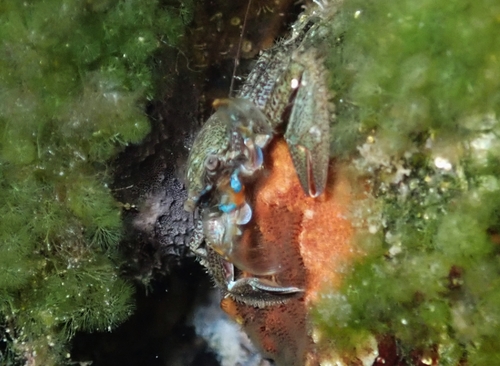
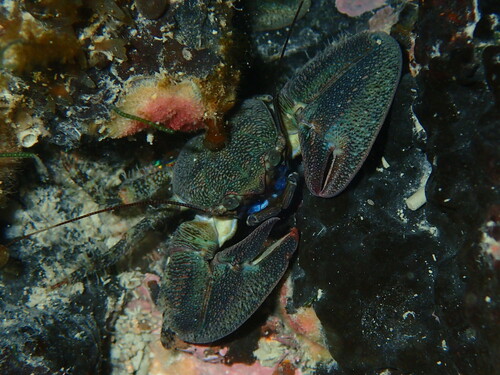
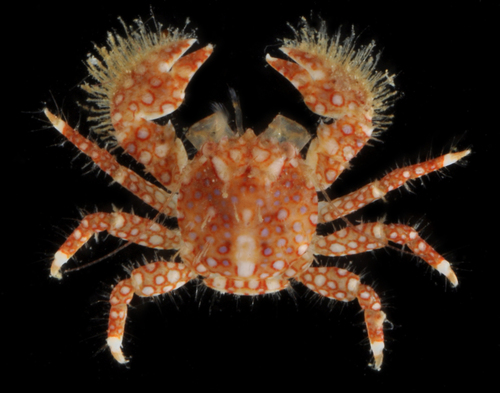
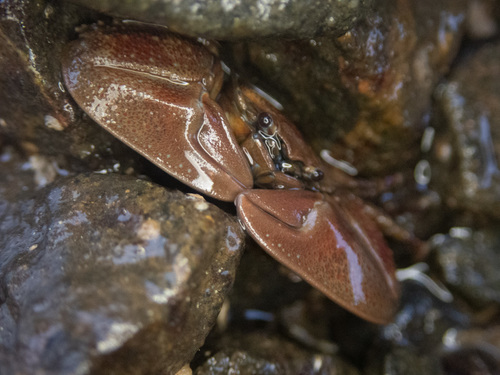
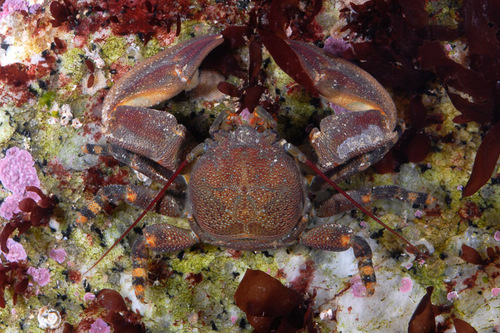
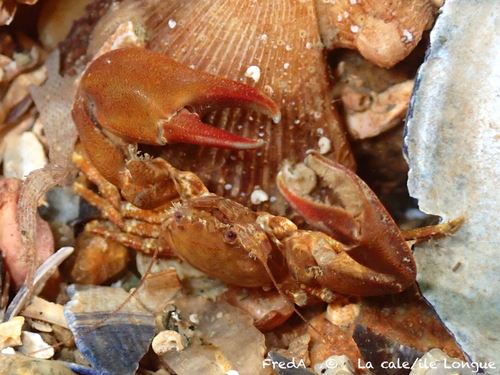
Description Adult Pisidia longicornis usually grow to a carapace length of 1 centimetre (0.4 in). Their colouring is variable: most individuals are reddish or orange, but some have pearly white patches, or are entirely white. One cheliped (the claw-bearing appendage) is typically larger than the other; this size difference is less noticeable in females than in males. The fifth pair of legs is smaller than the other pairs and may be hard to see.
Distribution and ecology Pisidia longicornis occurs in the north-eastern Atlantic Ocean, ranging from Norway to Angola, and is found across the entire Mediterranean Sea. In the north Atlantic, it inhabits areas from the lower shore down to depths of 70 metres (230 ft), while in some parts of the Mediterranean Sea it lives at depths between 30 and 100 m (100–330 ft). It makes its home under boulders and within bryozoan turfs, and can occasionally be found in fish markets among catches of mussels and oysters. It feeds by filtering suspended organic material from seawater. Intertidal individuals tend to be larger than those that live in deeper water, a difference that may be linked to greater sediment disturbance from tidal movement.
Life cycle Around the British Isles, females carry eggs from March to August; in the Mediterranean Sea, egg-bearing occurs from February to September. Young P. longicornis develop through two zoeal (larval) stages before reaching the megalopa (post-larval) stage. Zoea larvae have exceptionally long spines on the carapace: one spine points forward, and two point backward. The second zoeal stage can grow to a length of 10 millimetres (0.4 in), while the megalopa stage has a carapace width of 1.5 mm (0.06 in).