About Pipra mentalis P.L.Sclater, 1857
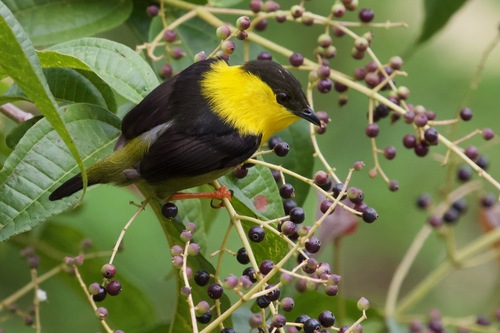
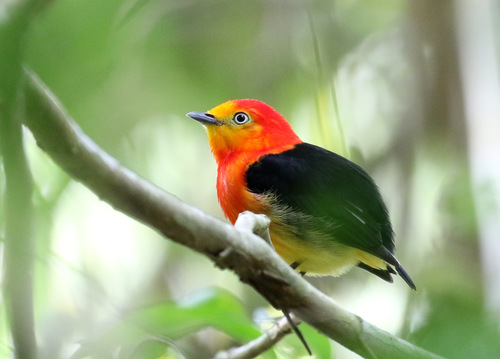
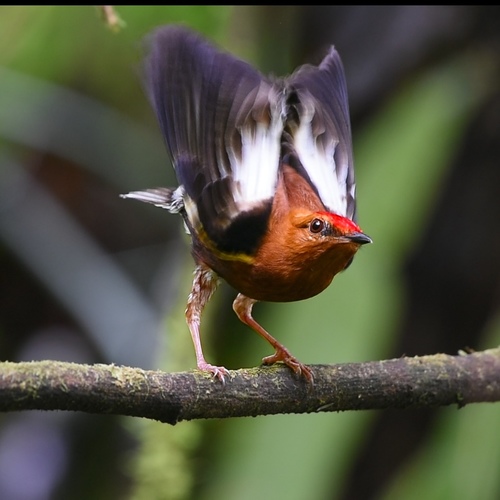
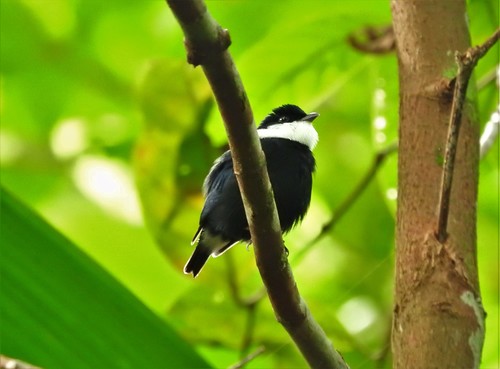
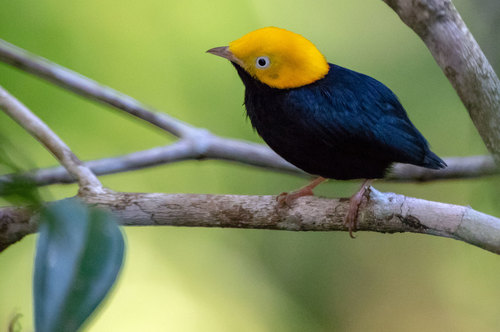
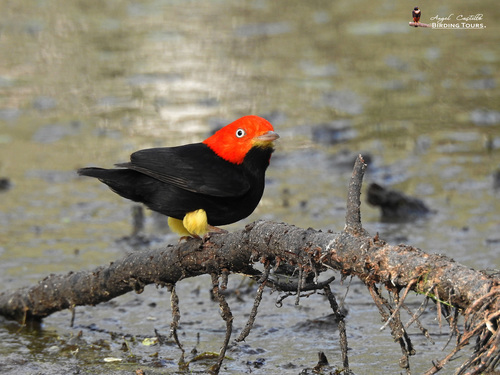
The red-capped manakin, scientifically named Pipra mentalis P.L.Sclater, 1857, is a small passerine bird. It measures 4 inches (10 cm) in length and weighs 16 g (0.56 oz). Adult males have velvety black plumage, with a bright red head and nape, bright yellow thighs, and pale yellow on the chin and wing linings. Females are olive green on their upper bodies, with paler, more yellow-green underparts. Both sexes have dull brown legs. Males have white irises, while females and young red-capped manakins have brown irises. Adult males are easy to distinguish, but females and young birds can be confused with several similar species. Male golden-collared manakins are larger and have orange legs instead of brown; female velvety manakins are a brighter green rather than olive. The red-capped manakin lives primarily in humid forest and second growth woodland. It typically occurs below 400–500 m (1,300–1,600 ft) above sea level, though it can sometimes be found as high as 900 m (3,000 ft). Most individuals are resident, but some migrate to access changing food resources. For example, at La Selva Biological Reserve in eastern Costa Rica, the number of red-capped manakins caught in mist nets tripled in January and February when a favored fruit ripened. During the same period, the number caught at a nearby higher elevation site where these fruits did not grow dropped to zero. The red-capped manakin is a frugivore that feeds almost exclusively on fruits. Fruit passes very quickly through its digestive system, typically taking less than 18 minutes to process. Its ability to quickly process large quantities of fruit evolved in response to seasons with low fruit abundance: this adaptation lets the bird consume large volumes of food to get the nutrients it needs. It consumes seeds from a wide variety of plants. One study in Costa Rica found evidence of 70 plant species in the fecal droppings of red-capped manakins, including species from the genera Clidemia, Hampea, Henriettea, Leandra, Miconia, Ossaea, Pinzona and Psychotria.