About Pipilo ocai (Lawrence, 1865)
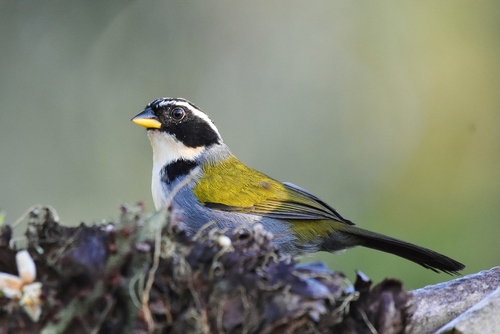
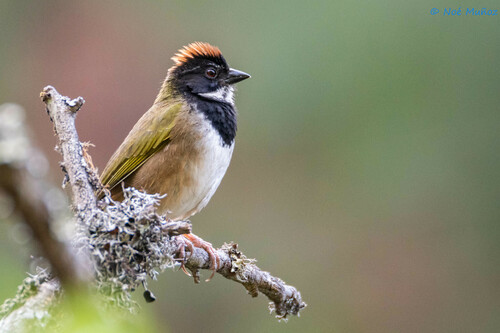
The collared towhee, scientific name Pipilo ocai, is a species of bird in the family Passerellidae that is endemic to Mexico. Its natural habitats are subtropical or tropical moist pine-oak montane forest, as well as heavily degraded former forest. This species lives in mountainous terrain at elevations ranging from approximately 1,500 to 3,500 m (4,900 to 11,500 ft). It is a fairly large species, reaching a total length of 21 cm (8.3 in). Standard physical measurements for the species are as follows: wing chord measures 7.9 to 9.2 cm (3.1 to 3.6 in), the relatively short tail measures 8.9 to 10.6 cm (3.5 to 4.2 in), the bill measures 1.5 to 1.8 cm (0.59 to 0.71 in), and the tarsus measures 2.8 to 3.4 cm (1.1 to 1.3 in). Males of the species weigh between 61 and 68 g (2.2 to 2.4 oz), while females weigh between 54.5 and 62.5 g (1.92 to 2.20 oz). In terms of weight, bill size, and tarsus length, the collared towhee is the largest overall emberizid species. However, related species including Abert's towhee, canyon towhee, and California towhee are larger than the collared towhee in overall length, as well as tail and wing length. The collared towhee has a chestnut cap, yellowish green upperparts, a black cheek and black breast band, gray flanks, and a white chin. This appearance is similar to that of the chestnut-capped brush finch, but the chestnut-capped brush finch has a thinner breast band and a more golden rather than whitish supercilium. The collared towhee also has a distinct song: it sings a trilling song mixed with chip notes, which is very different from the very high-pitched hissing song of the chestnut-capped brush finch.