About Piper umbellatum L.
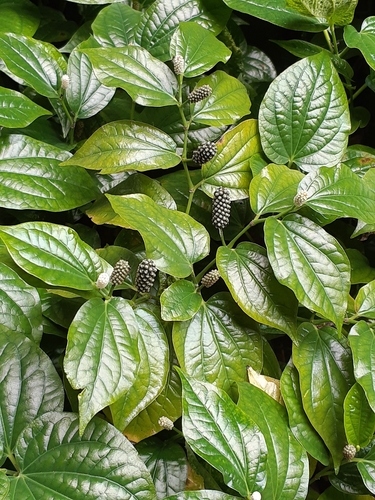
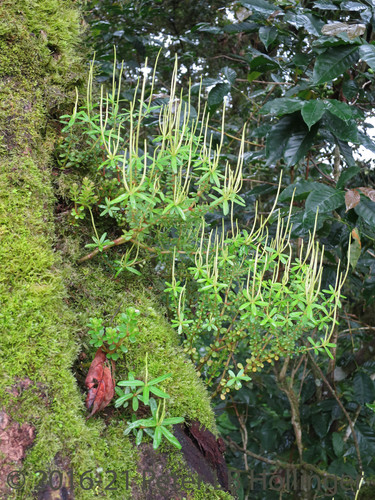
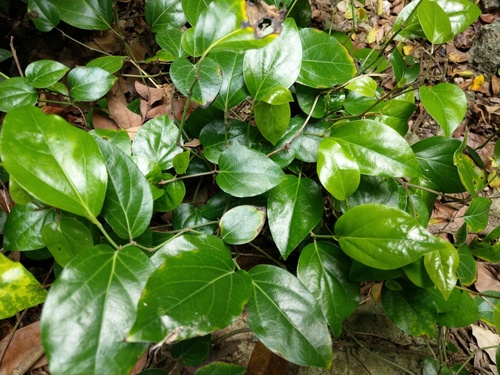
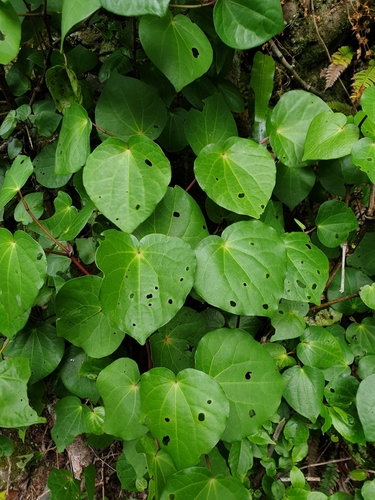
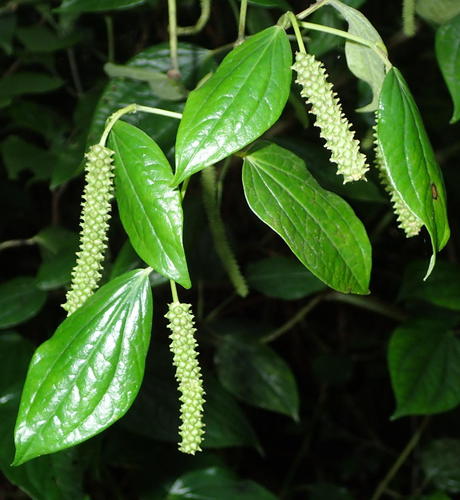
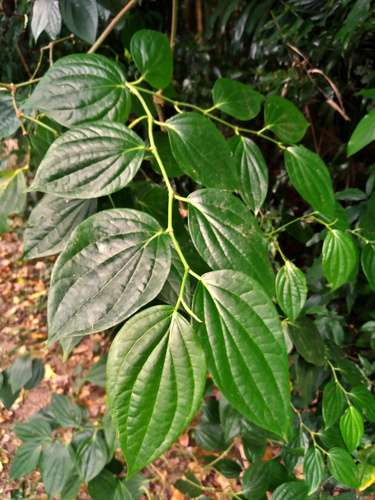
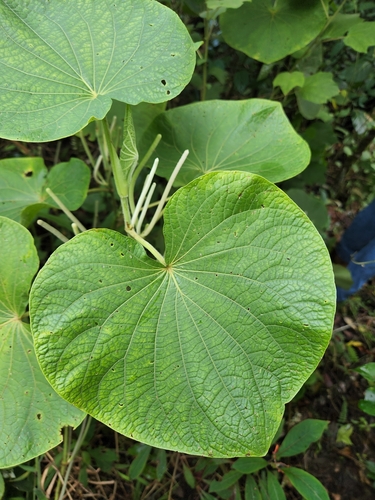
Piper umbellatum is a species of flowering plant in the pepper family. It can grow as either an herbaceous or woody shrub, and reaches heights between 0.9 and 4 meters (3.0 to 13.1 feet). This species has large, heart-shaped leaves, and its flower spikes range in color from white to yellow. Its mature fruits are brownish and shaped like an inverted pyramid. Piper umbellatum grows in the undergrowth of evergreen forests, in swamp forests, and along riverbanks. Multiple parts of the plant are edible. Young leaves and flowers are commonly steamed and eaten as a vegetable, ripe fruits can be eaten directly, and bark can be used as a condiment. In the Philippines, where the species was introduced, it is used to wrap pinais, a steamed dish made with shrimp and grated coconut. Piper umbellatum has a long history of traditional use in folk medicine for treating digestive and liver conditions. In 2002, researchers from Tokyo Medical and Dental University identified antibacterial properties in the plant that are specific to Helicobacter pylori. Two years later, laboratory testing conducted at the Pharmaceutical Sciences College (FCF) of the University of São Paulo showed that compounds from the plant have UVB-protective effects. Due to its potential applications in medicine and cosmetics, Brazilian pharmaceutical company Natura acquired exclusive marketing rights for products developed from this species.