About Pinus thunbergii Parl.
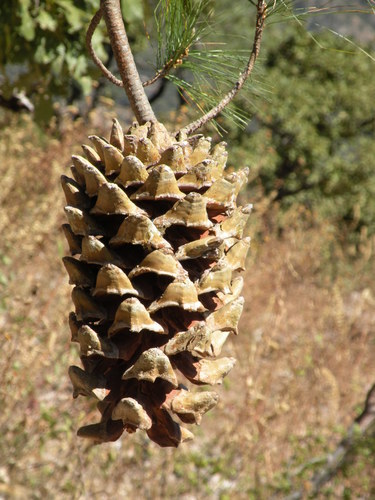
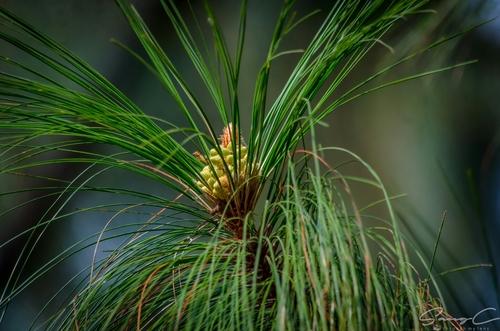
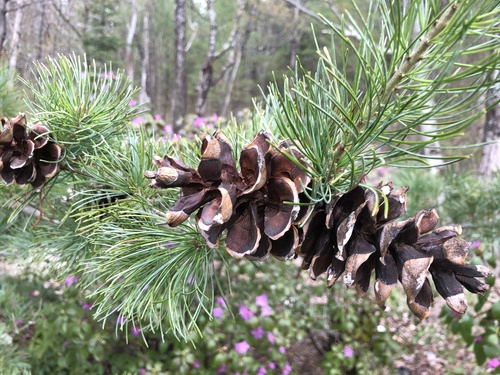
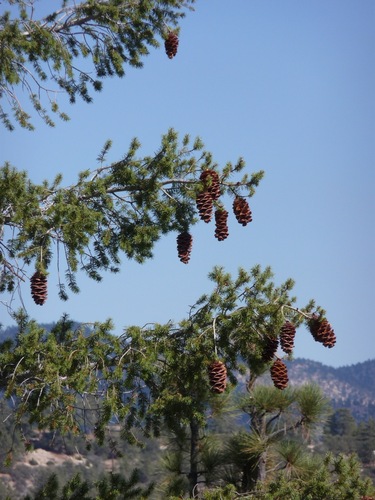
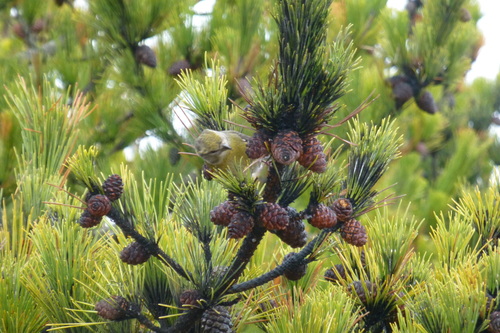
Black pines, scientifically named Pinus thunbergii Parl., can grow up to 40 metres (130 feet) tall, but rarely reach this size outside their natural range. Their needles grow in groups of two (fascicles) with a white sheath at the base, and are 7–12 centimetres (2+3⁄4–4+3⁄4 inches) long. Female cones are 4–7 cm (1+1⁄2–2+3⁄4 in) in length, with scales that have small points on their tips, and take two years to mature. Male cones are 1–2 cm (1⁄2–3⁄4 in) long, and grow in clusters of 12–20 on the tips of new spring growth. The bark is gray on young trees and small branches, and changes to a black, plated texture on larger branches and the trunk, becoming quite thick on the trunks of older trees. It is a widely adaptable plant with attractive dark green foliage. In North America, this tree suffers widespread mortality from the native American pinewood nematode, Bursaphelenchus xylophilus, which is spread by beetle vectors. After the nematode infects the tree, blue stain fungus invades it, leading to rapid decline and death. This nematode has also been accidentally introduced to Japan, causing the species to become endangered in its native area. Because it is resistant to pollution and salt, it is a popular horticultural tree. In Japan, it is widely used as a garden tree: it is both trained as niwaki, and left untrained to grow as an overstory tree. The trunks and branches are trained starting at a young age to produce an elegant, visually interesting form. It is one of the classic subjects for bonsai, requiring great patience over many years to train properly.