About Pinus kesiya Royle ex Gordon
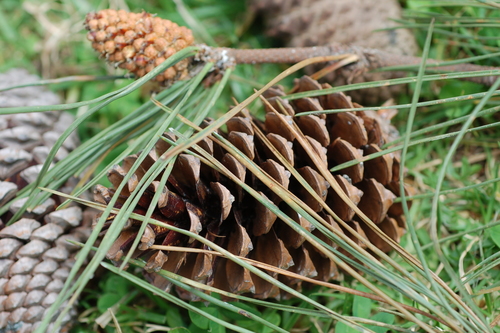
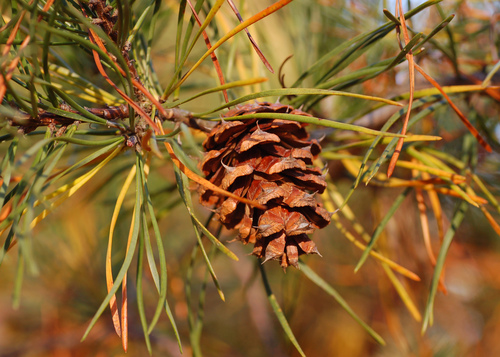
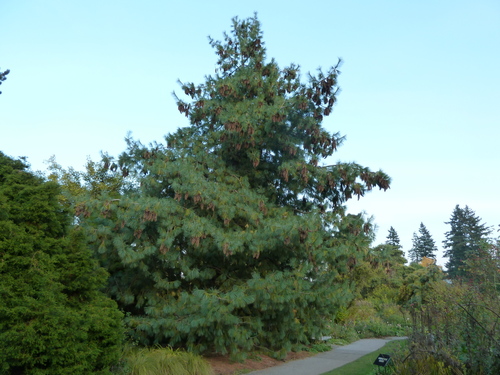
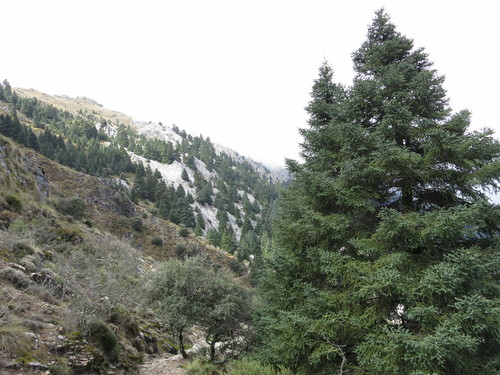
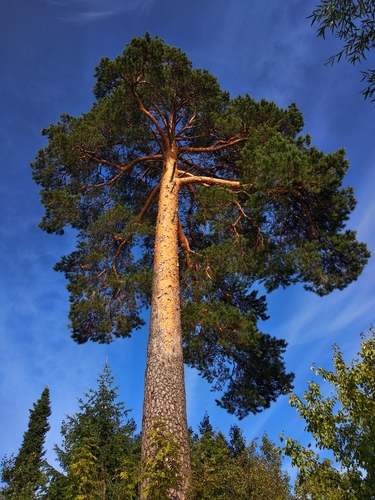
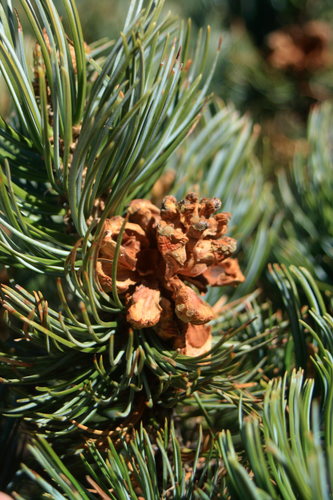
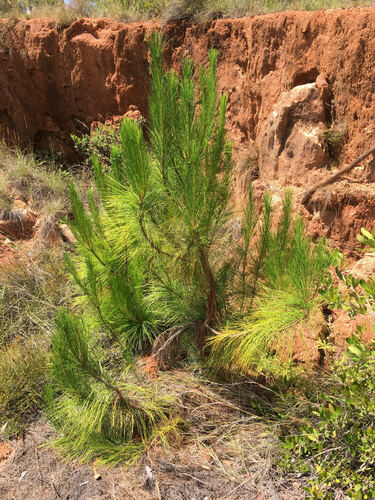
Pinus kesiya, also called Khasi pine, is a tree that grows to 30–35 metres (98–115 feet) tall, with a straight, cylindrical trunk. Its thick, dark brown bark is scaly and marked with deep longitudinal fissures. It has robust branches that turn red brown by their second year, with branchlets growing from horizontal to slightly upcurved. Its leaves are needle-shaped, dark green, and typically grow three per fascicle, measuring 12–20 centimetres (4+1⁄2–8 inches) long. The fascicle sheath is 1–2 cm (1⁄2–3⁄4 in) long and remains persistent. The tree produces ovoid cones 5–9 cm (2–3+1⁄2 in) long that often curve downwards and are sometimes slightly oblique. The scales of second-year cones are dense, with a slightly convex umbo that bears a small prickle, and transverse and longitudinal ridges cross the middle of each scale surface. The winged seeds are 6–7 millimetres (1⁄4–9⁄32 in) long, with a 1.5–2.5 cm wing. Pollination takes place in mid-spring, and cones mature 18–24 months after pollination. Khasi pine usually grows in pure stands, or mixed with broad-leaved trees. The soft, light timber of Pinus kesiya is suitable for a wide range of uses, including making boxes, producing paper pulp, and building temporary electric poles. It is heavily harvested for timber from both natural forests and plantations. While the tree produces good-quality resin, resin is not abundant, so it has not seen much widespread use. The only major historical use was turpentine production in the Philippines during the Spanish colonial period.