About Pinus echinata Mill.
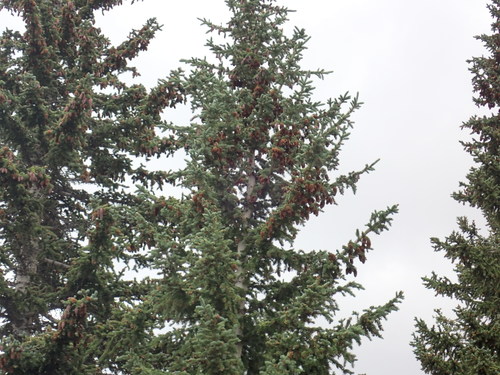
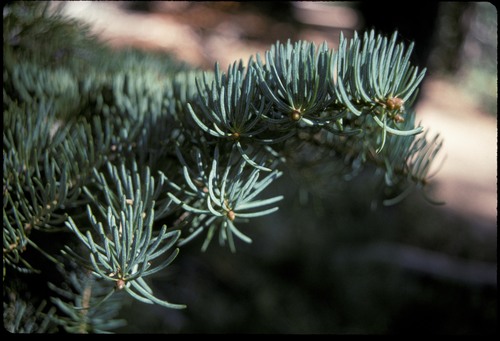
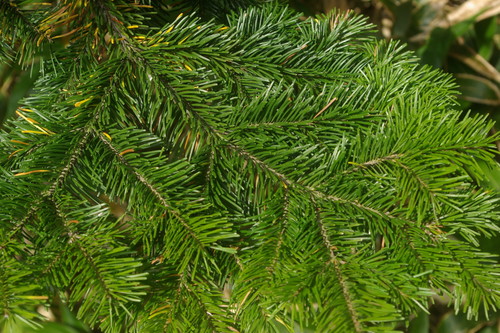
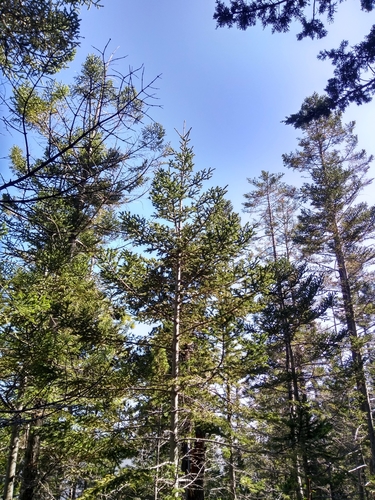
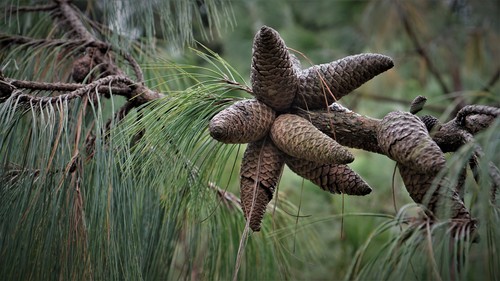
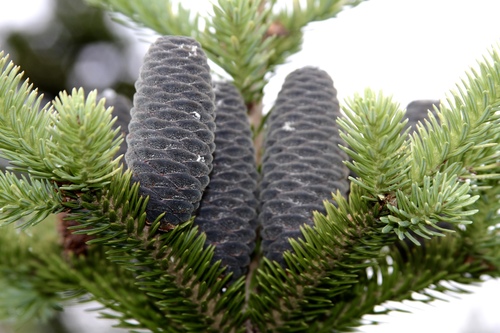
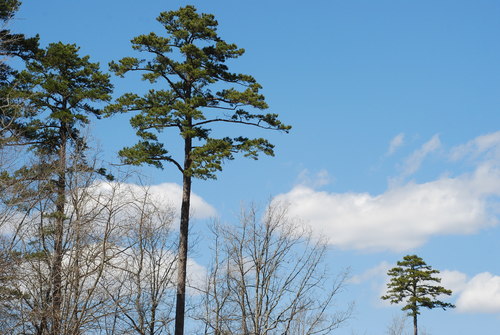
Pinus echinata Mill., commonly called shortleaf pine, is variable in overall form, sometimes growing straight and sometimes crooked, with an irregular crown. It generally reaches heights of 80 to 100 feet (24 to 30 m), but can grow between 100 and 120 feet (30 to 37 m) in optimal growing conditions. Trunk diameter ranges between 1.5 and 3 feet (0.46 to 0.91 m), with an average between 2 and 3 feet (0.61 to 0.91 m). Its leaves are needle-like, borne in mixed fascicles (bundles) of two and three, and measure 7 to 11 centimetres (2+3⁄4 to 4+1⁄4 inches) long. Its cones are 4 to 7 cm (1+1⁄2 to 2+3⁄4 in) long, with thin scales that have a transverse keel and a short prickle. Cones open when they reach maturity but remain persistent on the tree. Shortleaf pine seedlings develop a persistent J-shaped crook close to the ground surface. Axillary and other buds form near this crook, and can initiate new growth if the upper stem is killed by fire or severed. The bark of Pinus echinata has resin pockets, sometimes called pitch patches, that form small depressions less than 1 millimetre (1⁄32 in) in diameter. This feature distinguishes P. echinata from all other pine species within its native range. For comparison, the bark of young loblolly pine is slightly darker, thicker, more furrowed and ridged than young shortleaf pine, and these differences fade as loblolly pines mature; resin pockets remain visible on shortleaf pine and can still be used for identification. The tree's crown is a pyramidal structure that holds several small branches, and does not change much over the tree's lifetime. Shortleaf pine has very strong roots that allow it to withstand high winds, and the species can survive very dry conditions. Its roots can grow to great depths to access water; this deep root growth is thought to be a result of the species' wide range, which exposes it to variable climates. Shortleaf pine can grow in a wide variety of soil types including stiff clay, gravel, and sand. While it is not specialized to any particular soil, it does not thrive in wet or very poorly drained conditions. Shortleaf pine has the largest range of any southern U.S. yellow pine. It grows from the southernmost part of New York, south to northern Florida, and west to eastern Texas and Oklahoma. This pine occupies a variety of habitats, from rocky uplands to wet flood plains. Most shortleaf pines grow in soils with low organic matter in subsurface horizons that are relatively moist. In the Southern Appalachians, it grows at altitudes up to 3,000 feet. It is a component of 85 different forest types across 22 U.S. states. Overall, the volume of shortleaf pines across the U.S. has decreased over time. Shortleaf pine grows in a variety of habitats including hardwood forests and open woodlands. Soil conditions, geology, hydrology, and interaction with fire all influence the community structure where this species occurs. It can grow across a range of hydrological gradients, in locations including sand hills, sandstone hills, slopes, rolling uplands, and mesic lowlands. It occurs in multiple forest types, which vary depending on the classification system used. According to the Society of American Foresters, shortleaf pine is found in eighteen different forest cover types, and it occurs in sixty NatureServe plant communities. Fire plays a key role in the ecology of shortleaf pine, influencing the species' maintenance, structure, composition, regeneration, and establishment. Fire reduces competition from other tree species, which increases shortleaf pine survival, and also prepares soil for regeneration. Shortleaf pine typically responds well to prescribed fire. With frequent fire, the species can grow in savanna environments, which support a highly diverse understory and provide high-quality habitat for the red-cockaded woodpecker. Where their ranges overlap, shortleaf pine frequently hybridizes naturally with loblolly pine and pitch pine. Hybridization with loblolly pine has become more frequent in recent decades, and the resulting hybrids have lower fire tolerance. Shortleaf pine is a commercial source of wood pulp, plywood veneer, and lumber for a range of uses. It is one of the southern U.S. southern yellow pines, and is also occasionally called southern yellow pine or shortstraw pine. Its wood is used commercially to make flooring and beams. Historically, it was used to build ship masts, and during the American Revolutionary War and into the 1800s, it was a major timber source for home construction. Shortleaf pine is well known for lightwood, also called fatwood: resinous wood that is valued for lighting fires, as it can produce a strong fire with just a single kitchen match. Turpentine from this tree's resin has been used to treat kidney and bladder conditions. It can be used as a rub or steam bath for rheumatic infections, and can also be taken internally. It has been used to treat respiratory illnesses including influenza, coughs, colds, and TB. It can also be applied to the skin to treat burns, sores, wounds, and boils.