About Pinus discolor D.K.Bailey & Hawksw.
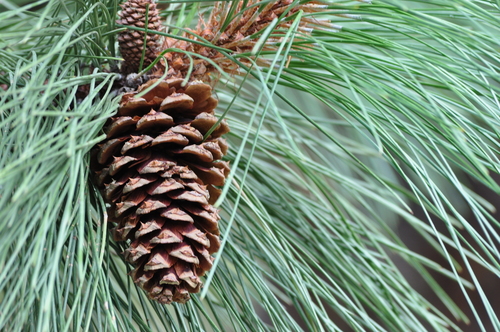
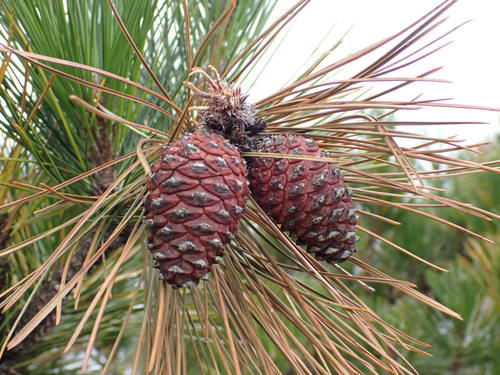
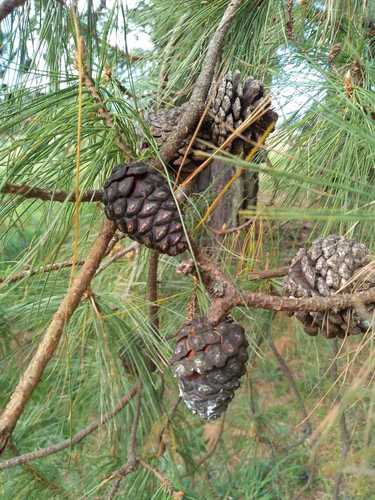
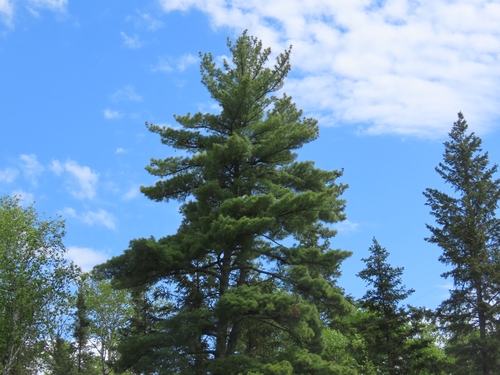
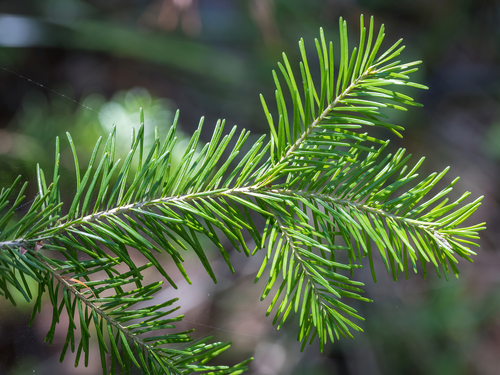
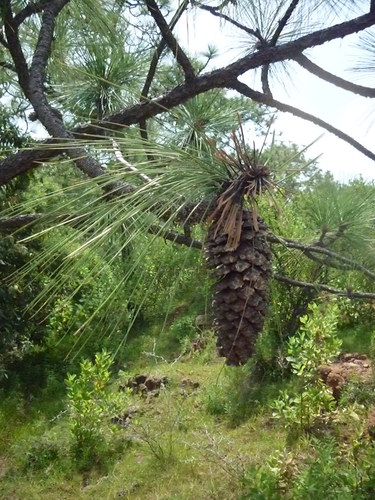
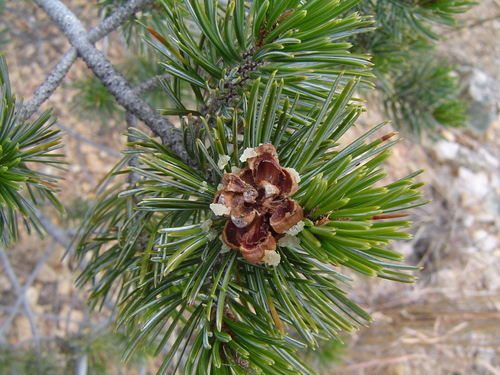
Pinus discolor (previously referred to as Pinus johannis) is a small to medium-sized plant, often growing as just a shrub. It reaches 4–10 metres (13–33 ft) in height, with a trunk diameter of up to 50 cm (20 in). Its bark is grey-brown, thin, and scaly at the base of the trunk. Its leaves, called needles, grow in mixed fascicles of three and four; they are slender, 3–6 cm (1+1⁄4–2+1⁄4 in) long, and range in color from deep green to blue-green, with stomata restricted to a bright white band on the needle inner surfaces. Its cones are globose, 2–4 cm (3⁄4–1+1⁄2 in) long and 2–3 cm (3⁄4–1+1⁄4 in) broad when closed. They are green when young, ripening to yellow-brown after 16–18 months, and have only a small number of thin, fragile scales, typically 6 to 12 fertile scales. When mature, the cones open to 3–5 cm (1+1⁄4–2 in) broad, and retain seeds on the scales after opening. The seeds are 9–12 mm (11⁄32–15⁄32 in) long, with a thick shell, a white endosperm, and a vestigial 1–2 mm (1⁄32–3⁄32 in) wing. These seeds are dispersed by the Mexican jay, which plucks the seeds out of open cones. The jay uses the seeds as a major food resource, stores many seeds for later use, and some unused stored seeds are able to grow into new trees. This pine is nearly dioecious: almost all individuals produce only male cones or only female cones, and trees do not change their sex expression over time. The edible pine nut seeds of this species are collected to a small extent in Mexico. The bright white-glaucous inner surfaces of its needles make it a very attractive small tree, suitable for planting in parks and large gardens.