About Pinna nobilis Linnaeus, 1758
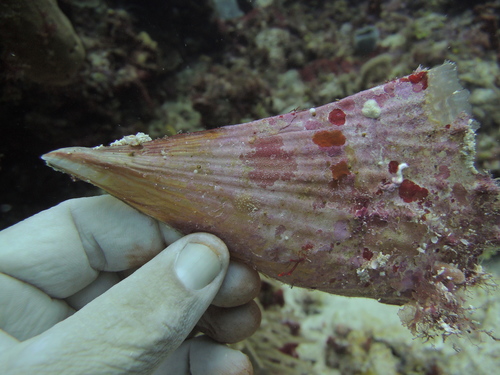
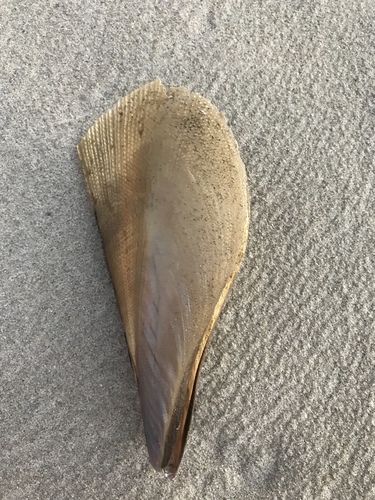
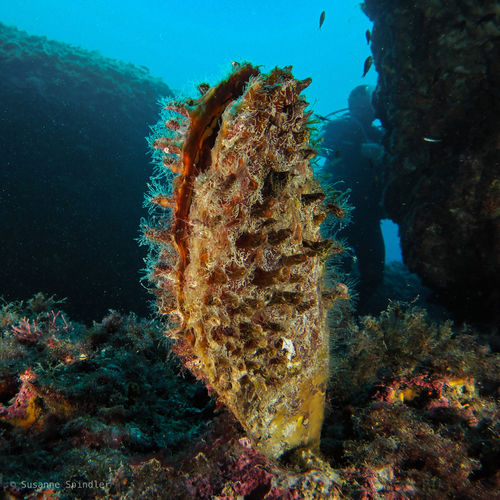
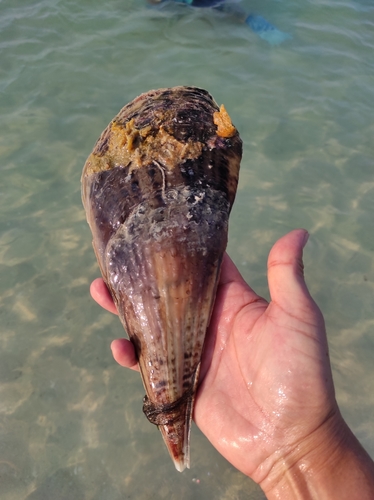
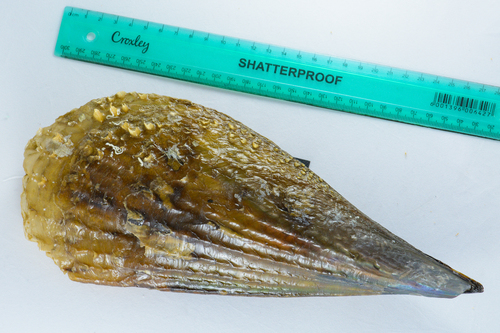
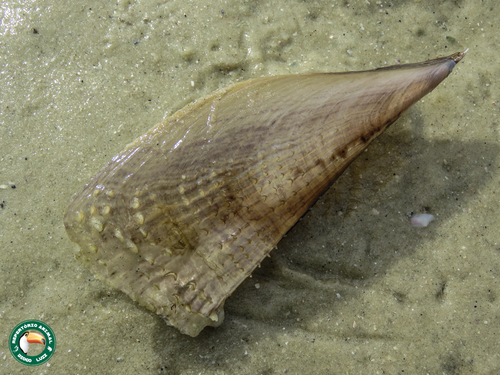
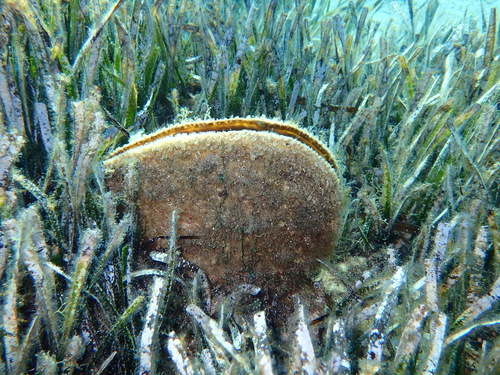
Pinna nobilis Linnaeus, 1758, commonly known as the noble pen shell, has a bivalve shell that typically measures 30 to 50 centimeters (12 to 20 inches) long, and can grow up to 120 centimeters (4 feet) in length. Its shell shape varies depending on the region it inhabits. Like all pen shells, it is relatively vulnerable to pollution and shell damage. This species attaches itself to rocks with a strong byssus made of many silk-like threads. These threads were historically used to make cloth. The organism secretes these fibers from its byssus gland; they are composed of keratin and other proteins, and can grow up to 6 centimeters (2 and 1/2 inches) long. The interior of the shell is lined with bright, brilliant mother-of-pearl. Like other members of the genus Pinna, Pinna nobilis hosts symbiotic crustaceans that live inside its shell. For this species, the symbiotic guests are the shrimp Pontonia pinnophylax and the pea crab Nepinnotheres pinnotheres. It is thought that when the shrimp detects a threat, it warns the host clam, possibly by retracting its claws or even pinching. The clam then closes its shell. Research has shown that the shrimp has a filter-feeding diet similar to its host, and the relationship between the host and symbionts is likely mutualistic. This species is endemic to the Mediterranean Sea. It lives offshore at depths between 0.5 and 60 meters (2 and 200 feet), and can be found buried beneath soft-sediment areas such as fine sand and mud, which are often anoxic.