About Pinna carnea Gmelin, 1791
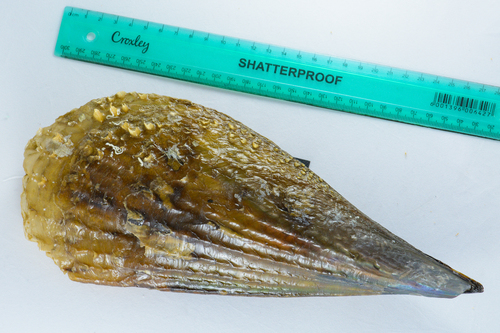
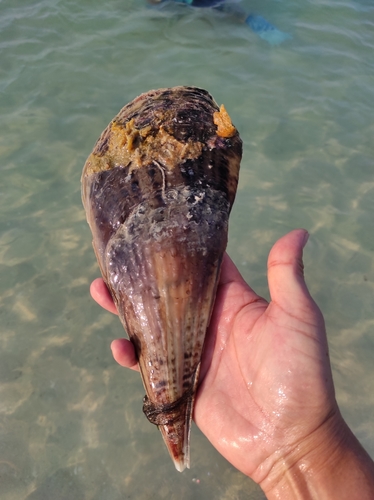
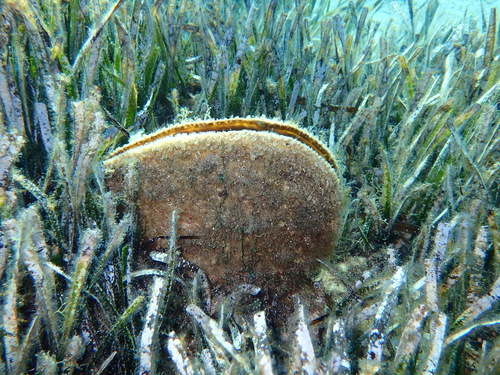
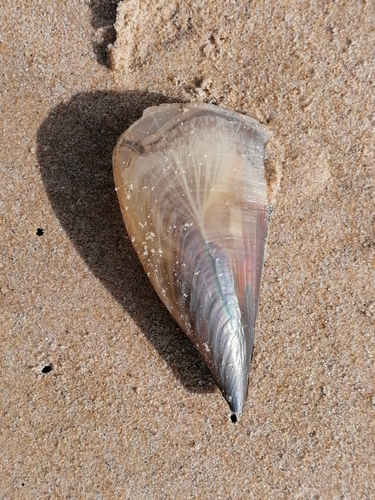
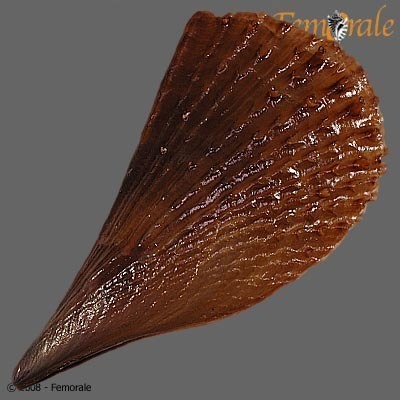
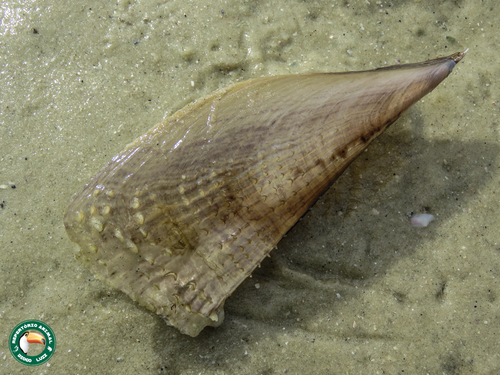
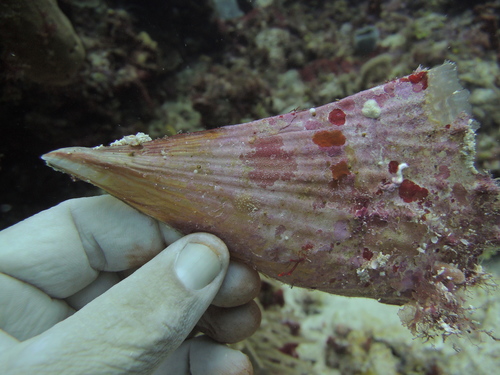
Description: The amber pen shell, Pinna carnea, is a bivalve with a pair of long, thin translucent valves held together by ligaments that run along the entire dorsal side. This species has a triangular shape, with 8 to 12 low ribs that radiate from the pointed anterior end (also called the umbo) to the large posterior edge. The exterior of the shell is typically a dull orange, amber-like color, and may have fragile, scale-like spines that often erode away over time. The anterior end is usually buried in the seabed and attached by byssal threads, while the wider, gaping posterior end extends above the sea floor to allow filter-feeding. Algae such as Lobophora variegata and invertebrates including sponges and encrusting corals often grow on the exposed part of the shell, and can camouflage the amber pen shell very effectively. Distribution and habitat: The amber pen shell occurs in coastal western Atlantic waters, ranging from southern Florida across the Caribbean and the West Indies to Brazil. It is a benthic species that most commonly grows in medium to coarse sand, mixed substrata of sand, gravel and rock, fine calcareous sandy mud in eelgrass meadows (Zostera spp.), and sandy substrates in turtle grass (Thalassia spp.) meadows and other mixed-species seagrass habitats. It is usually found at depths between 2 and 15 metres (6 feet 7 inches to 49 feet 3 inches). Reproduction and settlement: The amber pen shell is a hermaphrodite, with its gonads producing both sperm and egg cells. Its larvae are planktonic and drift along with ocean currents. The shells of planktonic larvae are transparent, pale golden or amber in color, and triangular in shape. Larvae will likely settle in any location where they can attach via byssal threads. After settlement and byssal attachment, the larval shell erodes quickly, so few adult amber pen shells retain any remains of their larval shell stage. Once settled, amber pen shells are sessile and stay in the same location for the rest of their lives, though individuals that become dislodged are able to re-establish themselves in a new spot.