About Pinctada radiata (Leach, 1814)
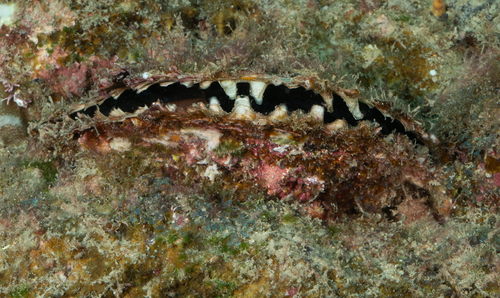
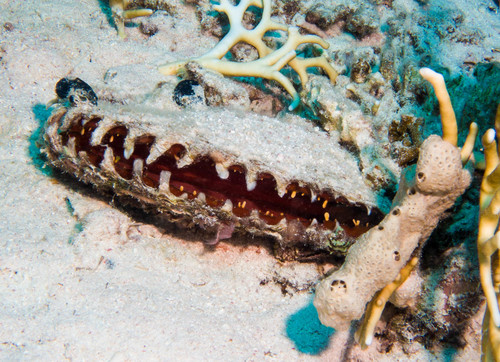
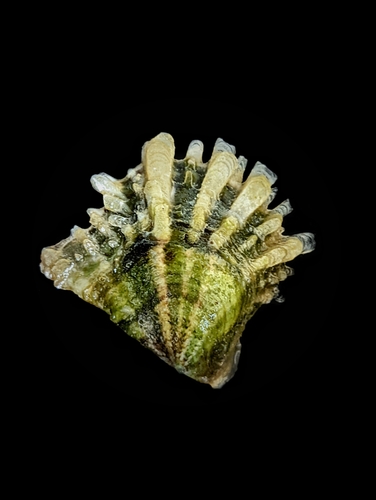
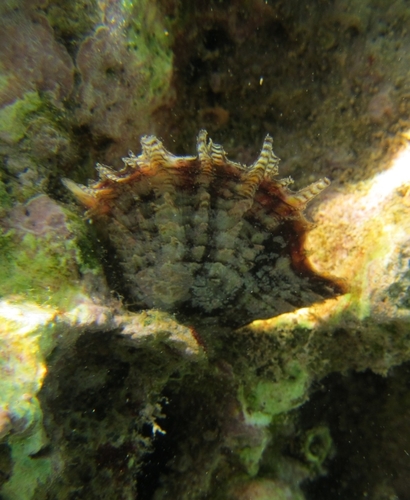
Pinctada radiata is most often between 50 and 65 millimetres (2.0 and 2.6 in) in length, and can grow as large as 106 millimetres (4.2 in). Its shell is thin, compressed, roughly square-shaped, and marked with growth rings and ribs on its outer surface. This species displays varied coloration: the exterior is typically brown or red, with a pearly interior and light brown edge, and less frequently can be green or bronze. Darker brown or red rays may mark the shell, forming darker patches along the margin. Shell shape and structure also vary widely between individuals, which has led to this species being given many synonyms. It is very similar to Pinctada margaritifera, and has occasionally been misidentified as that species. Pinctada radiata is hermaphroditic, and the timing of its reproductive maturity is influenced by temperature. Pinctada radiata is found across the entire Indo-Pacific region and the Mediterranean Sea, and can live at any depth, though it is most commonly found between 5 and 25 metres (16 and 82 ft). It attaches to a range of hard surfaces, including rocks and shipwrecks. This species is common throughout its entire range, which may be due to its adaptations to subtropical environments and its ability to survive in polluted water. It was originally native only to the Indo-Pacific, but was unintentionally introduced to the Mediterranean via the Suez Canal, and also intentionally introduced there for aquaculture purposes. Humans harvest Pinctada radiata for pearls, especially in Qatari waters where this species can make up as much as 95% of the total oyster catch. It is also fished for its edible meat and lustrous shell. It has also been studied as a potential bioindicator for heavy metals in waters of the Persian Gulf.