About Pinctada margaritifera (Linnaeus, 1758)
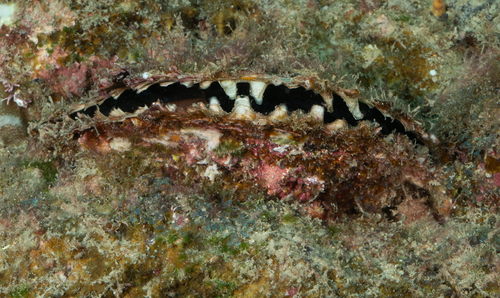
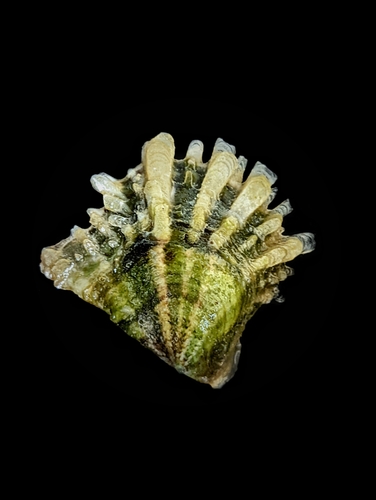
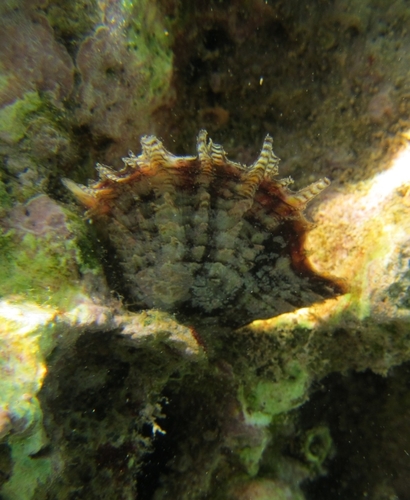
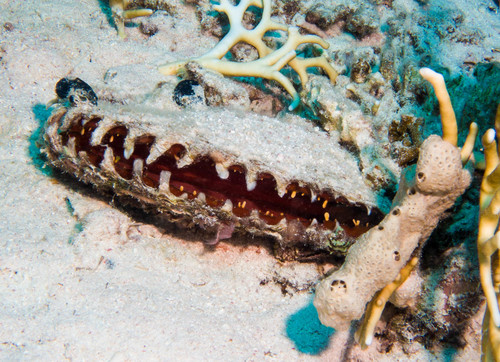
The common name of Pinctada margaritifera refers to the black coloring along the margins of the shell's interior. Externally, the shell is dark grayish brown or green, and white spots are commonly found across its surface. Adult individuals of this species usually grow to between 20 and 25 centimetres (7.9 and 9.8 in) in height. A distinctive trait of this species is that its hinge has no teeth. The genera Pinctada and Pteria are often confused. For Pinctada, the hinge is long and straight, the long end of the shell forms a right angle with the hinge, and the left valve is slightly deeper than the right valve. For the genus Pteria, the shell's width is much longer than its height, and the angle of the hinge is prominent and pronounced. Pinctada margaritifera has a wide range across the Persian Gulf, Red Sea, Sudan, Papua New Guinea, Australia, French Polynesia, Cook Islands, Indonesia, Andaman and Nicobar Islands, the southwestern part of the Indian Ocean, Japan, the Pacific Ocean, and various coastal locations of India. P. margaritifera lives in coral reef areas. As suspension feeders, these pearl oysters can thrive in conditions with low levels of phytoplankton. They attach themselves to barnacles and other hard substrates via a byssus. They grow well in intertidal and subtidal zones, at depths ranging from low tide up to 75 meters. Their habitats are typically oligotrophic and have low turbidity. Many other species, including sponges, hydroids, polychaetes, lamellibranchs, amphipods, decapods, echinoderms, and fishes, usually have close associations with P. margaritifera pearl oyster beds.