About Pimpinella major (L.) Huds.
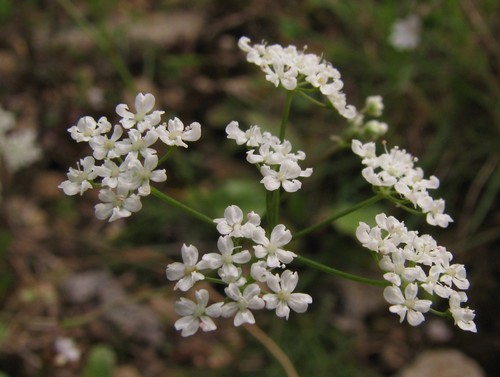
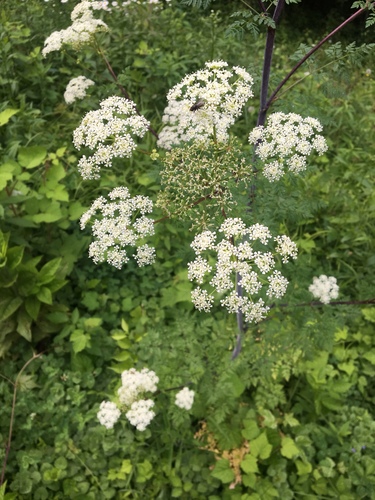
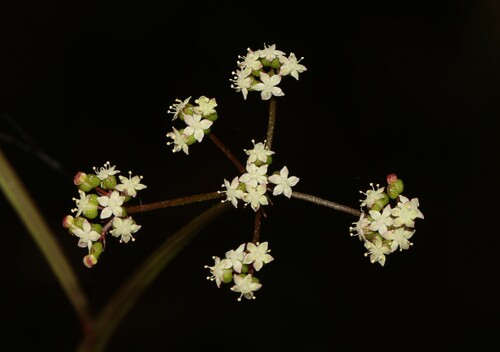
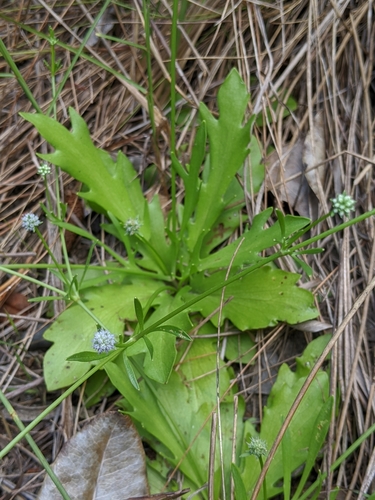
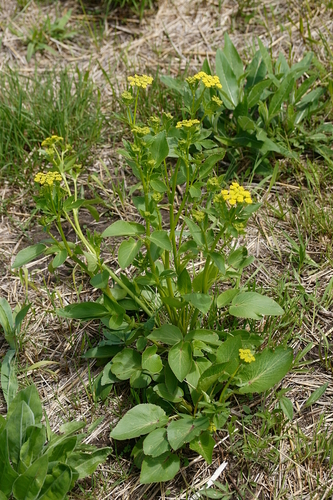
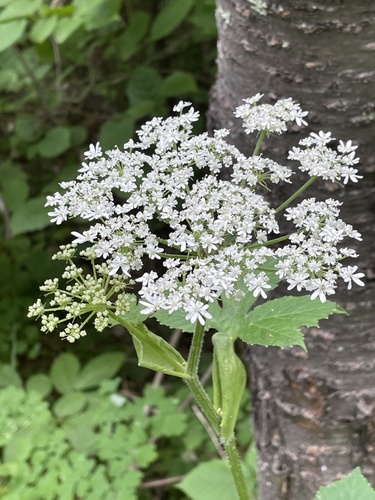
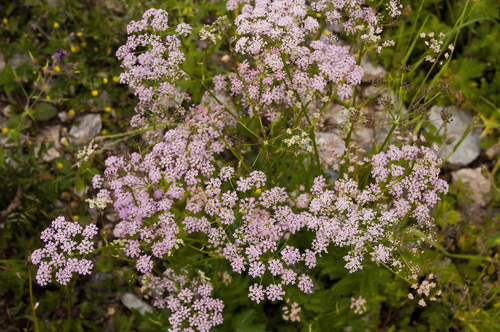
Pimpinella major (L.) Huds. grows to an average height of 30–100 cm (10–40 in). Its stem is hollow, deeply grooved, mostly hairless, and typically branched and leafy. The leaves are dark green, slightly glossy, ovate or oblong, short-stalked, feathery in texture, more or less deeply cut, and usually pointed. Basal leaves have petioles that measure 20–60 cm (8–20 in) long. Its inflorescence has a diameter of 50–60 mm (2.0–2.4 in). The flowers, which are usually hermaphroditic, range in color from white to bright rose or soft pink, and are clustered in umbels with 11 to 16 stalks. In its native range, the flowering period runs from June to August. The fruits are ovoid, and 2–3 mm (0.08–0.1 in) long.
Pimpinella major is widespread across central Europe and the Caucasus, and is naturalized in North America. It grows in burned forests, clearings, herb-rich areas, meadows, waysides, and wooded pastures. It favors nutrient-rich substrate, as well as chalk and limestone soils, and occurs at altitudes from 0 to 2,300 m (0–7,546 ft) above sea level.
In Austrian traditional medicine, the roots of Pimpinella major have been used internally as a tisane, mixed with milk, or included in herbal liqueurs, to treat respiratory tract disorders, fever, infections, colds, and influenza.