About Pimephales vigilax (Baird & Girard, 1853)
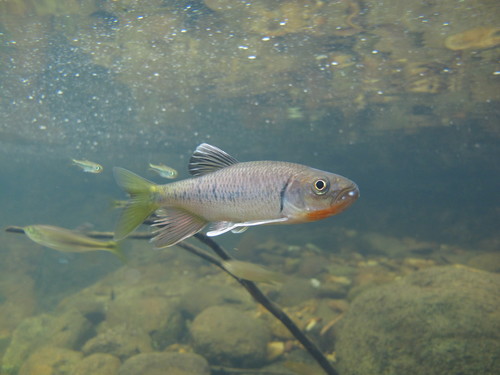
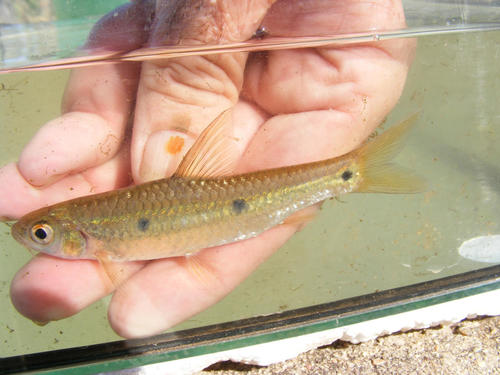
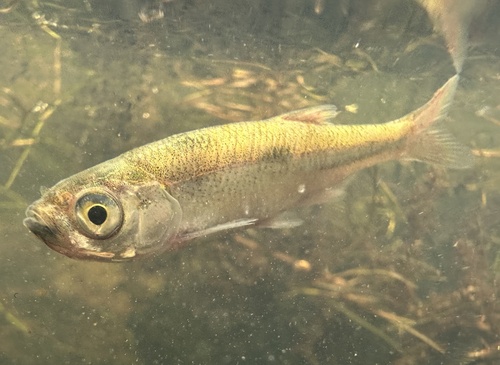
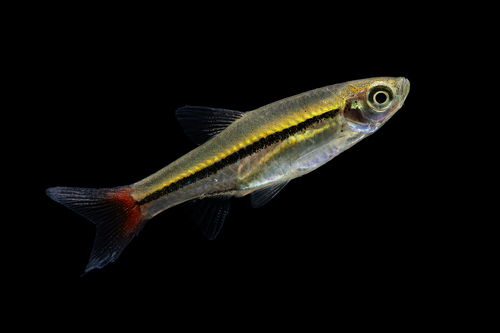
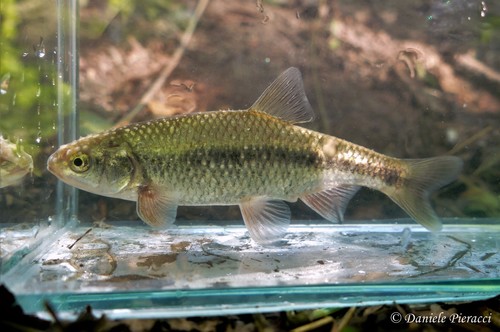
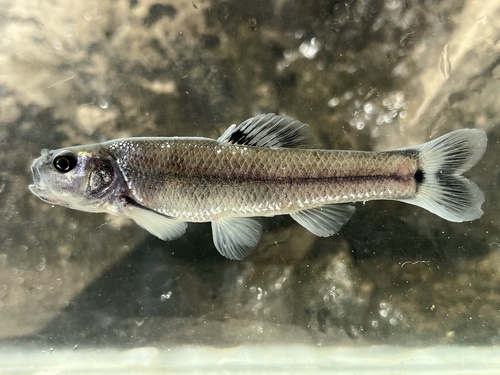
Pimephales vigilax, commonly called the bullhead minnow, is a small cylindrical fish. It has an average length of 5.7 centimetres (2.2 in) and reaches a maximum length of 9.2 centimetres (3.6 in). Males are dark, with colors ranging from brown and olive to tan, and have two light vertical lines along their sides, while females have plainer, less patterned coloration. It has a rounded snout, with eight pharyngeal teeth split equally between the two sides of the pharynx. A dark spot is present on the anterior section of the dorsal fin. The forked tail has rounded ends, and a dark spot sits at the base of the tail fin at the level of the lateral line. Its single dorsal fin holds eight rays, has an anterior dark spot, and has no spine. The anal fin holds seven rays and has no spine; pelvic fins are positioned abdominally, and no adipose fin is present. The leading edge of the pectoral fins is dark. The lateral line dips downward along its anterior section. The bullhead minnow is primarily native to the southern United States, where it occurs in the Gulf Coast and Mississippi River Basin, including the Mobile River basin, connected backwaters, streams, and rivers. It occurs most often in water with little to no current, such as river pools, and is counted among the 324 fish species found in Tennessee. The species has been introduced to many areas outside its native range: the Osage River and Kansas River systems in Kansas, the Missouri River in Nebraska, the Rio Grande in New Mexico, Lake St Marys in Ohio, the James River drainage in South Dakota, the Red River, Canadian River and Rio Grande in Texas, and the upper Fox River and possibly the Menomonee River in Wisconsin. These introductions most likely happened when the fish were carried by anglers and released as unused bait. It has also been introduced to Utah, where it lives in two closed drainages within the Great Basin: the Sevier River, where it was accidentally introduced when channel catfish (Ictalurus punctatus) imported from Texas were released in the 1950s, and Lake Utah.