About Pilularia globulifera L.
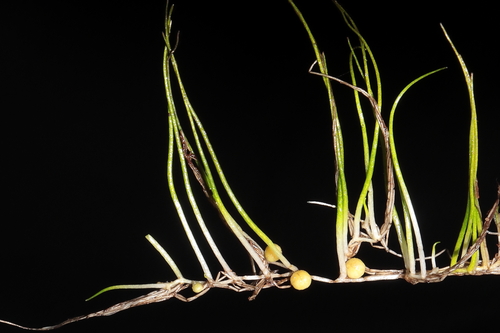
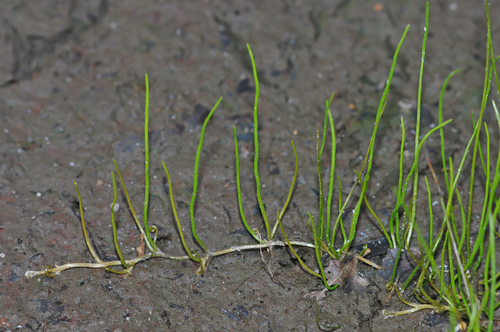
Pilularia globulifera L., commonly called pillwort, produces slender, cylindrical, rush-like fronds that can reach up to 8 centimetres (3.1 inches) tall. Young fronds are shaped like croziers as they unfurl. It forms a pea-shaped, 4-chambered sporocarp around 3 millimetres (0.1 inches) in diameter. Each chamber develops from a modified leaf, and holds multiple sori that contain both megasporangia and microsporangia. This species is heterosporous as a result of this structure.
Pillwort grows on silt and mud at the margins of lakes, ponds, and other watercourses that stay submerged for at least part of the year. In the United Kingdom, it is commonly found growing alongside associated species including water celery (Apium inundatum), marsh pennywort (Hydrocotyle vulgaris), and lesser spearwort (Ranunculus flammula). It grows well in open, bare locations with little competition in its typical habitats, which include shallow water along pond margins and poached wet grassland. Pillwort population sizes vary greatly from year to year. It sometimes disappears from a known site, only to reappear there again after many years. Cleaning out a ditch can actually trigger the species to grow back at a site it had previously vanished from.
This is a rare species, with populations declining because wetland habitats are being lost to eutrophication and drainage. Despite this trend, it is currently classified as Least Concern on the IUCN Red List. In the United Kingdom, it is protected under the Wildlife and Countryside Act 1981 across most of the country, where it is now classified as vulnerable. It is listed on Schedule 8 of the Wildlife (Northern Ireland) Order 1985, but it has not been recorded in Northern Ireland since 1970, and may now be extinct in the province. It is listed as threatened or endangered in nearly every country where it naturally occurs. Pillwort can be cultivated in bog gardens, or grown as a marginal aquatic plant in garden ponds.