About Pieris virginiensis Edwards, 1870
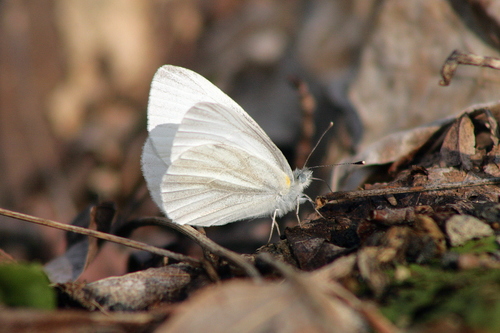
Pieris virginiensis, commonly called the West Virginia white, is a butterfly species found in North America. Its current range includes the Great Lakes states, the Appalachian region from New England to Alabama, southern Ontario, New York, Pennsylvania, and southwestern New England. It was originally native to the east coast of the United States and central Canada, and became established in new North American habitats starting in the 1870s. This butterfly is most often found in moist, shaded deciduous forests. It is generally sedentary, rarely crosses open habitat, and stays within shaded forest areas, which limits its natural dispersal ability.
This is a small, semi-transparent white butterfly. It usually has no yellowish tinge, but may show tawny or gray coloring, with hazy brown or pale gray markings along the underside of the hindwing veins. Only one generation is produced each year. Adults are active for a short period of about one month, typically in early spring, emerging in April or May even when springs are dry. However, if the spring is dry, the species often does not survive, as it depends on healthy native host plants for egg-laying.
In Alabama, two species in the genus Cardamine—Cardamine diphyla and Cardamine concatenata—are documented host plants for this butterfly. Populations of Pieris virginiensis are currently declining. The primary threats to the species include forestry activities, development, and the highly invasive plant Alliaria petiolata, commonly known as garlic mustard. Garlic mustard invades the butterfly's native habitat, and females confuse this invasive plant with their native host plant Cardamine diphylla, which negatively impacts the species' populations.