About Pieris oleracea (Harris, 1829)
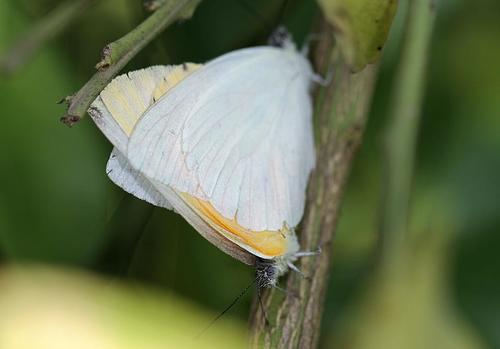
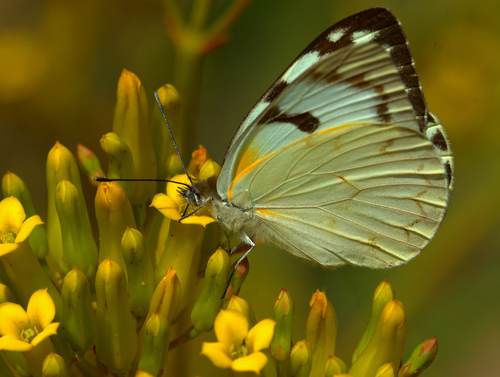
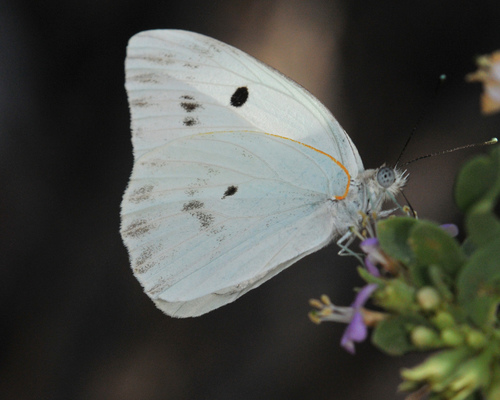
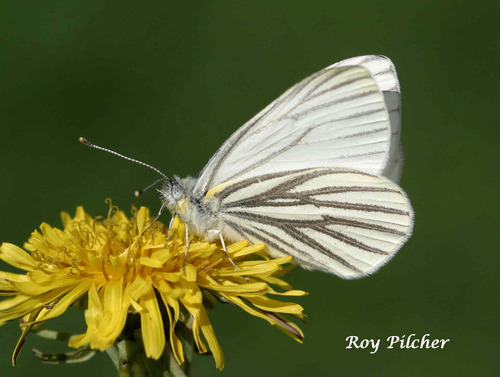
Pieris oleracea, commonly known as the mustard white, is a butterfly of the Pieridae family native to much of Canada and the northeastern United States. This nearly all-white butterfly typically inhabits wooded areas or open plains. It has two distinct seasonal forms that set it apart from other similar species, and populations are shifting further north due to climate change. As its common name suggests, both adult and larval P. oleracea feed primarily on plants in the mustard family, Brassicaceae. This species is threatened by the rapid, monoculture-forming spread of the invasive plant Alliaria petiolata, which is toxic to P. oleracea larvae. P. oleracea populations are currently declining. While the butterfly may be slowly adapting to garlic mustard, this adaptation may not happen quickly enough to guarantee its survival, due to the invasive plant's aggressive growth and ongoing encroachment from human development. Its specific epithet oleracea is Latin for "related to vegetables or herbs", and is a form of the word holeraceus (oleraceus). This species occurs mainly across Canada and parts of the northeastern United States, often found alongside other very similar species in specific localities. Its range spans Canada from Newfoundland to Alberta and the Northwest Territories; in Alberta, it is only found in the foothill regions. In British Columbia, populations occur in the northern and central parts of the province. In Nunavut, it is found specifically near the coast at Coppermine and Arviat. A single isolated population has been recorded in the Cypress Hills of Saskatchewan. In the United States, it occurs in the New England states and the Great Lakes area. Mustard white butterflies inhabit prairies, stream banks, and moist deciduous areas. In spring, they are most commonly encountered in moist habitats including woodlands or open fields. P. oleracea is a biovoltine species, meaning it typically produces two broods per season. The flight period of adults varies based on the region they inhabit. Most areas see two flights: one in June and a second in late July. In southern Ontario, however, populations can produce three to four generations per year, while in areas further north, only one generation has been observed each year.