About Pieris mannii (Mayer, 1851)
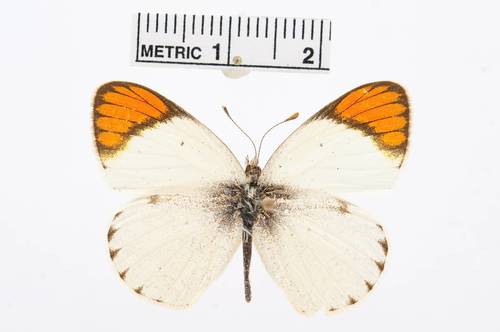
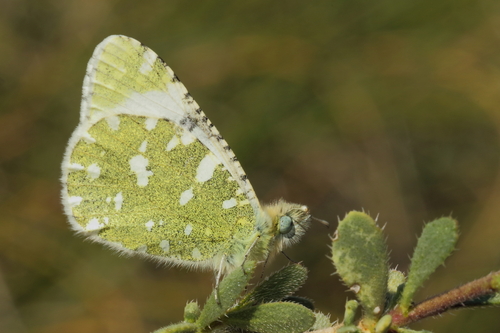
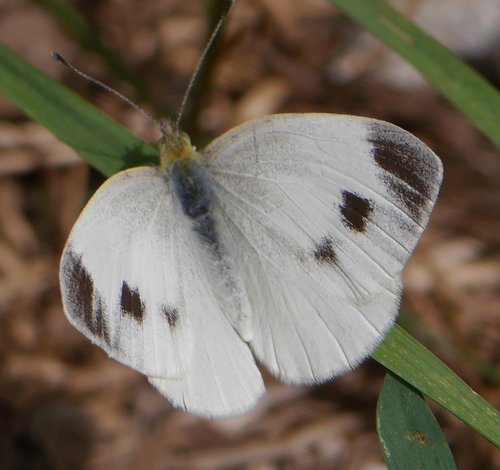
In Seitz's treatment, Pieris mannii (manni Mayer) and rossii Stef (Pieris rapae var. rossii Stefanelli, 1900) are treated as forms of a separate species, consistent with observations Count Emilio Turati communicated to the authors by letter. The larva of this species has not been described yet, but the shape of the pupa is considered sufficient proof that the insect is a distinct species. Unlike the pupa of Pieris rapae, which is greenish, the pupa of P. mannii is whitish with a reddish tint, and has no dark dots or other markings. The spring form manni differs from the spring generation metra of P. rapae in that its underside is much lighter, and its black markings, especially on the upper side, are much more extended. The summer form rossii Stef. (20 d) is not much lighter on the underside than manni, and its upper side black markings are only slightly reduced, though they are dusted with white. This species occurs in Italy, the Tyrol, and South-Western Europe. According to Elwes, it also occurs in Tura; based on material examined by the authors, it is found in the Taurus, and it probably also lives in other districts of Asia. The butterfly flies from March to October, depending on its location. For identification, when compared to Pieris rapae, the cabbage pest small white, P. mannii has a larger forewing spot that is squarish or even crescent-shaped rather than round. The apex marking extends further down the outer margin, reaching as far as the spot. Until relatively recently, P. mannii was confined to South Europe, Asia Minor, Morocco and Syria. It was first found north of the Alps in France and Germany in 2008, and has since gradually extended its range in these two countries. It was first sighted in southern Netherlands in 2015, Calais in 2019, and Suffolk, UK in 2025.