About Phytolacca dioica L.
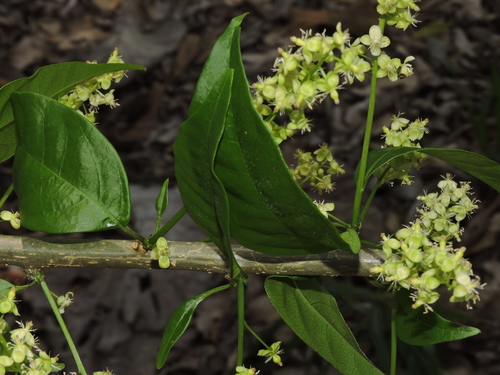
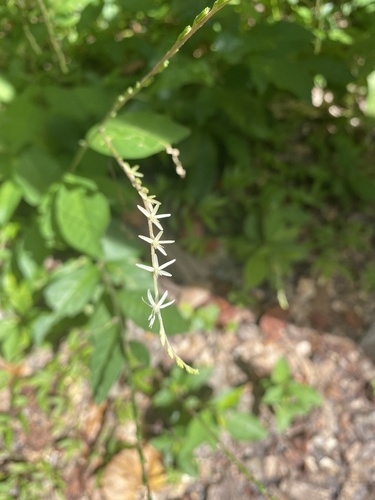
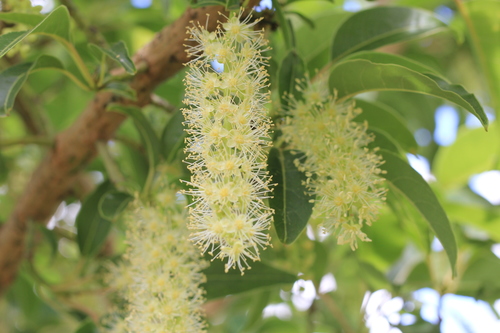
Phytolacca dioica, commonly called ombú in Spanish and umbu in Portuguese, is a large evergreen tree belonging to the pokeweed family Phytolaccaceae. It is native to the Pampas region of South America. As indicated by its scientific specific epithet, this species is dioecious, meaning male and female flowers grow on separate individual plants. Its flowers are pollinated by the butterfly Doxocopa laurentia. The tree has an umbrella-shaped canopy that spreads to a diameter between 12 and 15 meters (39 to 49 feet), and it can reach a mature height of 12 to 18 meters (39 to 59 feet). All above-ground growth emerges from a large tuberous caudex that can grow up to 14 meters (46 feet) in girth. Because the species evolved from herbaceous ancestors, its trunk forms through anomalous secondary thickening rather than producing true wood. As a result of this structure, the ombú grows quickly, and its wood is soft and spongy enough to cut with a knife. These traits make it suitable for bonsai art, as it can be easily manipulated to achieve the desired form. The tree's sap is poisonous, so cattle do not graze on it, and it is not affected by locusts or other pests. For the same poisonous property, its leaves are sometimes used as a laxative or purgative. It is a cultural symbol of Uruguay, Rio Grande do Sul, Argentina, and gaucho culture; its canopy is easily visible from a distance, and provides comfortable shelter from both sun and rain. This species is grouped in the same genus as North American pokeweed. It is also cultivated as a shade tree in Southern California. In South Africa, where it is widely planted, the ombú has been classified as a category 3 minor invasive species.