About Phyteuma nigrum F.W.Schmidt
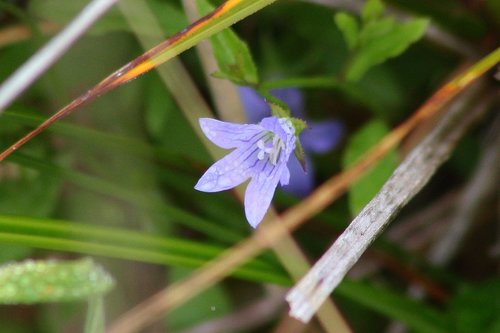
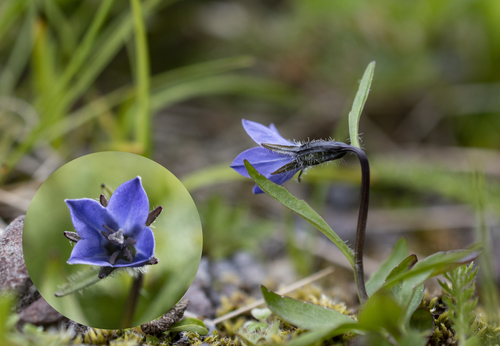
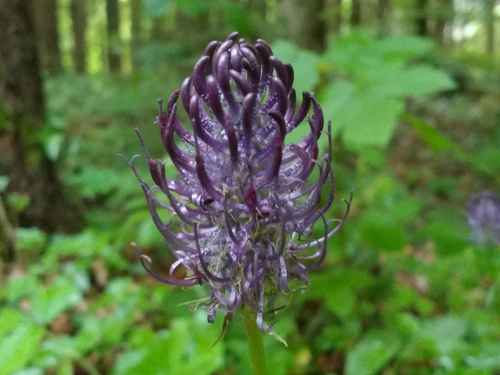
Phyteuma nigrum, commonly called black rampion, is a perennial herbaceous plant. It grows to a height between 20 and 70 centimeters. Its leaves are lanceolate, with a width approximately half their length. Basal leaves usually have a shallow, heart-shaped blade base, and a leaf edge that is notched to toothed. Lower stem leaves are ovate and narrowed at the base, while middle and upper stem leaves have only reduced blades. Phyteuma nigrum occurs primarily in northern Europe, covering all of Scandinavia: Norway, Denmark, Sweden, and Finland. Some populations also grow in Switzerland. Although it is now predominant in Scandinavia, it was not originally native to Norway and Denmark; it was reportedly introduced to Norway in 1908 and to Denmark in 1959. Pollination of Phyteuma nigrum is primarily done by animals, with bumblebees being the main pollinating animal. Pollen limitation contributes to low fertility in this species, as it does in other plants with relatively small populations such as Phyteyma spicatum. Phyteuma nigrum is a relatively rare species, and its small population size makes it harder to successfully fertilize and disperse the next generation of sporophytes, which are Phyteuma nigrum embryos. Smaller populations receive less frequent visits from pollinators. Reduced pollination, and thus reduced fertilization, leads to less competition between offspring, which negatively affects the fitness of future generations of Phyteuma nigrum.