About Physocephala tibialis (Say, 1829)
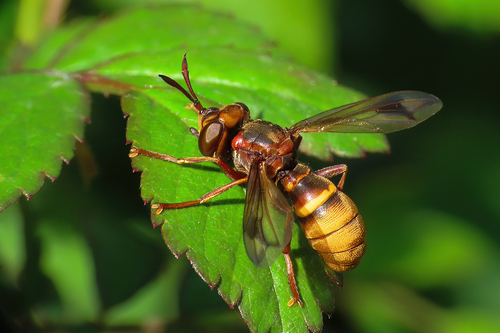
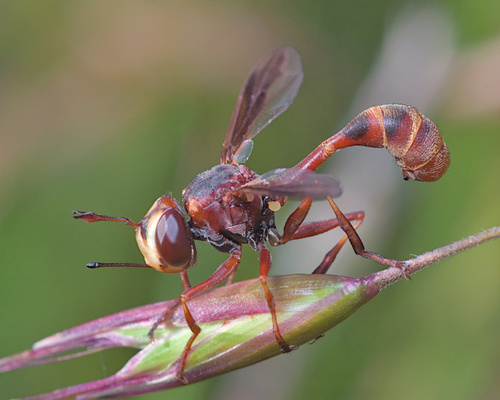
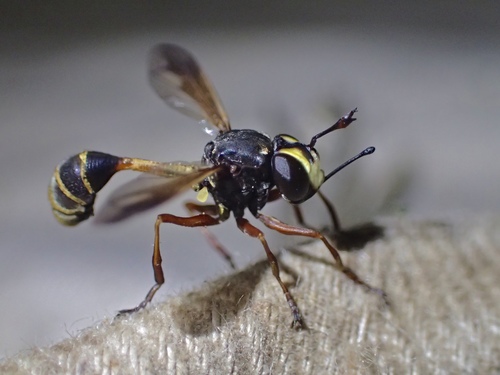
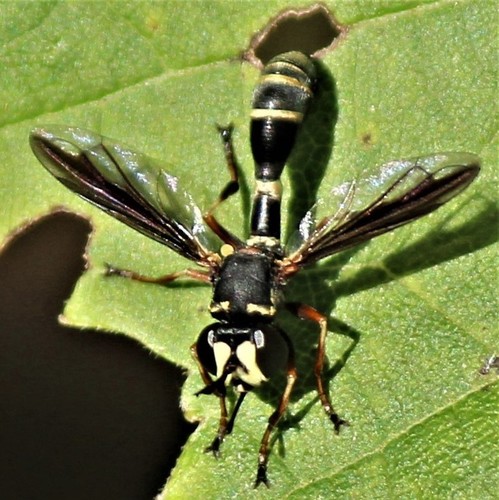
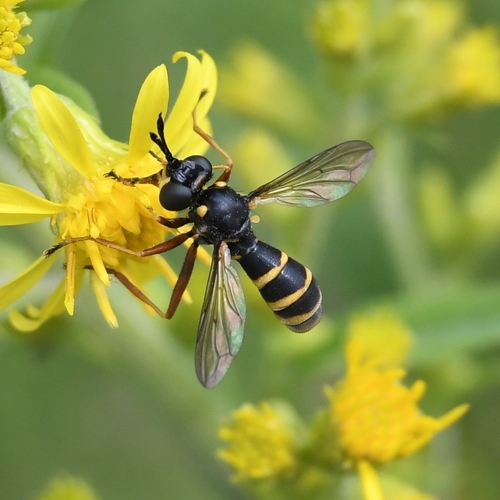
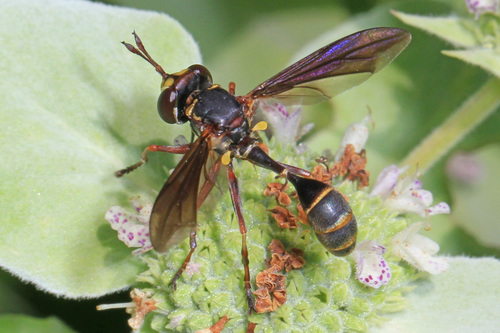
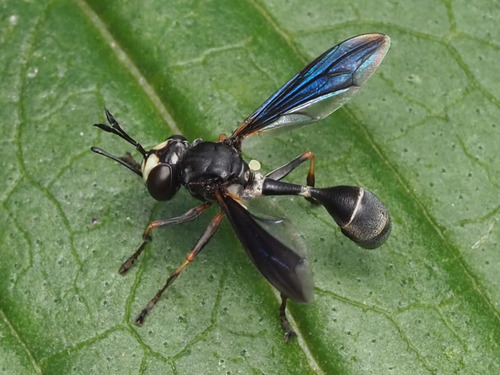
Physocephala tibialis (Say, 1829) is a species of thick-headed fly belonging to the family Conopidae. It is found in North America, primarily along the east coast of the eastern United States. Its range extends north to Massachusetts, south to Florida, and west to Wisconsin and Texas. This species is most often found near flowering plants, likely because its host bee species can be found pollinating these plants. It does not show a preference for any specific plant species, and attacks host bees at many different types of flowering plants. Adult P. tibialis are primarily black, with a yellow face and thin white stripes on the abdomen. P. tibialis is a parasite of many different bee species. Adult female flies lay a single egg inside the abdomen of their bee host, which is a Hymenopteran. After the larva hatches inside the host, it feeds on the host's nutrients to grow and develop through three instar stages. As it grows, it comes to take up most of the space inside the host's abdomen. When the host eventually dies, the larva forms a puparium around itself and pupates inside the dead host's corpse. After an extended period of pupation, an adult P. tibialis emerges from the host bee's corpse. Bees parasitized by P. tibialis larvae often develop altered behaviors, including induced grave digging and changes in flower preference.