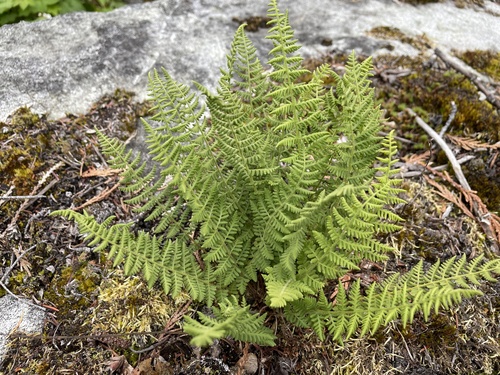
About Physematium scopulinum Trevis.
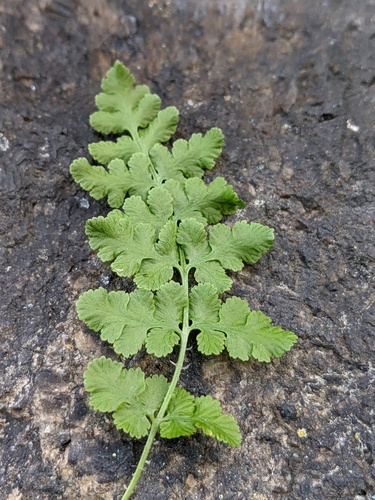
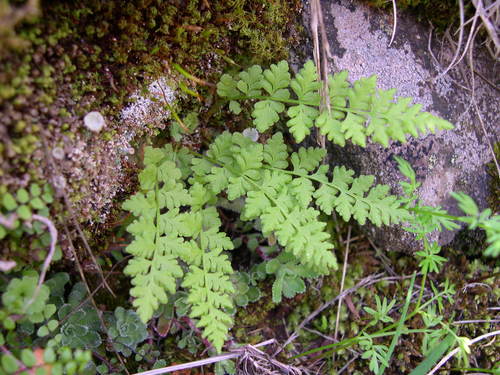
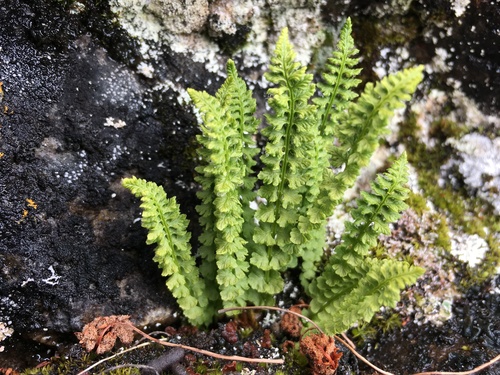
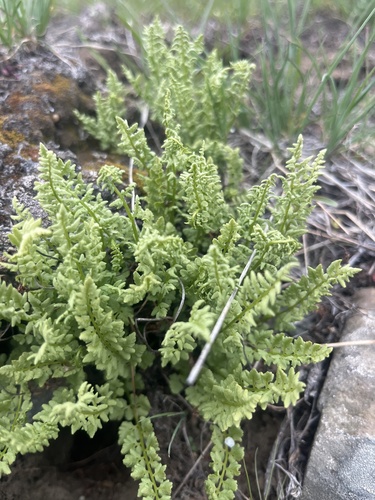
Physematium scopulinum grows from a short, scaly rhizome, and produces twice pinnate fronds. Most of these fronds grow upright, reaching 10 to 30 cm long and up to 8 cm wide, with a medium to pale green color. The pinnae and rachis are sparsely to moderately covered with sharply protruding long hairs that do not lie flat against the stem; some of these hairs have a globular gland at their tip. This hairy rachis is the feature that distinguishes Physematium scopulinum from the similar species Physematium oreganum. The upper, adaxial side of the rachis is grooved. Small round sori grow on the underside of the pinnae, and are initially partly covered by a narrowly lobed indusium. New leaves of this fern develop with circinate vernation, meaning they emerge tightly curled. Physematium scopulinum is widespread in mountain areas near the west coast of North America, ranging from southern Alaska to southern California, and also grows in the Rocky Mountains from British Columbia to Colorado. Isolated populations of this species also occur in northeastern North America. It is most commonly found in sunny rocky habitats, including rock crevices, talus slopes, and rock ledges.