About Physalis virginiana Mill.
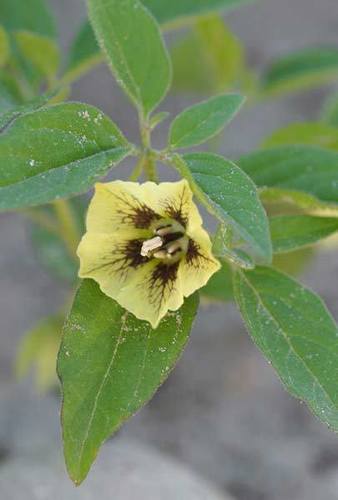
Physalis virginiana Mill., commonly called Virginia groundcherry, is most often encountered in native areas from early July through September. It prefers moist, slightly sandy soil with light grazing activity. The plant base typically produces one to six hairy stems, which are forked with ascending branches. Its leaves are pale green and lance-shaped. Small greenish flowers grow along each stem. After flowering, the flowers develop into a five-angled, bladder-like structure that encloses the plant’s fruit, which measures half an inch in diameter. Virginia groundcherry grows to a height of 8 to 12 inches.
Native Americans have a long tradition of using various Physalis species to treat eye infections, open wounds, and gastrointestinal symptoms. Today, Physalis species are researched for their potential health benefits. One specific study focused on P. virginiana to investigate its antibacterial properties, with the goal of identifying chemical compounds from the plant that could be used to develop antibiotics. In the study, researchers applied plant extracts to twelve different bacteria cultures. They found that P. virginiana extracts inhibited the growth of eight of the twelve tested bacteria strains. The researchers identified withanolide as the chemical compound in the plant responsible for inhibiting bacteria growth. The entire plant demonstrated bacteria-inhibiting properties; shoot extracts produced the strongest effect, while root extracts produced the weakest.