About Physalis longifolia Nutt.
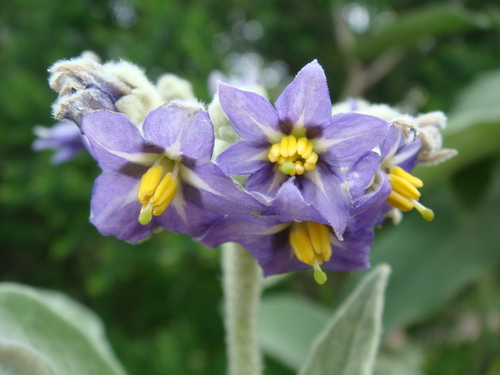
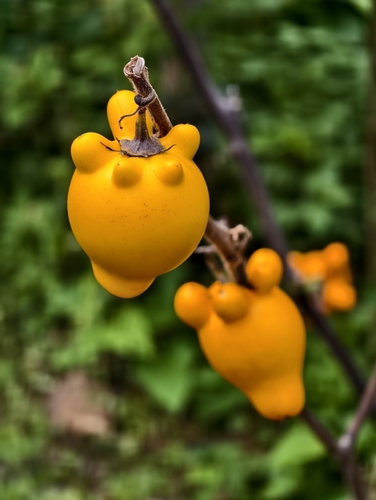
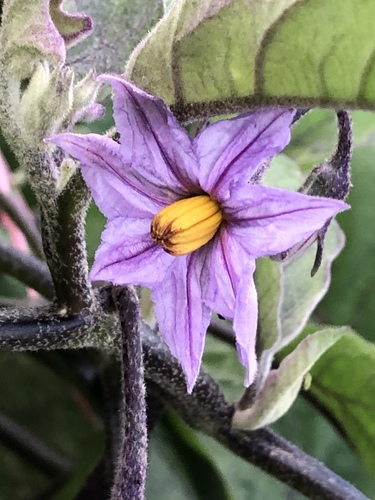
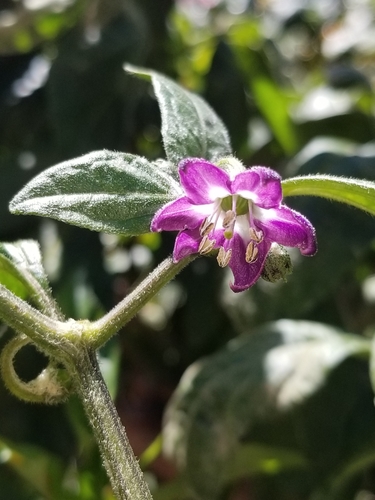
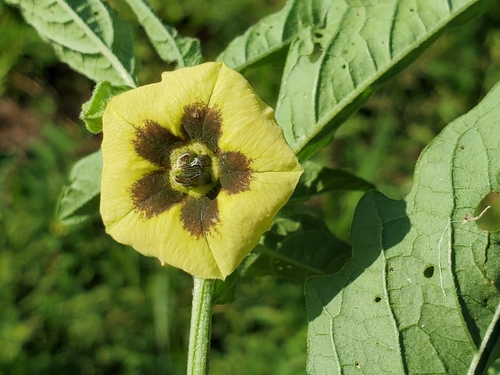
Physalis longifolia Nutt., commonly known as common groundcherry, longleaf groundcherry, and wild tomatillo, is a species of flowering plant in the nightshade family, Solanaceae. It is native to North America, specifically eastern Canada, most of the continental United States, and northern Mexico. It has also been recorded as an introduced species in parts of the United States outside its original native range, and it grows as an occasional noxious weed in some areas such as California. This species is a perennial herb that grows 20–60 cm (7.9–23.6 in) tall. Its somewhat oval leaf blades measure 4–7 cm (1.6–2.8 in) long, and are borne on petioles. Flowers grow in the leaf axils. The bell-shaped corolla is up to 2 cm (0.79 in) wide, yellow with purplish markings around its center. The papery husk covering the berry can reach up to 3.5 cm (1.4 in) long and has ten veins. There are two recognized varieties: P. longifolia var. longifolia and P. longifolia var. subglabrata (a synonym for P. subglabrata). The yellow-green fruit of this species is edible. Fresh fruit has been described as "tasting like an effervescent, under-ripened strawberry", while dried berries taste like "a cross between a raisin and dried cranberry." Native American groups used this plant for food. Puebloan peoples called its fruits charoka and shuma charoka, and ate them either fresh or cooked. The Zuni people refer to this plant and its relative Physalis hederifolia as Ke’tsitokia, and are thought to have used the plants in similar ways. Zuni women grew this species in household gardens. Its tomato-flavored berry was boiled and ground with onion, coriander, and chilis to make a dish that was considered a delicacy. The fruit was also dried and mixed into flour to make bread. Today, the Zuni use the closely related common tomatillo (P. philadelphica) in a sauce recipe that originated from traditional dishes that once used these wild species. P. longifolia var. subglabrata has been listed in Louisiana government compendia as a restricted taxon thought to be hallucinogenic, but this classification is likely inaccurate. Trials show P. longifolia is easy to grow and produces flavorful fruit.