About Physalaemus albonotatus (Steindachner, 1864)
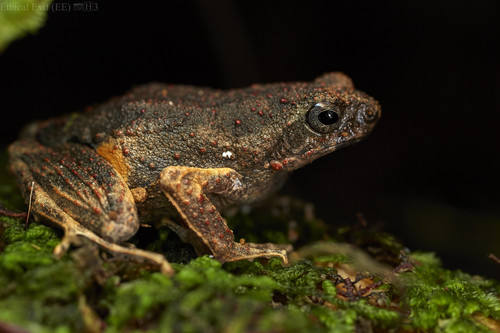
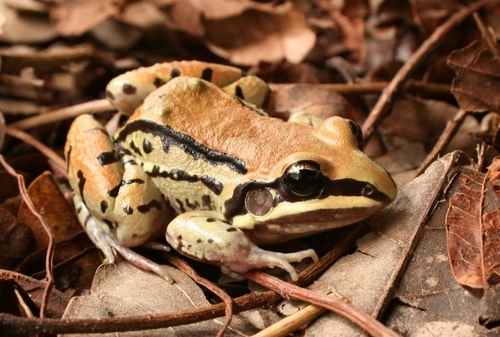
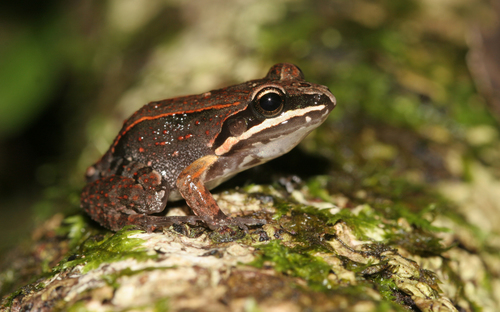
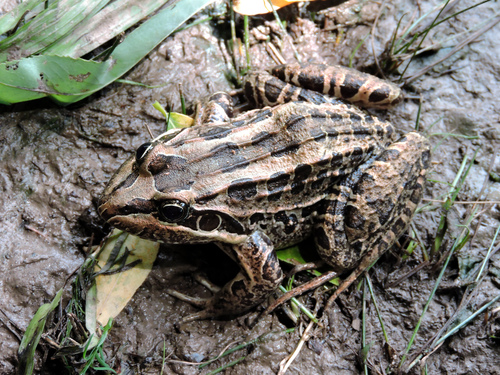
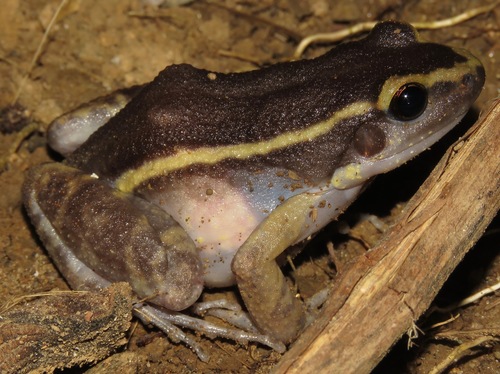
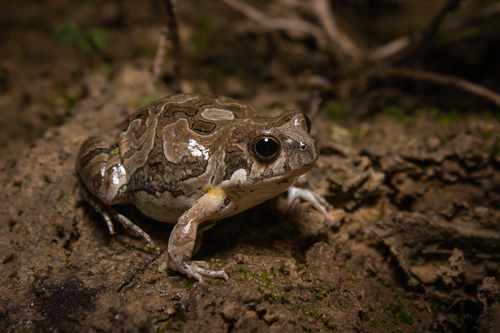
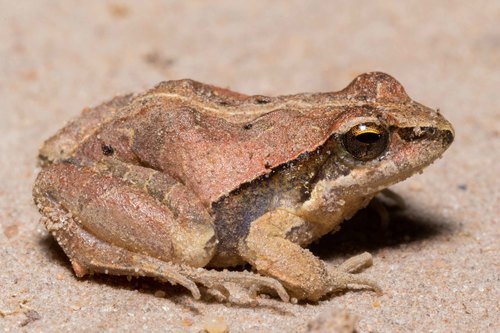
Physalaemus albonotatus, commonly known as the menwig frog, is a species of frog in the Leptodactylidae family. Its confirmed distribution includes the Mato Grosso and Mato Grosso do Sul states of Brazil, Paraguay, Chacoan Argentina, and Bolivia. This frog lives on the ground near semi-permanent water bodies, temporary water bodies, or flooded grasslands; flooded grasslands serve as its breeding habitat, and it also breeds in temperate ponds and roadside ditches. It adapts very well to human disturbance and is not a threatened species. A study conducted in Bodoquena, Mato Grosso do Sul, southwestern Brazil, found that Physalaemus albonotatus is a continuous breeder that reproduces throughout the wet season. Males call to attract females from the margins of ponds and flooded areas, while hiding in vegetation or in small depressions like footprints. The mean clutch size for this species is approximately 1500 eggs. Females and males are similar in overall size: females have a mean snout–vent length of 30.2 mm (1.19 in), ranging from 26 to 34 mm, and a mean body mass of 2.2 g, while males have a mean snout–vent length of 29.7 mm (1.17 in), ranging from 27 to 32 mm, and a mean body mass of 2.4 g. Ovaries account for approximately 27% of a female's total body mass, and fecundity increases as female body size increases.