About Physa fontinalis (Linnaeus, 1758)
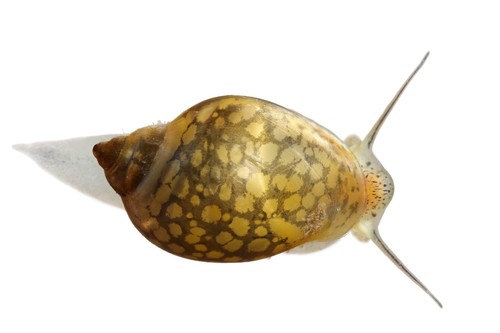
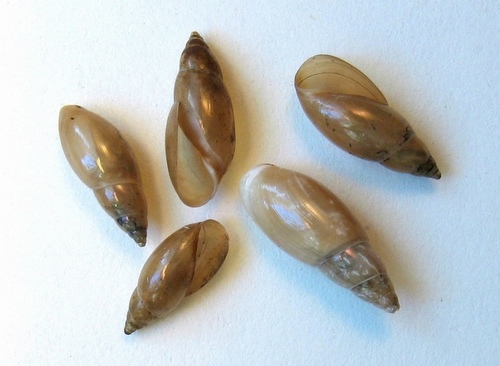
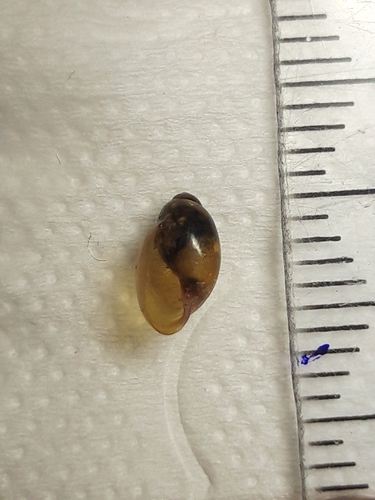
This species, Physa fontinalis (Linnaeus, 1758), has a shell that measures 7 to 12 mm in height and 4 to 7 mm in width. Its spiral contains four to five whorls, and the final whorl makes up more than three-quarters of the total shell height; the apex of the shell is rounded. The shell has very thin walls, is translucent, shiny, and pale horn in color. The aperture is wide and oval, and the edge of the shell mouth is very thin and brittle. The soft body of the snail ranges in color from brown to black. The edges of the mantle extend outward as finger-like lobes that cover the outer surface of the shell. Its tentacles are long, slender, and cylindrical, with eyes positioned at the base of each tentacle. The foot is long and thin. Bladder snails like this species are hermaphrodites.
Physa fontinalis has a wide distribution across the western Palaearctic, but confusion with similar similar species means the eastern boundary of its range is not confirmed. Its overall range is likely Eurasian Boreo-temperate. Some species currently recognized in North America may actually be the same species as Physa fontinalis; if this is true, the full range could be Circumpolar Boreo-temperate. Confirmed occurrences of the species have been recorded in the Czech Republic, Slovakia, Germany, Poland, the Netherlands, Croatia, and other regions.
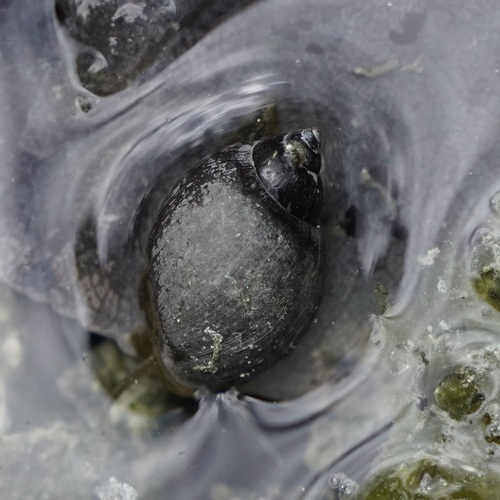
In terms of ecology, Physa fontinalis is an opportunistic species that inhabits streams, rivers, ponds, lakes, springs, canals, and irrigation ditches. It can live in both nutrient-poor habitats and habitats with abundant vegetation, and may also be found in moderately polluted water bodies.