About Phyllosticta ampelicida (Engelm.) Aa
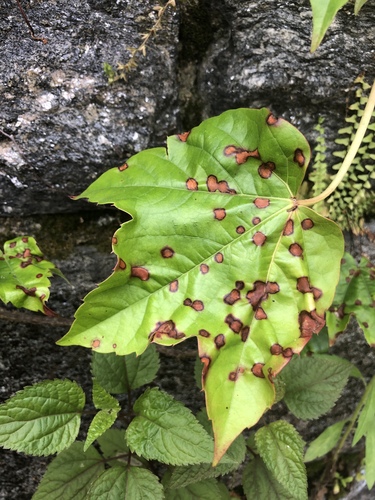
Grape black rot is a fungal disease caused by the ascomycetous fungus Guignardia bidwellii; its anamorphic (asexual) stage is classified as Phyllosticta ampelicida (Engelm.) Aa. This disease infects grape vines during periods of hot, humid weather. It originated in eastern North America, and now occurs in parts of Europe, South America, and Asia. In warm, humid climates, grape black rot can lead to complete crop loss, and it is virtually unknown in regions that have arid summer conditions. The disease gets its name from the black fringe that borders expanding brown patches that form on grape leaves. Grape black rot can infect all green parts of the grape vine, including shoots, leaves, fruit stems, tendrils, and fruit. Damage to fruit is the most harmful impact of the disease. Grape black rot affects many grape growers across the world, so understanding the disease's life cycle and the environmental conditions that favor it is important for effective disease management. Multiple different control methods are available to use after an infection has occurred.