About Phylloscopus sibillatrix (Bechstein, 1792)
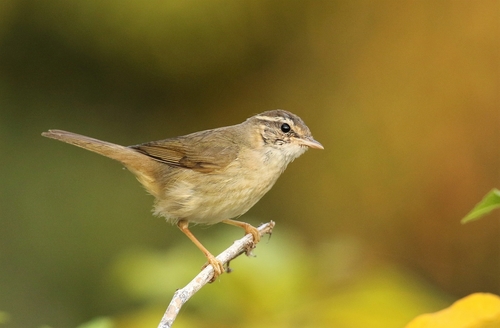
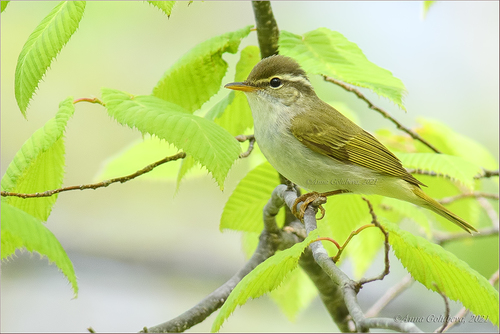
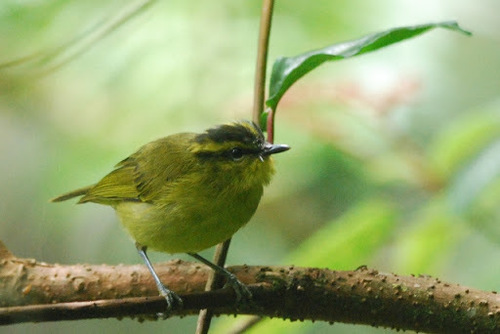
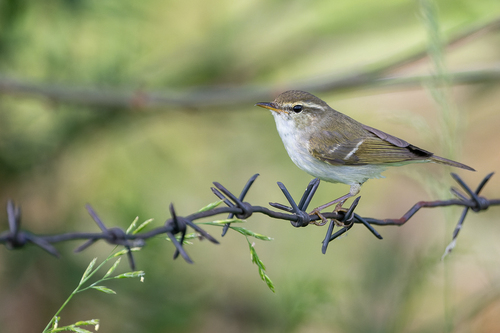
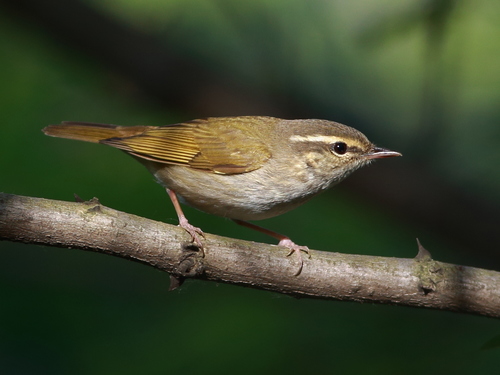
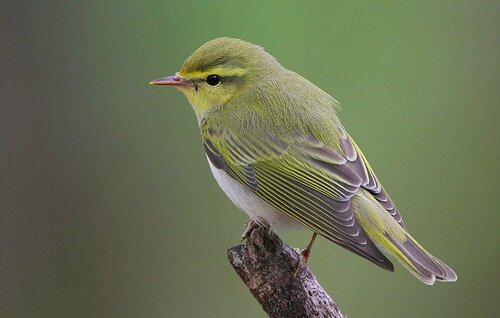
The wood warbler (scientific name Phylloscopus sibillatrix (Bechstein, 1792)) measures 11–12.5 cm in length. It is a typical leaf warbler in appearance, with green plumage on its upperparts, white plumage on its lower underparts, and a lemon-yellow breast. It can be told apart from similar species like the common chiffchaff (P. collybita) and willow warbler (P. trochilus) by its yellow supercilium, yellow throat and upper breast, pale edges to its tertial feathers, longer primary projection, and a shorter but broader tail. This species is a summer visitor to the United Kingdom, where it can be seen from April through August, and its population has declined in the UK in recent years. It is rare in Ireland, where a very small but apparently stable breeding population is located in County Wicklow. Multiple factors tied to forest structure, including slope, total forest cover, proportion of broad-leaf forest, canopy height, and forest edge length, all affect the site occupancy rates of this declining forest species. For this reason, conservation measures are needed to create and maintain the forest structure that wood warblers prefer. The species also shows a preference for forest habitat during the non-breeding season, but this habitat is declining in its wintering areas such as Ghana. Despite this reduction in forest habitat, the total number of wood warblers has not changed, as the species is able to use degraded habitats including well-wooded farms. However, further loss of trees will probably have a negative effect on this species in the future. The wood warbler inhabits open but shady mature woodlands, such as stands of beech and sessile oak, with sparse ground cover suitable for nesting. It builds a dome-shaped nest close to the ground in low shrub. It lays six or seven eggs in May, and may raise a second brood in a breeding season. Like most Old World warblers, this small passerine bird feeds on insects. For wood warblers breeding in the primeval habitat of Białowieża Forest, Poland, mammals are the main nest predators, particularly medium-sized carnivores. These predators mostly hunt nests at night, using sound or smell to locate them. As a result, nest survival drops as the nesting cycle progresses, most likely because older, louder chicks are easier for predators to detect.