About Phylloscopus borealis (J.H.Blasius, 1858)
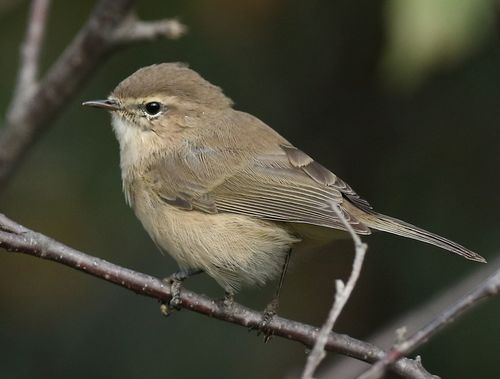
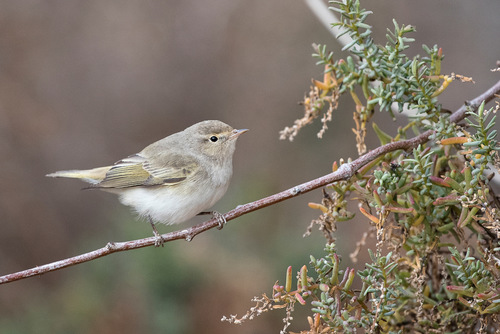
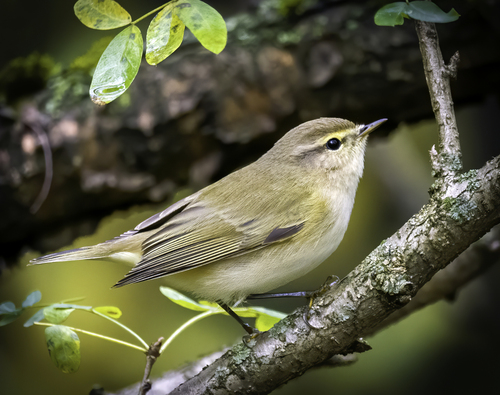
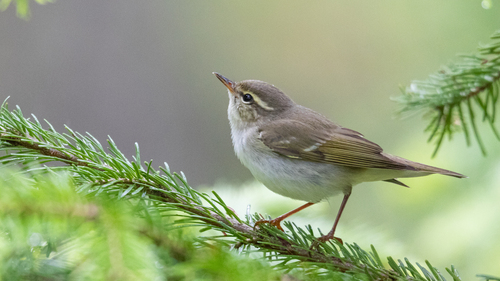
The Arctic warbler, with the scientific name Phylloscopus borealis, is a widespread leaf warbler that breeds in birch or mixed birch forest near water across Fennoscandia and the northern Palearctic. It has established a breeding foothold in North America in Alaska. This warbler is strongly migratory, and the entire population winters in southeast Asia. Because of this travel route, it has one of the longest migrations of any Old World insectivorous bird. Populations that breed in Kamchatka, the Kuril Islands and Japan were traditionally included within this species, but genetic and vocal evidence strongly supported splitting these into separate species. They are now all considered distinct: the Kamchatka leaf warbler is found in Kamchatka, Hokkaido and the Kuril Islands, and the Japanese leaf warbler occurs in Japan except for Hokkaido. The Arctic warbler builds its nest on the ground in a low shrub. Like most Old World warblers, this small passerine bird feeds on insects. In appearance, it is a typical leaf warbler, with greyish-green upperparts and off-white underparts. Its single wing bar sets it apart from most similar species, with the exception of the greenish warbler, Phylloscopus trochiloides. The Arctic warbler is larger than the greenish warbler, and has a heavier, dagger-like bill, with a dark tip on the lower mandible. Its song is a fast trill. This species appears as an autumn vagrant in western Europe, and occurs annually in Great Britain. Between 1958 and 2001, there were 225 confirmed sightings of Arctic warblers in Britain. The genus name Phylloscopus comes from Ancient Greek: phullon means "leaf", and skopos means "seeker", derived from skopeo meaning "to watch". The specific epithet borealis comes from Latin, and means "northern".