About Phyllonorycter oxyacanthae (Frey, 1855)
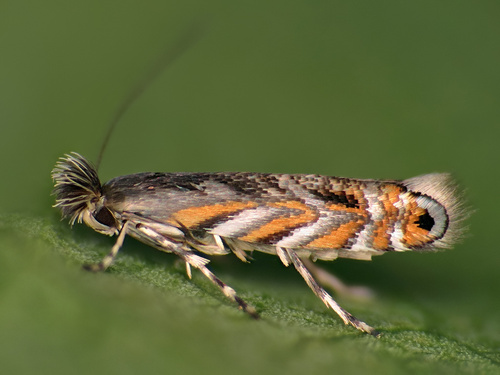
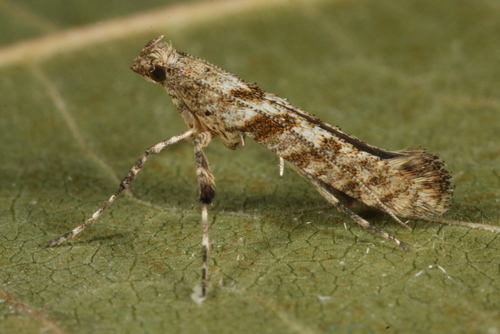
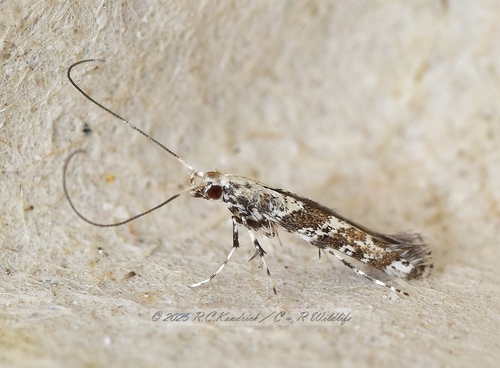
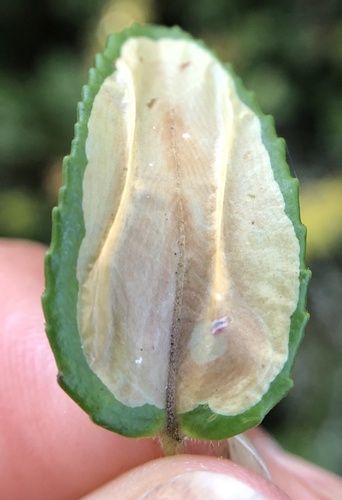
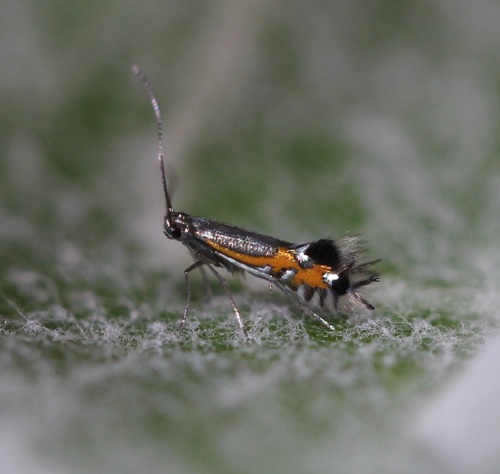
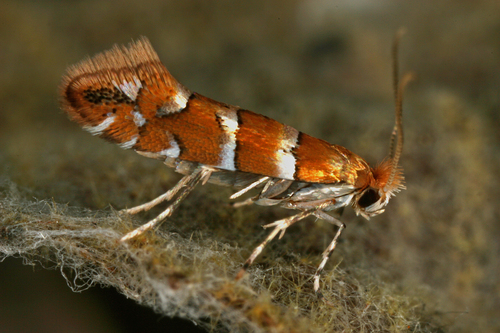
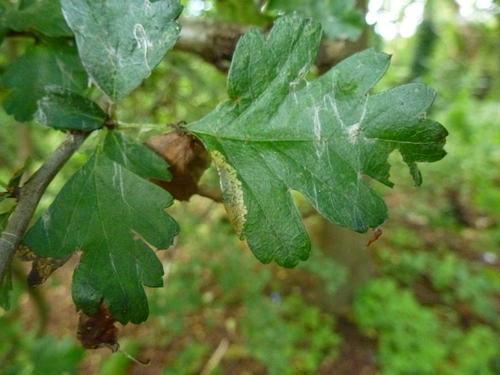
This species has the scientific name Phyllonorycter oxyacanthae (Frey, 1855). Its wingspan measures 6–8 mm. The posterior tarsi bear dark fuscous spots. Forewings range from golden-brown to dark brown; a white median streak runs from the base to near the middle of the wing, and is dark margined on its upper edge. The dorsum is narrowly white toward the base. There are four costal and three dorsal white wedge-shaped spots, with blackish margins on their anterior sides. The first costal spot is small, the first dorsal spot is long and sometimes interrupted. A blackish apical spot is present. Hindwings are dark grey. Close relatives Phyllonorycter sorbi and Phyllonorycter mespilella can only be distinguished from this species through genitalia examination; alternatively, pupae can be collected from their food plants to confirm identification. Eggs are laid on the underside of leaves. Larvae occur in two generations, active in July, and from September to October. They are greenish-yellow with a pale brown head. Larvae create a mine on the underside of a leaf, usually near the leaf edge or lobe. The mine epidermis has many creases and contracts strongly, causing the leaf edge or lobe to fold over. The epidermis of the mine stays green, which differentiates it from the smaller mines of Parornix anglicella, which have brown epidermis. Recorded host plants for feeding larvae are Crataegomespilus arnieresi, fireberry hawthorn (Crataegus chrysocarpa), hawthorn (Crataegus monogyna), small-flowered black hawthorn (Crataegus pentagyna), Crataegus rhipidophylla, river hawthorn (Crataegus rivularis), quince (Cydonia oblonga), medlar (Mespilus germanica), scarlet firethorn (Pyracantha coccinea), common pear (Pyrus communis), rowan (Sorbus aucuparia) and Sorbus torminalis. Pupae can be found in July and from October to May. The winter generation pupates inside a flimsy golden-brown cocoon, while the summer generation pupates almost without a cocoon, with frass deposited behind a silken pad at the end of the leaf lobe. This moth is bivoltine, meaning it produces two generations of adults per year, emerging in May and August.