About Phyllodesmium poindimiei (Risbec, 1928)
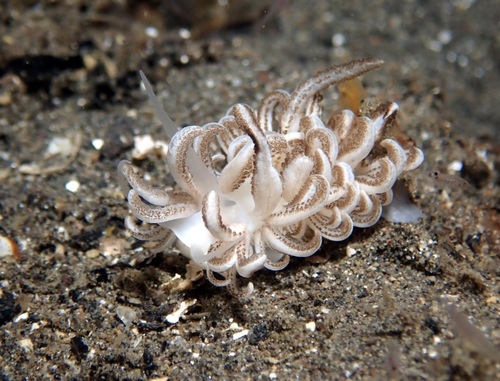
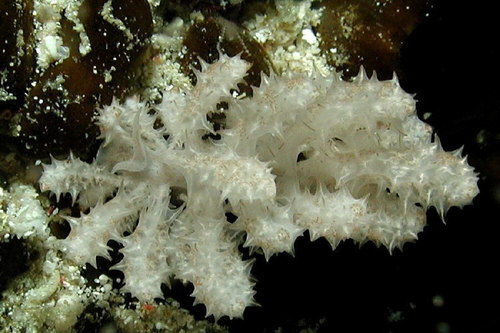
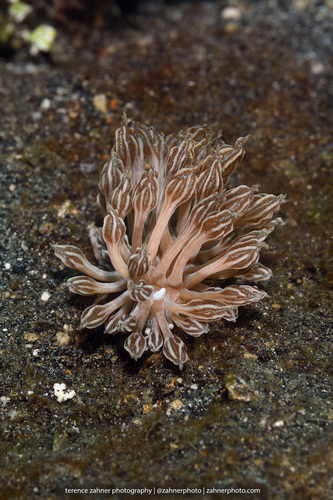
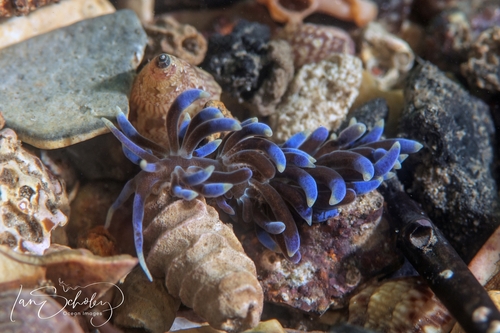
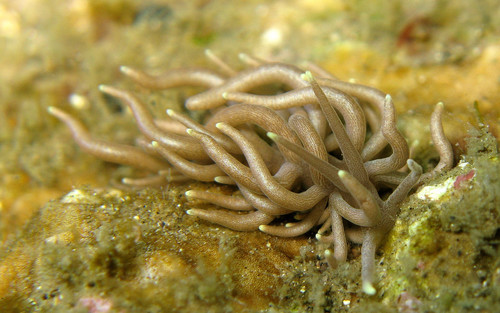
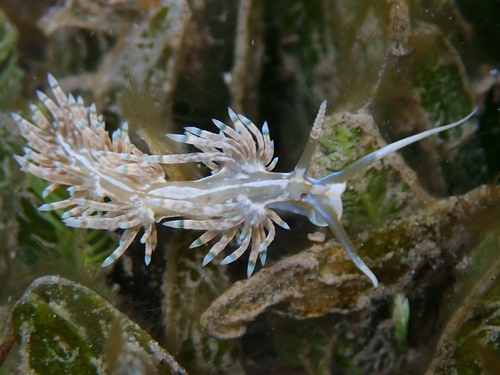
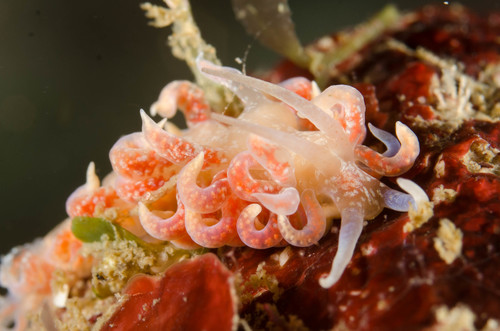
Phyllodesmium poindimiei reaches a maximum length of about 50 mm. It typically has two pairs of tentacles, each with an integrated olfactory system and an eye at its base. This soft, shell-less slug has cerata outgrowths on its upper surface; these structures hold the organism’s respiratory and digestive systems, and can be shed for protection. Most species in the genus Phyllodesmium have cnidosacs at the tips of their cerata, which allow them to digest and reuse nematocysts captured from cnidarian prey such as jellyfish or corals. Unlike most of its genus, P. poindimiei lacks these cnidosacs, which other species use for defense against predators such as the swimming crab Thalamita integer. It also lacks the adaptation that allows many other Phyllodesmium species to store photosynthetic microscopic dinoflagellates called zooxanthellae in their cerata. Non-symbiotic species like P. poindimiei are thought to have evolved earlier than nudibranchs that have these symbiotic and defensive adaptations. P. poindimiei generally inhabits coral reefs. Many of the tropical locations where this species lives are research biotopes for climate change studies. These slugs are useful for studying environmental change because they have short lifespans, and their population recovery is linked to habitats that are sensitive to ocean temperature change and coral bleaching. Most Phyllodesmium species are found along coastlines of Australia, Hawaii, and the Indo-Pacific region, where coastal channels and estuaries provide abundant shelter.