About Phyllodesma ilicifolia (Linnaeus, 1758)
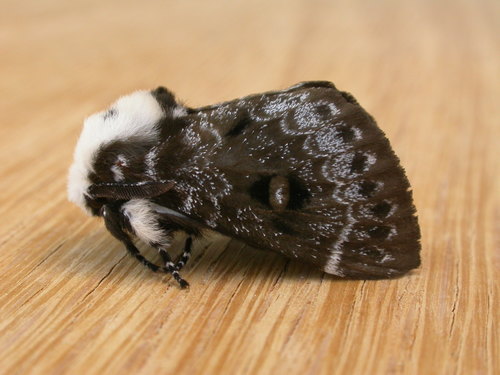
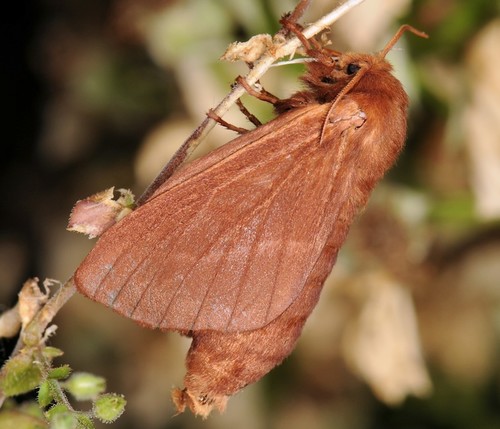
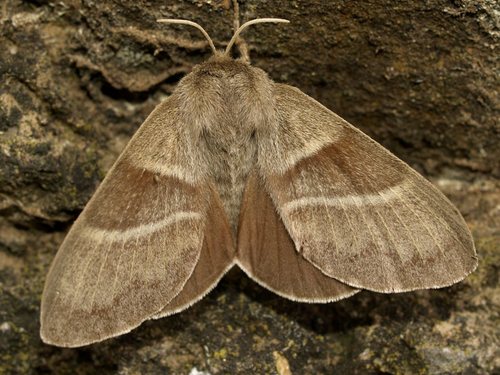
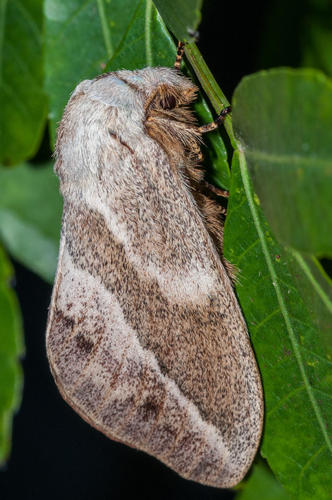
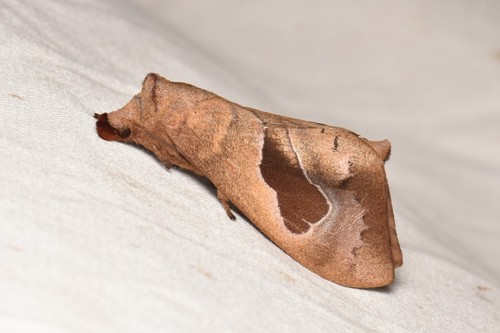
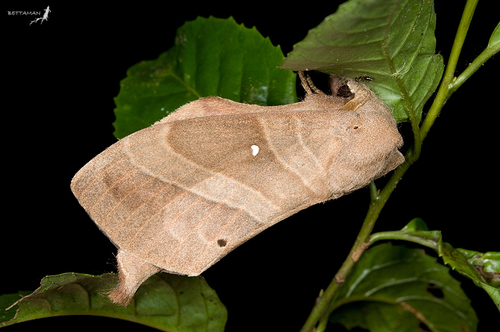
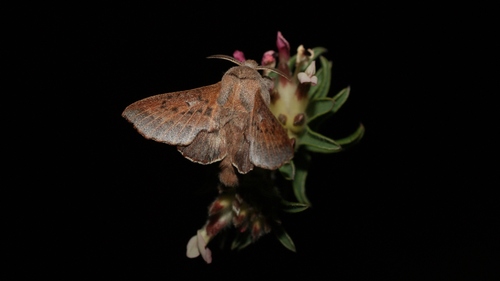
This species is scientifically named Phyllodesma ilicifolia (Linnaeus, 1758). Adult moths have a wingspan of 35 to 40 millimeters. The forewing has vein 9 extending to the apex. The forewing itself is brownish-ferruginous and lightly sprinkled with white; the first and second lines are dark grey, waved, interrupted, and curved near the costa. It has a dark grey discal mark, preceded by a whitish suffusion. A broad terminal band of whitish irroration, which contains a darker interrupted line, does not reach the costa. The cilia are white and barred with dark ferruginous. The hindwings are purplish-fuscous, with two suffused whitish bands. On the hindwing, vein 8 is connected with vein 7, and there are one or two pseudoneuria. Full-grown larvae are grey or reddish, with reddish hairs. They have a black, interrupted dorsal line with red interruptions, edged with whitish. The lateral area is blue-grey and interrupted. This moth occurs in Austria, Belarus, Belgium, China, Czech Republic, Denmark, Estonia, Finland, France, Germany, Italy, Malta, Japan, Kazakhstan, Latvia, Lithuania, Mongolia, Norway, Poland, Romania, Russia, Slovakia, Spain, Sweden, Switzerland, and Ukraine. The larvae feed on plants of the genera Vaccinium and Salix. The species hibernates as a pupa inside a cocoon. Adults emerge in spring, fly at night during summer, and lay their eggs in batches.