About Phyllocrania paradoxa Burmeister, 1838
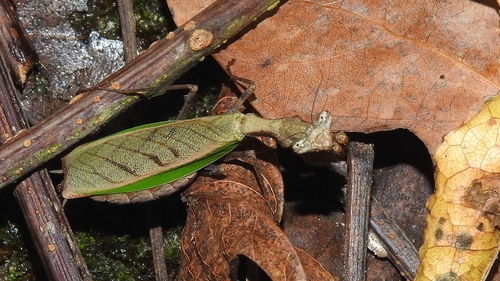
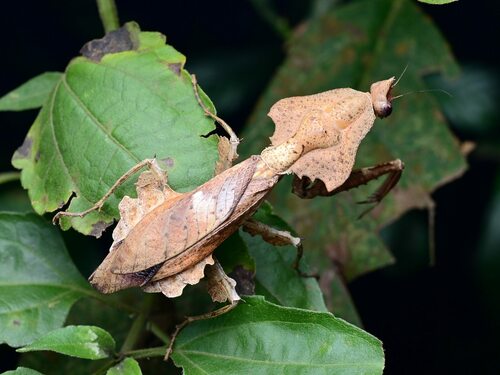
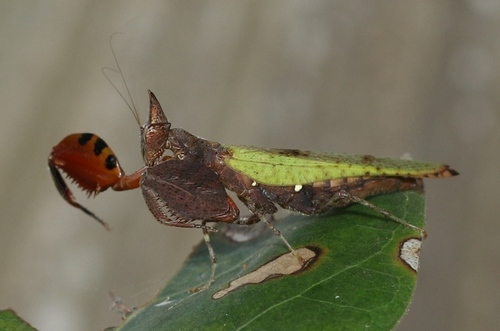
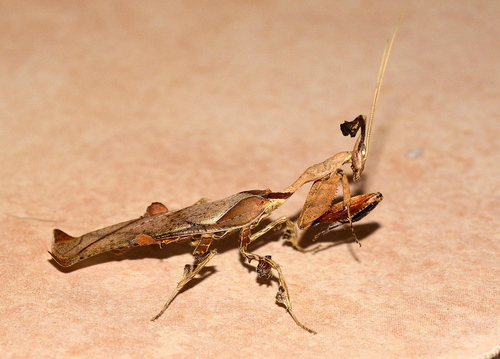
Compared to many other praying mantises, the ghost mantis (Phyllocrania paradoxa Burmeister, 1838) is a miniature species, reaching only 45 to 50 millimetres (1.8 to 2.0 inches) in length. It displays various brownish color shades, ranging from very dark brown (almost black) to greenish gray. An individual’s color changes between molts, and is also affected by light and humidity levels. P. paradoxa has camouflage that makes it resemble dead, dried-up leaf material. It has an elongated head, a flattened, extended prothorax, and leaf-like protrusions growing from its limbs. This mantis also has a forewing that looks like a desiccated leaf, and the creases visible on the wing are actually pigment shadings. In the wild, the ghost praying mantis blends effectively into its surroundings against dead leaves. Predators like birds typically do not notice insects that match their background, and the ghost praying mantis can remain undetected by staying still. If threatened, large nymphs and adult females practice thanatosis, also known as playing dead, while adult males respond by running or flying away. The oothecae of P. paradoxa can hatch up to three dozen young. First and second instar nymphs of this species are dark in color, and use ant mimicry as a defensive strategy. P. paradoxa has a wide range across the African continent and its surrounding islands. It has been recorded in Angola, Cameroon, Cape Province, Congo Basin, Ethiopia, Ghana, Guinea, Ivory Coast, Kenya, Malawi, Madagascar, Mozambique, Namibia, Somalia, South Africa, Sudan, Tanzania, Togo, Transvaal, Uganda and Zimbabwe. Ghost mantises inhabit dry open areas, including bushes, shrubs, and trees.