About Phyllocnistis hyperpersea Davis & Wagner, 2011
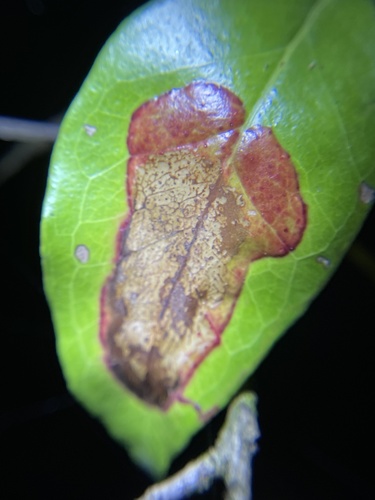
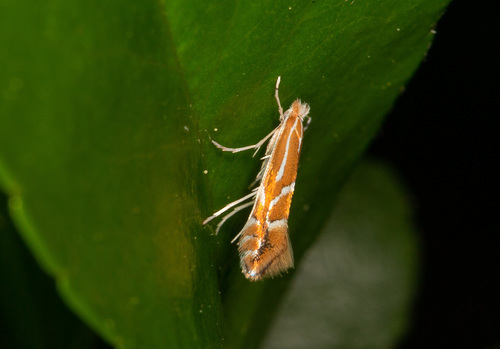
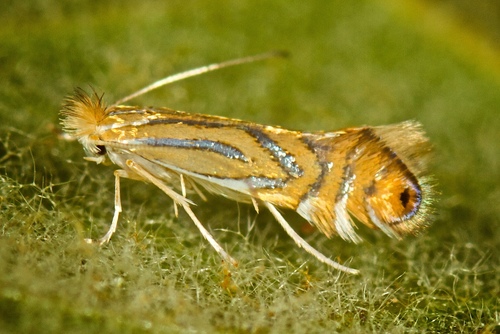
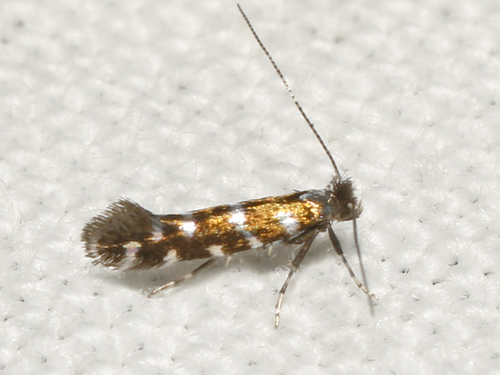
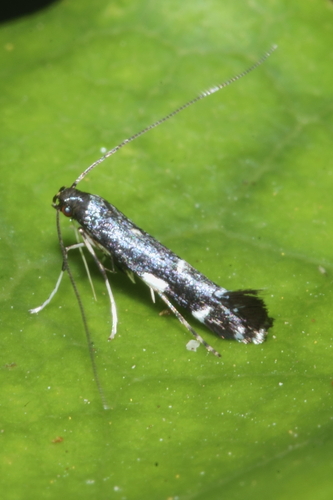
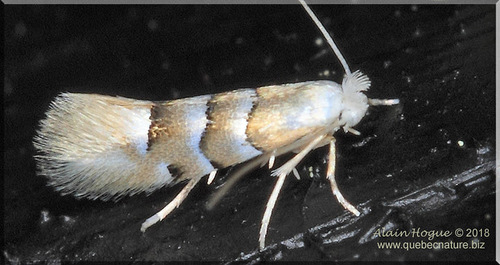
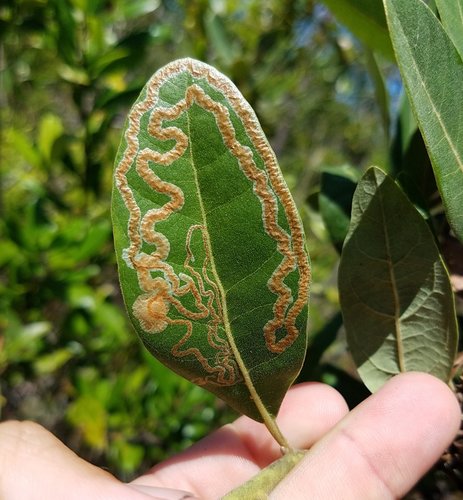
Phyllocnistis hyperpersea Davis & Wagner, 2011 is a moth species in the family Gracillariidae. Its confirmed range extends from Nansemond and Virginia Beach Counties in Virginia, south along the lowland Atlantic coastal region to the Florida Everglades. Unidentified material that may belong to this species has been found in Honduras and Mexico, so the species may have a wider actual distribution than currently confirmed. The forewings of adults measure 1.9–2.2 mm in length. Adult specimens have been recorded across multiple months: in southern Florida they have been recorded in September, December, February, March, April, May and June, while in southern Virginia adults have only been recorded in June. Larvae of this moth feed on two host plants: Persea americana and Persea borbonia. Larvae create leaf mines while feeding on host leaf tissue. The mine takes the shape of a long, slender, serpentine gallery, which contains a relatively broad, dark brownish median frass trail, and is almost always located on the upper (adaxial) surface of the leaf. Eggs are deposited on the upper leaf surface, away from the leaf midrib. Mines begin on one half of the leaf blade, and after consuming most of this area, cross over to the other half near the leaf apex. The median frass line of this species is unusually broad for a member of the genus Phyllocnistis, and is more similar in appearance to the frass trail of Prophyllocnistis, a moth genus found in Chile. Pupation takes place within the leaf lamina, in a circular nidus located away from the leaf edge. This pupation structure is similar to the nidus made by Prophyllocnistis. The serpentine section of the mine starts as a narrow tract around 0.3 mm wide, and gradually widens to about 2–2.5 mm before reaching the pupation chamber. In early larval instars, the median frass line makes up one quarter of the total mine width, and gradually broadens as the larva develops to occupy more than half of the mine width.