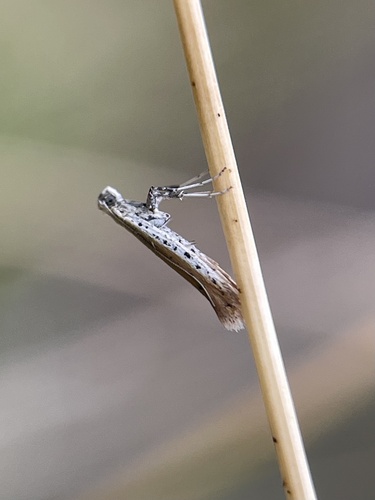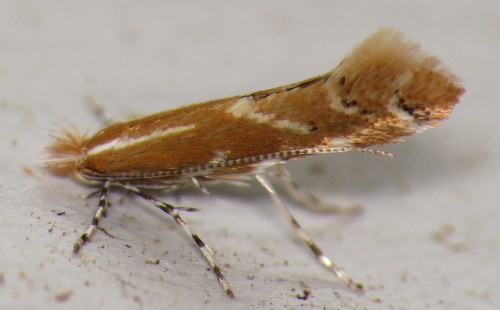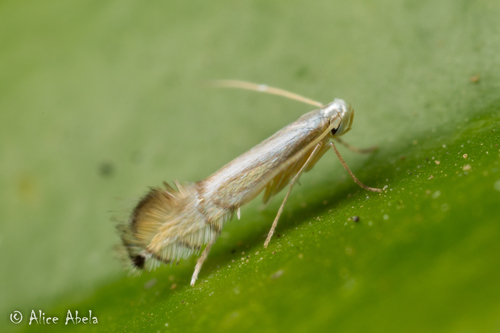
About Phyllocnistis citrella Stainton, 1856
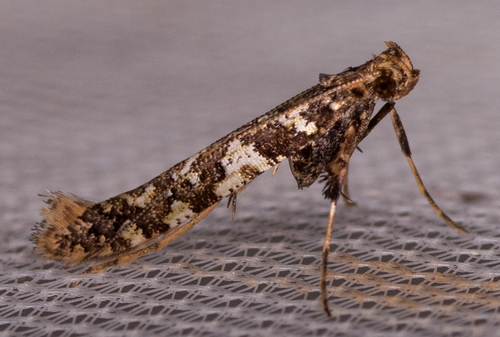
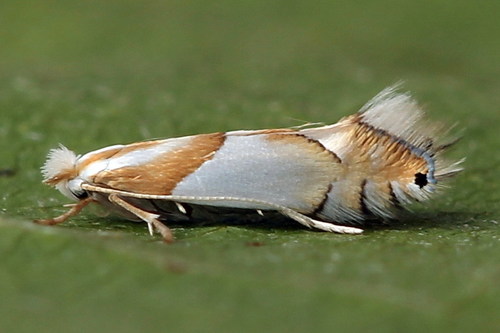
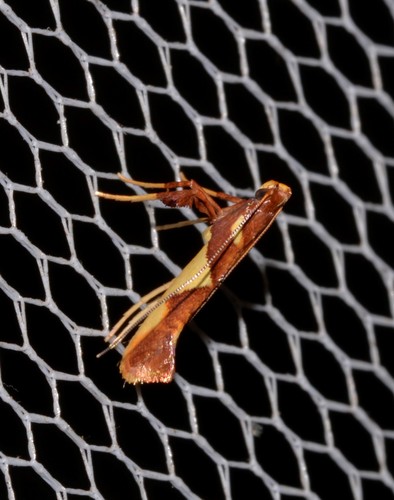
Phyllocnistis citrella, commonly called the citrus leafminer, is a moth in the family Gracillariidae, and is known as CLM in agricultural contexts. It was described by Henry Tibbats Stainton in 1856, based on material originally collected from India. This species was first recorded in Florida, United States, in 1993, and is now found across much of the world, including Argentina, Australia, Brazil, China, Corsica, Costa Rica, Cuba, India, Israel, Madeira, Malaysia, Mauritius, Mexico, the Philippines, South Africa, Spain, Sri Lanka, and other regions of the United States beyond Florida. It has an approximate wingspan of 5 millimetres (0.20 in).
Citrus leafminer larvae are classed as a serious agricultural pest that targets Citrus species and related plants, including Aegle marmelos, Atalantia, Citrofortunella microcarpa, Citrus limon, Citrus paradisi, Citrus maxima, Fortunella margarita, Murraya paniculata, and Poncirus trifoliate. Larvae have also been documented feeding on Garcinia mangostana, Pongamia pinnata, Alseodaphne semecarpifolia, Loranthus, and Jasminum sambac.
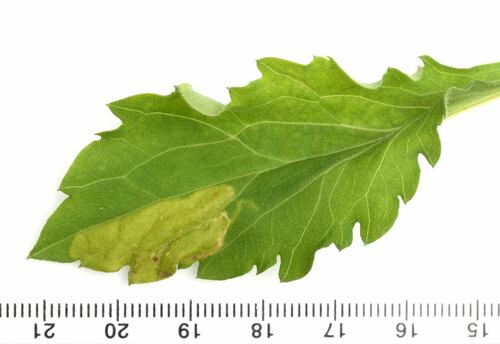
Larvae create mines in the leaves of their host plants. Each mine takes the form of a long epidermal corridor that has a distinct central frass line. Most mines are formed on the lower surface of the leaf, though some develop on the upper leaf surface, and mines very rarely occur on the rind of developing host fruit. Because larvae develop inside leaf tissue, they are protected from many topical insecticide treatments. Pupation occurs inside a chamber formed at the end of the larval mine, under a folded section of the leaf margin.
Citrus leafminer is native to Asia, where it is distributed across the continent. Confirmed distribution within Asia includes Japan, the Philippines, New Guinea, India, and Taiwan. The species has since spread beyond its native range to nearly every citrus-growing area around the world. Its recent spread into North and South America was first reported in the early 1990s. This spread is particularly significant because two major citrus-producing countries, Brazil and the United States, are located in these continents, and together they produce half of the world's citrus supply.