About Phyllidiella striata (Bergh, 1889)
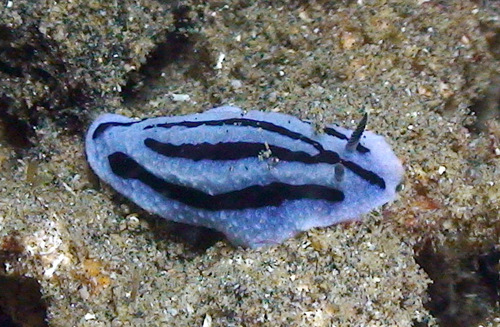
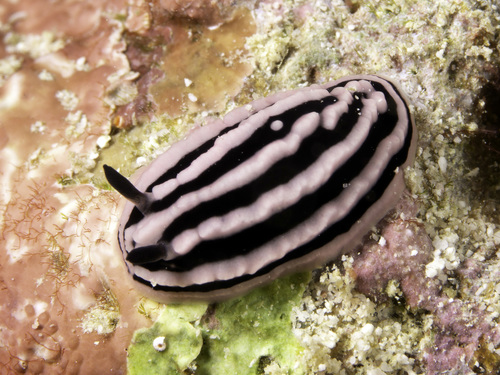
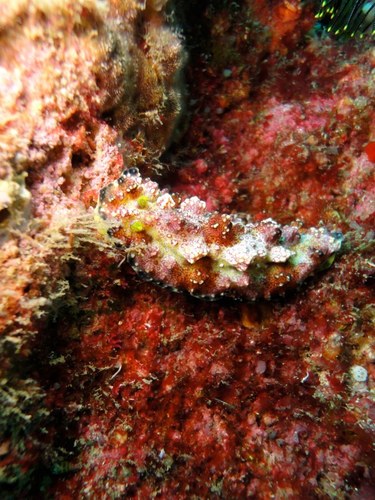
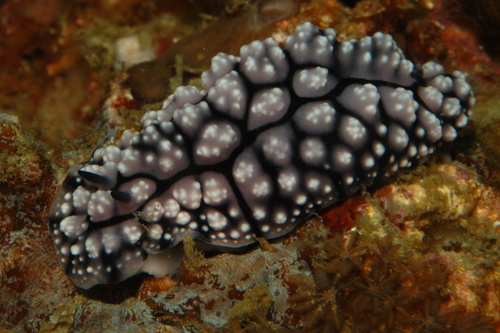
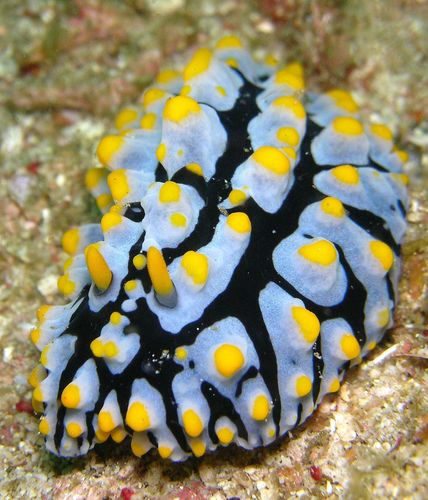
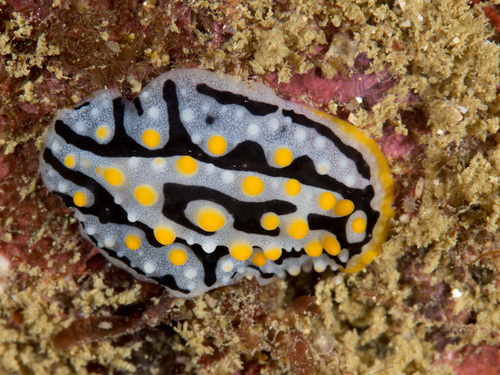
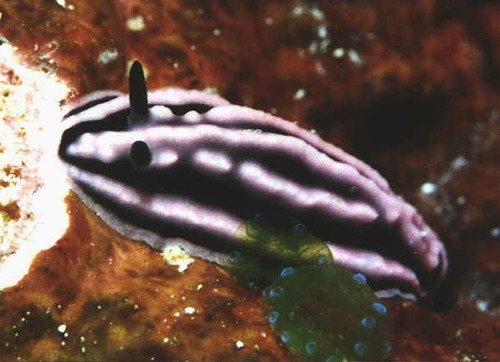
Phyllidiella striata can reach a maximum length of 35 mm (1.4 in). Its rhinophores are black with pink bases, and its oral tentacles are pale grey, sometimes marked with black streaks. The dorsal body surface is black, with pink, grey, greenish, or bluish tubercles arranged in longitudinal rows. The tubercles at the front of the body are positioned obliquely, sloping toward the center of the back. The ventral surface is uniformly pale grey. Phyllidiella striata is found in the tropical central and western Pacific Ocean and the Indian Ocean, at depths up to approximately 50 m (160 ft). This species was first described from the Philippines, and its name is often incorrectly applied to Phyllidiopsis xishaensis. This nudibranch species feeds on sponges. It lacks a radula, jaws, and stomach, and feeds by everting part of its gut. It uses digestive enzymes to break down sponge tissues, then sucks in the resulting liquified food. Like other nudibranchs, Phyllidiella striata is a hermaphrodite. Its genital pore is located on the right side of the foot, just behind the head. When mating, two individuals move close together, face in opposite directions, and transfer sperm to one another. After mating, each individual can produce eggs. There is no free-living larval stage; embryos develop directly into juvenile nudibranchs. Phyllidiella striata secretes a milky-white substance that contains terpenes from a dorsal gland. This substance is derived from toxic compounds from the sponges the species eats, and it functions to deter predators.