About Phyllidiella pustulosa (Cuvier, 1804)
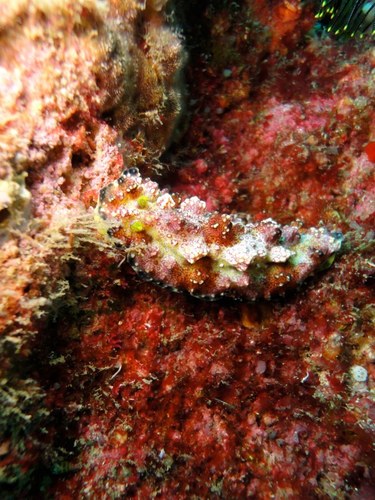
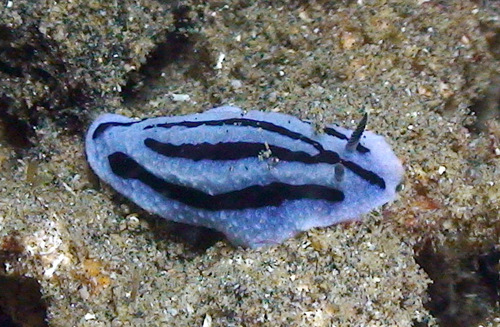
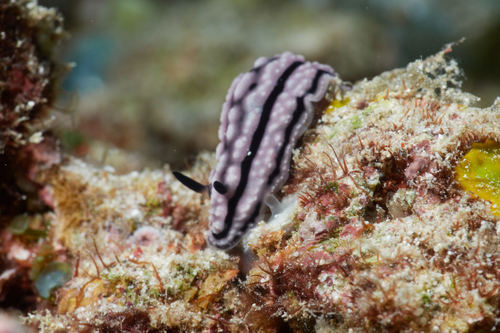
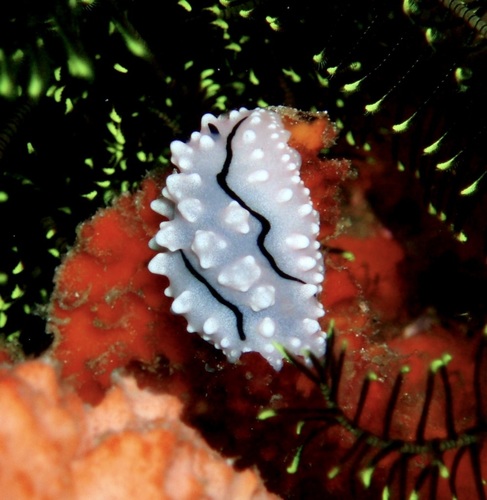
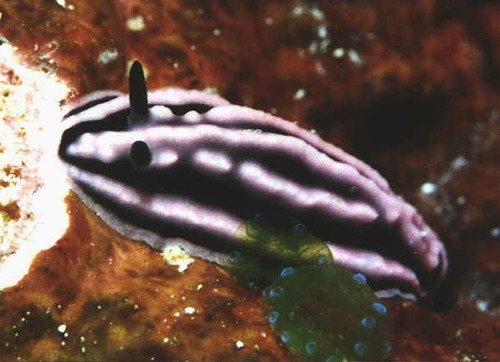
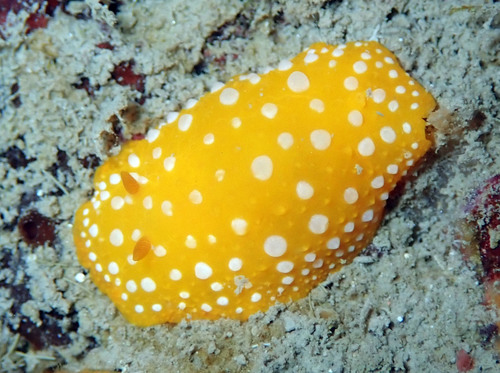
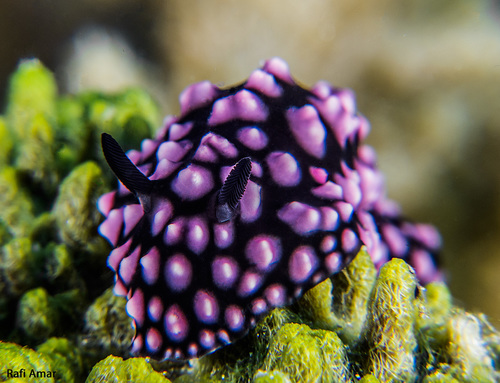
Description: Even though this nudibranch changes its appearance as it grows, three median clusters of usually pink tubercles do not change in arrangement – they are merged in juveniles and separate in fully grown individuals. These tubercles can vary in color from pink to green to white. The intensity of pink coloration and the presence of green-grey body tones may potentially be linked to the nudibranch’s diet and how much time has passed since its last feeding. Other key identifying features include a pale pink mantle edge, broad triangular oral tentacles with black tips, and a rhinophoral clavus that has 22 to 26 lamellae in specimens larger than 35 mm. Distribution: This species was first described from specimens collected in Timor. It is one of the most common nudibranch species across the entire tropical Indo-West Pacific. However, a study using CO1 gene DNA sequencing has confirmed that this entity forms a species complex.