About Phyllaplysia taylori Dall, 1900
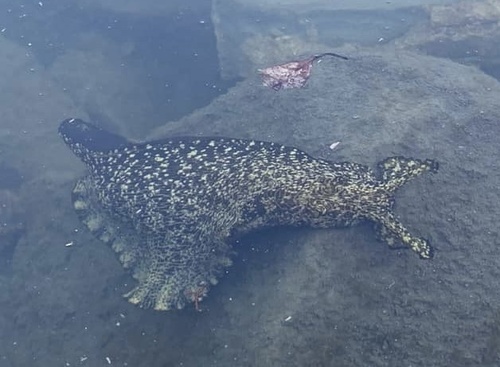
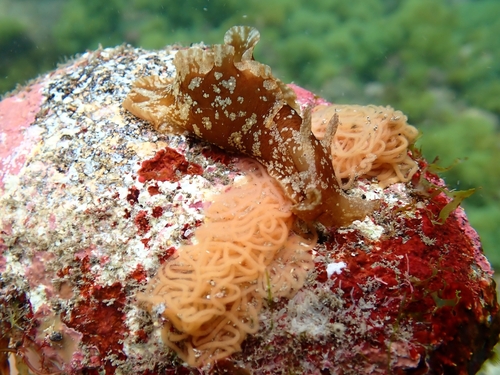
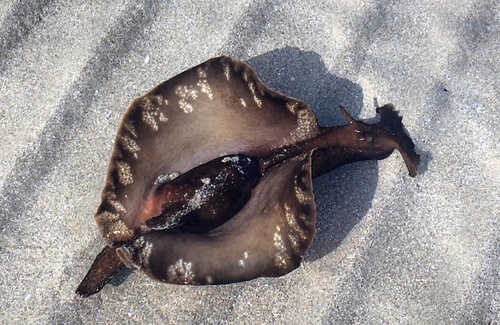
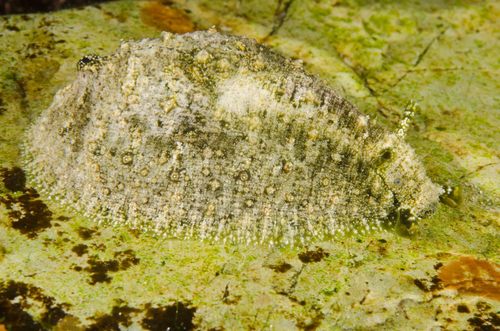
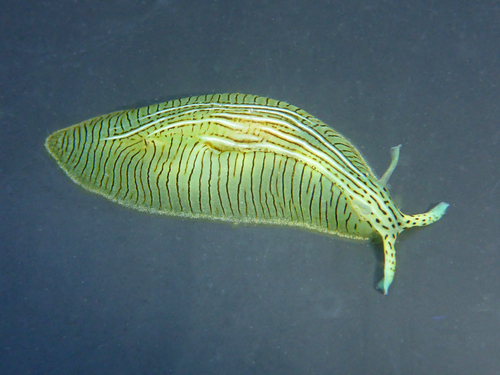
Two color morphs of the sea hare Phyllaplysia taylori Dall, 1900 have been observed: bright green and yellow, both with characteristic black and white stripes; a more complete description can be found in Beeman 1970. This species has a dorsally flattened body, and is well camouflaged on Zostera marina (eelgrass), the sea grass it is found on almost exclusively. It grazes on epiphytes that settle on Zostera blades, including sponges and diatoms. Phyllaplysia taylori inhabits the intertidal photic zone on the Pacific Coast of North America, occurring from British Columbia, Canada, to San Diego, CA, US. It lives in estuarine habitats and completes its entire life cycle on Zostera marina. To accommodate the changing conditions of estuaries, the species is euryhaline and eurythermal. It is a weak osmoregulator, which allows it to thrive best in low saline environments above 25 ppt. Population density depends heavily on landscape and temperature, so local terrestrial runoff has a greater impact on the species' distribution than ocean processes. Acclimation to warmer temperatures may reduce the sea hare's ability to adapt to temperature changes, specifically cold shocks. Throughout all life stages, Phyllaplysia taylori has limited mobility, due to direct development in its larval stage and a lack of swimming mechanism in its adult stage. This limited dispersal can lead to high levels of isolation in individual populations, and potentially to phenotypic differences. Epiphytes that grow on eelgrass block eelgrass from accessing sunlight and nutrients, and Phyllaplysia taylori feeds on these epiphytes. Clearing epiphytes allows eelgrass populations to grow more substantially, so Phyllaplysia taylori may play an important role in eelgrass community restoration efforts. Known possible predators of Phyllaplysia taylori include sunfish and sea stars of the genus Solaster. Phyllaplysia taylori has two overlapping generations per year, and typically spawns in summer and fall, with population abundance varying across different locations. The size of this species' eggs varies with the spawning season: larger eggs are spawned in fall, and the individuals hatching from these eggs live longer than those hatching in summer. Eggs are laid in parallel rows on Zostera marina. Eggs have double layers of egg capsules, with each capsule holding a single ova and a nutritional body. As eggs develop, the egg mass becomes darker. During early development, there are a total of eight cell stages, and unlike other sea hares, Phyllaplysia taylori undergoes direct development. After approximately one to three weeks, eelgrass sea hares hatch and begin feeding actively. This species has a short lifespan: individuals hatched in fall have an average lifespan of seven to eight months, while individuals hatched in summer have an average lifespan of three to five months. Research suggests Phyllaplysia taylori is an annual animal, but the exact time and location of the species' death is still unknown. Some sources suggest individuals die after mating, while others hypothesize they return to the deep sea. Unlike species that reproduce only once per year, Phyllaplysia taylori reproduces multiple times per year even though it has a relatively reliable food source.