About Phycita roborella (Denis & Schiffermüller), 1775
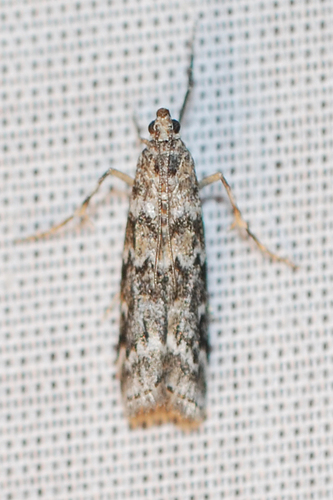
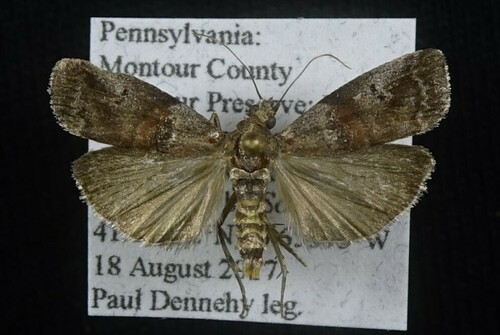
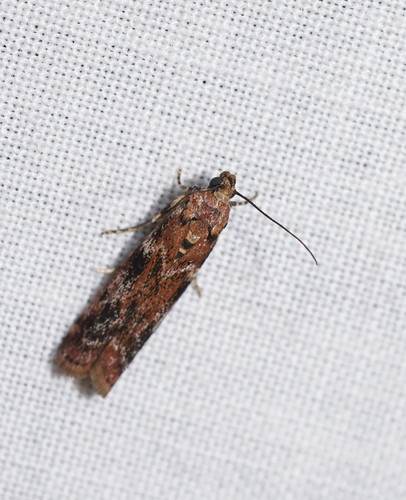
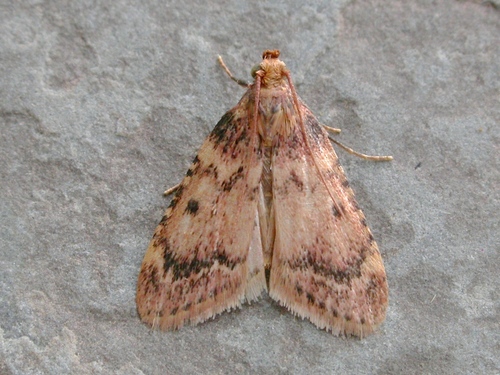
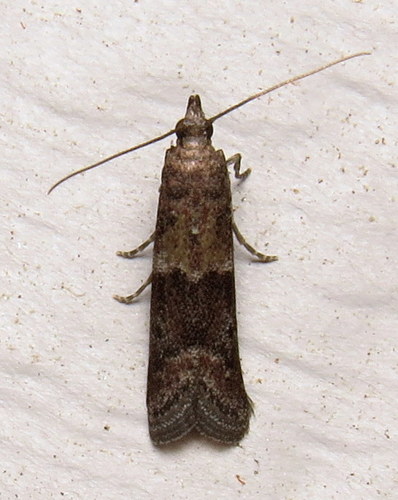
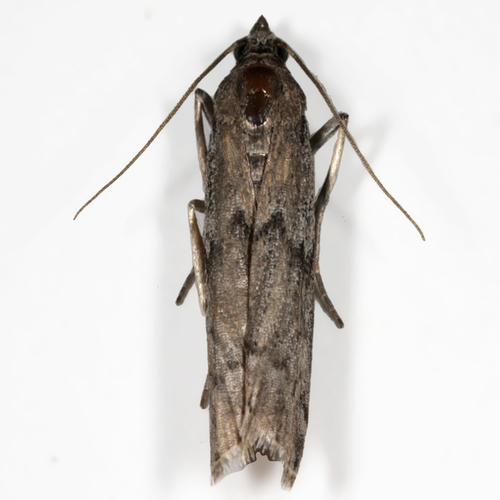
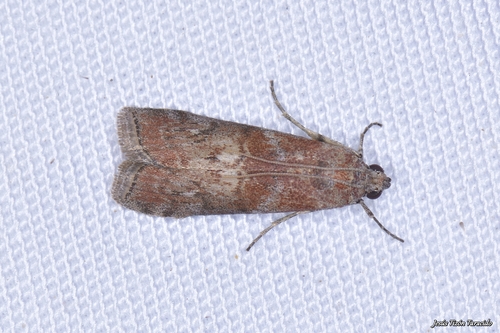
Phycita roborella (Denis & Schiffermüller), 1775 is a moth species belonging to the family Pyralidae. Under its junior synonym Tinea spissicella, it is the designated type species of the genus Phycita, and by extension also the type species for the subfamily Phycitinae. This species occurs in Europe. The wingspan of adult Phycita roborella ranges from 24 to 29 mm. The forewings are fuscous (dark brownish-grey), mixed or tinted with reddish colouring and sprinkled with greyish white scaling; the area towards the dorsum between the two forewing lines is more suffused with whitish colour. An erect, triangular, reddish-brown patch mixed with blackish scaling extends from the dorsum in front of the first line, and this patch is often preceded by a whitish shade. The first and second forewing lines are pale, with darker edges along their inner sides. A curved, darker transverse marking sits in the discal area of the forewing. A number of short black dashes are present on the veins just in front of the second line. The hindwings are fuscous. The larva is reddish-brown with yellowish freckling. Its subdorsal and lateral lines are darker than the surrounding body. The head is reddish-brown. The second body segment has two black spots. The third body segment bears a lateral white spot ringed with black. Larvae live among the spun leaves of oak trees. Adult moths emerge in a single generation annually, active from the end of June through September. The caterpillars feed on oak, apple, and pear.