About Phrynomantis bifasciatus (Smith, 1847)
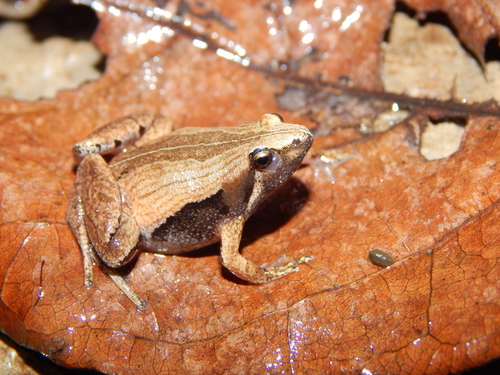
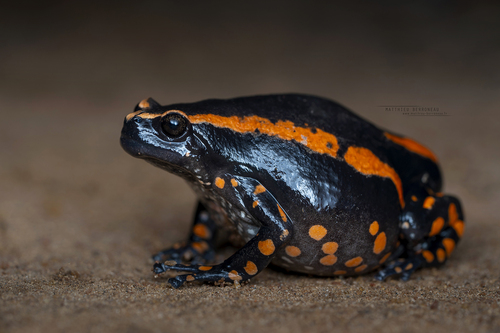
The banded rubber frog, with the scientific name Phrynomantis bifasciatus, is a species of frog in the family Microhylidae. It is native to central and southern Africa. Its natural habitats include dry savanna, moist savanna, subtropical or tropical dry shrubland, subtropical or tropical moist shrubland, subtropical or tropical dry lowland grassland, subtropical or tropical seasonally wet or flooded lowland grassland, subtropical or tropical high-altitude grassland, intermittent freshwater lakes, intermittent freshwater marshes, arable land, pastureland, water storage areas, ponds, and canals and ditches. Females of this species reach a maximum length of 65 mm. Males have recorded lengths between 45 mm and 68 mm, and their maximum size is currently unknown. Tadpoles can grow to 37 mm in length. This frog has a smooth, rubbery skin texture. Its underside is greyish with white spots, which are sometimes not visible. Its arms and legs bear reddish spots. Males can be distinguished from females by their darker throat. Banded rubber frogs secrete a milky toxic substance through their skin, and this substance is toxic to both other frog species and humans.