About Phryganidia californica Packard, 1864
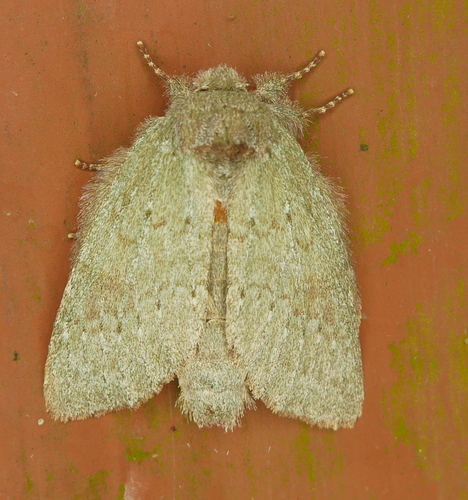
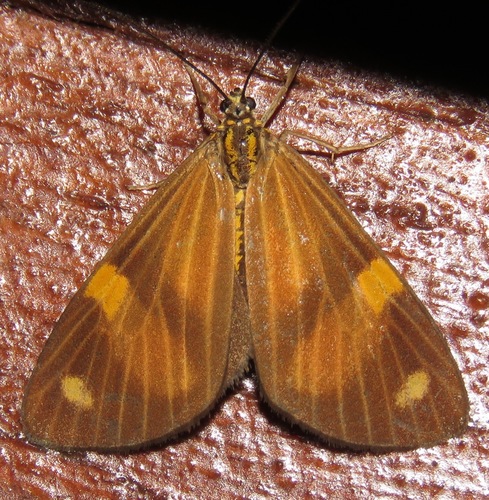
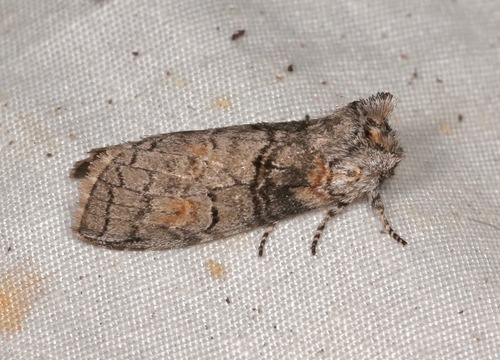
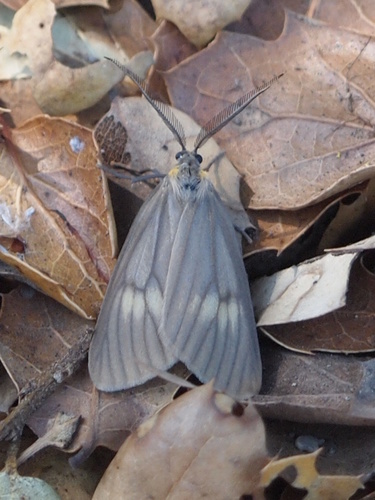
Phryganidia californica, commonly known as the California oakworm or California oak moth, is a moth species belonging to the family Notodontidae and subfamily Dioptinae. This species was first formally described by Alpheus Spring Packard in 1864. It can be found along the coasts of the U.S. states of California, Oregon, and Washington. The California oak moth is the only member of its subfamily that occurs north of Mexico. The adult moth has a wingspan of approximately 30 mm (1.2 in), and its body and wings range in color from tan to gray with prominent wing veins. Adult moths are active and can be seen in flight from March through November. In northern California, this species produces two generations per year, and a third generation sometimes occurs in southern California. The larvae are black with longitudinal yellow stripes, and full-grown larvae reach a length of about 30 mm (1.2 in). Pupation occurs inside a white or yellow pupa marked with black patterns. The larvae feed on the leaves of deciduous oaks, with a particular preference for Quercus agrifolia, the coast live oak. Young larvae feed between leaf veins on the lower surface of leaves; even though the upper leaf surface remains intact, it dries out and turns brown after feeding. Later instar larvae chew all the way through leaf blades, often leaving only the major leaf veins behind. As the larvae feed, small frass pellets fall from the tree canopy. In years when population outbreaks occur, individual trees or groups of trees may be almost completely defoliated, usually by late summer or early fall. Which trees are fed on depends on where female moths lay their eggs, though the defensive chemical compounds produced by oaks themselves may also be an influencing factor. These oak defensive chemicals may also protect the larvae from predators that hunt during the day; unlike many non-toxic moths and caterpillars that only feed at night, California oak moths and their larvae can feed safely during daylight hours. California oak moth larvae use silk threads to move to the ground, or alternatively, to another oak tree. If a larva reaches another oak tree, it will continue feeding there until it is ready to pupate. When a larva reaches the ground, it searches for a suitable site to undergo pupation, which can be found on the sides of trees, rocks, buildings, or other manmade objects.