About Phragmites australis (Cav.) Trin. ex Steud.
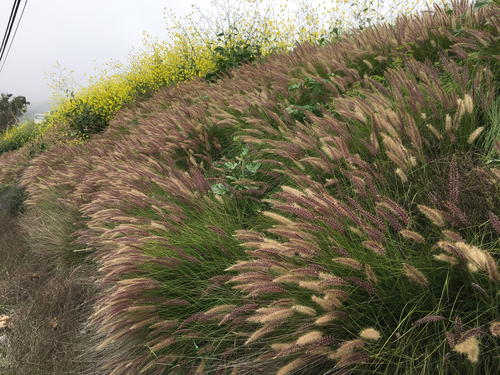
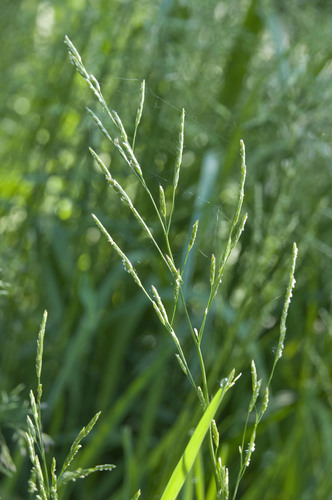
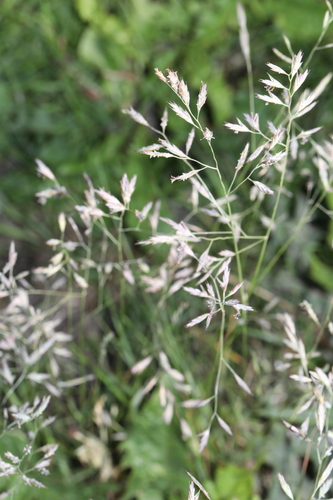
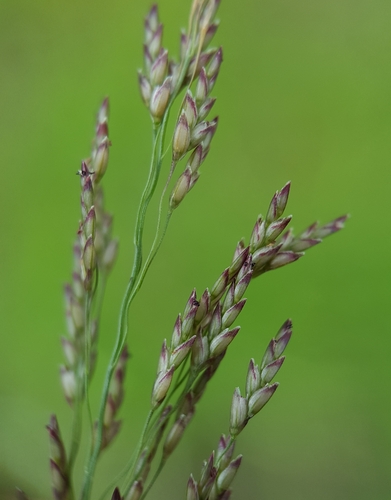
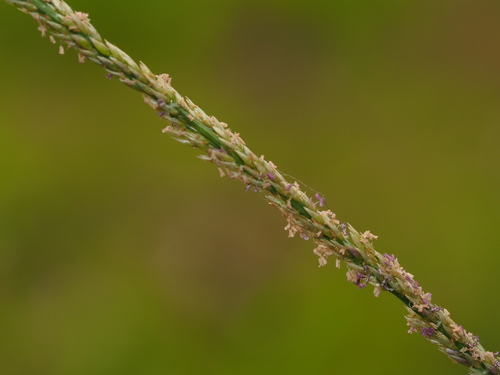
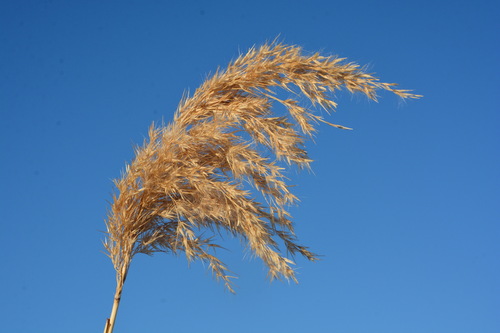
Phragmites australis (Cav.) Trin. ex Steud., commonly called common reed, very often forms large, extensive stands known as reed beds. These stands can reach 1 square kilometre (0.39 square miles) or more in size. When growing conditions are suitable, this species can spread 5 metres (16 feet) or more each year via horizontal runners, which put down roots at regular intervals. It can grow in damp ground, in standing water up to 1 m (3 ft 3 in) deep, or even grow as a floating mat. Its erect stems grow 2–4 m (6+1⁄2–13 ft) tall; the tallest plants grow in areas with hot summers and fertile growing conditions. Its leaves measure 18–60 centimetres (7–23+1⁄2 in) long and 1–6 cm (1⁄2–2+1⁄4 in) broad. Flowers develop in late summer, forming a dense, dark purple panicle roughly 15–40 cm (6–15+1⁄2 in) long. Later, the numerous long, narrow, sharply pointed spikelets turn greyer as long, silky hairs grow on them. These hairs ultimately help disperse the plant’s very small seeds. Phragmites australis is a helophyte, an aquatic plant. It is especially common in alkaline habitats, and it can also tolerate brackish water. For this reason, it is often found at the upper edges of estuaries, and on other wetlands such as grazing marsh that are occasionally inundated by the sea. One study has found that P. australis has greenhouse gas emissions similar to Spartina alterniflora, a plant native to the Atlantic coast of the Americas. However, other studies have found that P. australis is associated with larger methane emissions and greater carbon dioxide uptake than native New England salt marsh vegetation that grows at higher marsh elevations. Common reed is suppressed when it is grazed regularly by livestock. Under regular grazing, it either grows as small shoots within the existing grassland sward, or disappears entirely. In Europe, common reed is rarely invasive, except in damp grasslands where traditional grazing has been abandoned. The entire common reed plant is edible, and can be eaten raw or cooked. Young stems can be boiled, and more mature stems can be used to make flour. Both the tough underground stems and the hard-to-find seeds can be used. Stems can be processed into eco-friendly drinking straws. Young shoots can also be eaten either raw or cooked. Hardened sap from damaged stems can be eaten fresh or toasted. Stems can be dried, ground, sifted, hydrated, and toasted similar to marshmallows. Seeds can be crushed, mixed with berries and water, and cooked to make a gruel. Roots can be prepared in a similar way to cattail roots. Common reed is the primary source of material for traditional roof thatching in Europe and other regions. It is also used extensively in phytodepuration, or natural water treatment systems, because its root hairs are excellent at filtering impurities out of wastewater. It also has excellent potential as a source of biomass.