About Phragmatopoma californica (Fewkes, 1889)
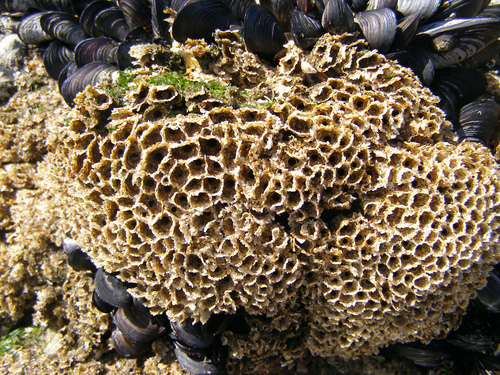
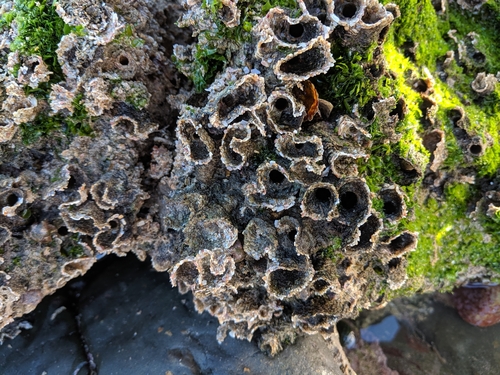
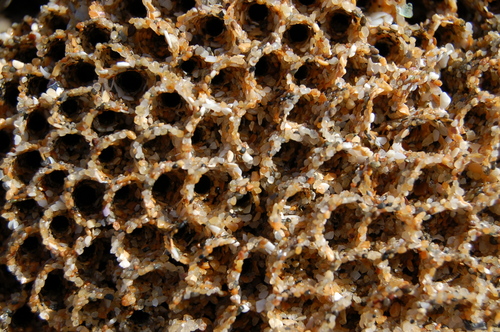
Phragmatopoma californica, commonly called the sandcastle worm, honeycomb worm, or honeycomb tube worm, is a reef-forming marine polychaete worm in the family Sabellarididae. This species is dark brown, with a crown of lavender tentacles, and grows to a maximum length of around 7.5 centimeters (3.0 inches). It lives along the Californian coast, ranging from Sonoma County to northern Baja California. Sandcastle worms live in colonies, building tube reefs that look somewhat similar to sandcastles, which gives the species its common name. These reefs are often visible on rocky beaches during medium and low tide, and have a honeycomb-like outer appearance. Individual reefs can reach up to 2 meters (6.6 feet) across each side. They often share sheltered habitats including rock faces, overhanging ledges, and concave shorelines with mussel beds. The worms stay inside their tubes most of the time and are almost never seen outside. When low tide exposes the colonies above water, the worms close their tube entrance with a shield-like operculum made of dark setae. When submerged, they extend their tentacles out of the tube to catch food particles and sand grains. They sort these collected grains, using the most suitable ones to repair their tubes, and eject the remaining grains. Colonies form through the gregarious settlement of larvae, which need to contact an existing colony to metamorphose into adult worms. This species' gregarious settlement has been linked to specific free fatty acids found on the tubes of adult worms. On rocky beaches, successful larval settlement depends on the larvae's behavior in the water column and their ability to detect chemical cues when they contact adult tubes. Phragmatopoma californica should not be confused with the similar but more northerly species Sabellaria cementarium, which ranges from Alaska to southern California and has an amber-colored operculum. Unlike P. californica, S. cementarium rarely forms colonies, does not have gregarious settlement, and its larvae do not respond to free fatty acids.