About Phragmataecia castaneae Hübner, 1790
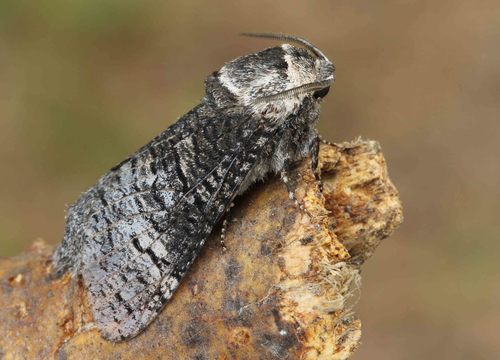
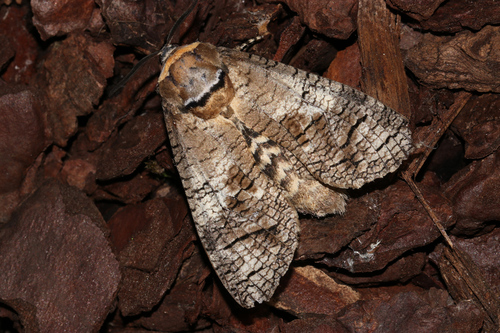
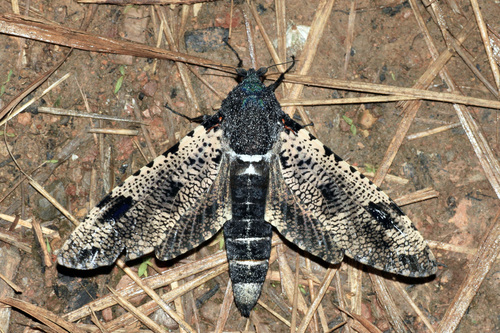
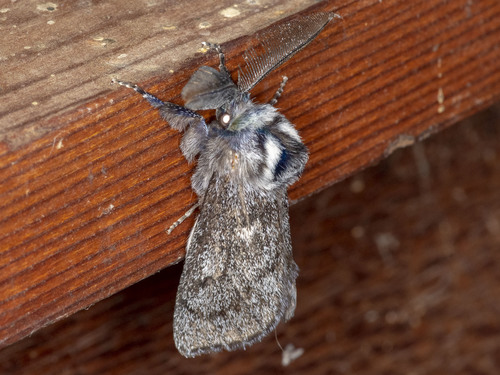
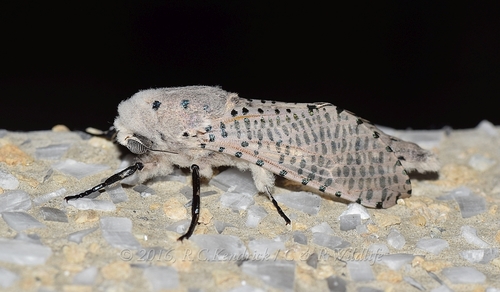
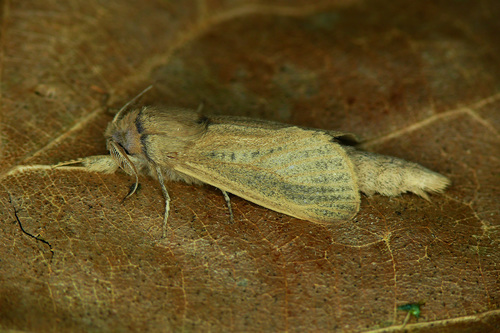
As a member of its genus, Phragmataecia castaneae lacks palpi. Males have antennae that are bipectinated, meaning they are comb-like on both sides, along two-thirds of their length, with short branches. The legs have no spurs, and the wings are long and narrow. The species has a wingspan ranging from 27 to 50 mm. Its head, thorax, and abdomen are brownish white, and females are larger than males. Forewings are buffish grey with fine dark spotting; some specimens lack forewing striations entirely. Females have a very long abdomen that extends far beyond the wingtips when at rest. Hindwings are white or brownish white. The larva has a yellowish white body with two purplish-brown lines along its back, and a light brown head. In terms of ecology, adult moths fly from May to July, with flight timing varying by location. Larvae feed on Phragmites australis, Phragmites communis, Phragmites gigantea, and Phragmites pumila. After hatching in summer, larvae first feed in the shoot tips of their host plants. After two moults, larvae move into an internode at the base of the shoot. Larvae pupate within host shoots after two years of development.